Paradox Museum Stockholm guide: optical illusions and Instagram moments
Stockholm: Vasa Museum entrance ticket
Is the Paradox Museum Stockholm worth visiting?
The Paradox Museum offers roughly 50 interactive optical illusion installations across multiple rooms — forced perspective, upside-down rooms, infinity mirrors, and similar visual tricks. From 249 SEK per adult it is the most expensive museum-format attraction per square metre in Stockholm. Good for families with children aged 8–15 and for groups looking for photogenic Instagram content; less compelling for solo visitors or adults seeking educational depth.
Optical illusions and perceptual tricks in central Stockholm
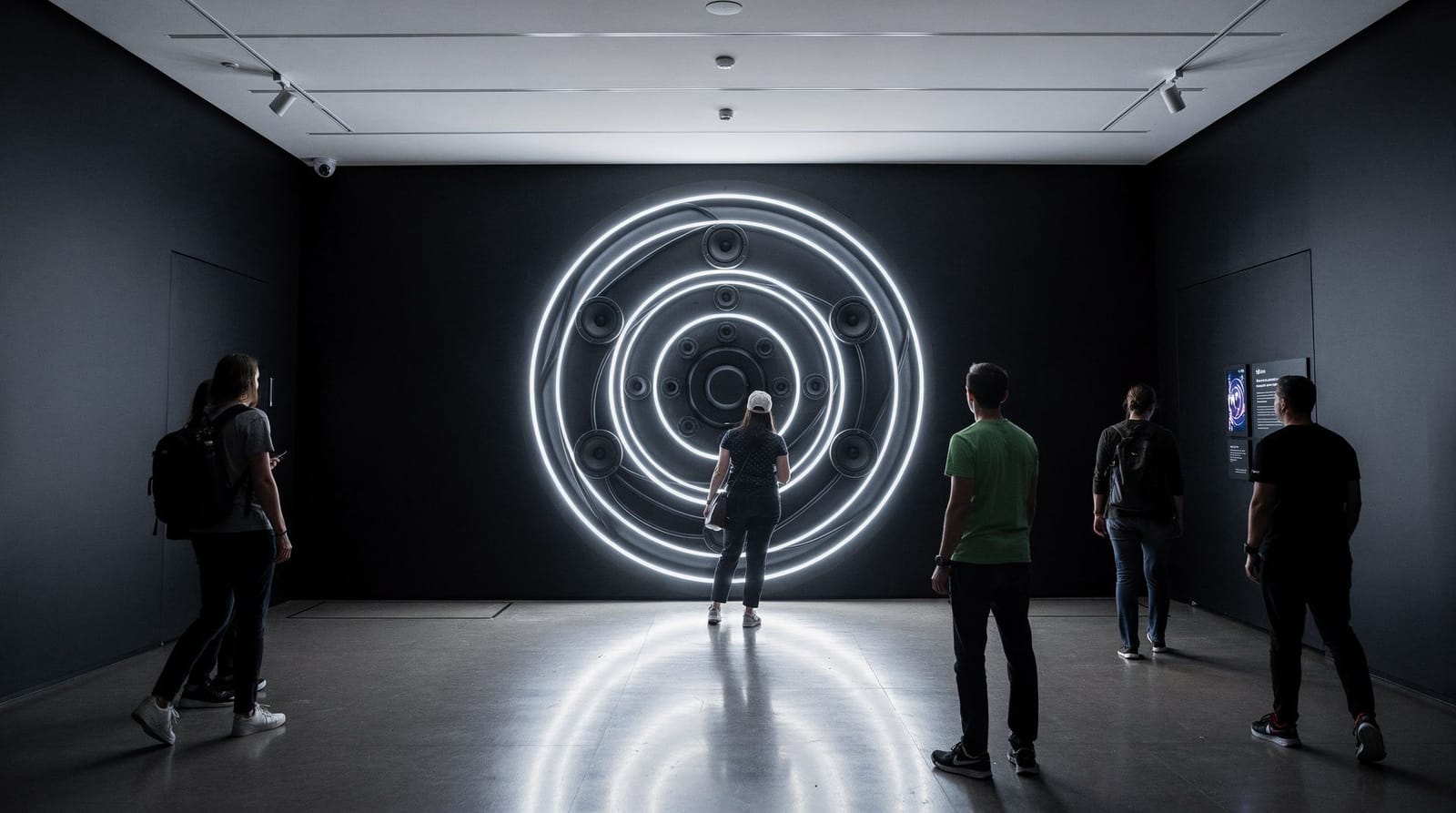
The Paradox Museum is part of a global chain of interactive experience museums that has expanded rapidly since the mid-2010s — a format that combines optical illusions, forced perspective rooms, infinity mirrors, anti-gravity environments, and other visual tricks to create an Instagram-optimised experience that is simultaneously entertainment and perceptual education.
The museum is at Sergelgatan 20 in central Norrmalm, a short walk from T-Centralen, which makes it easy to fit into a day of sightseeing. The museum occupies a multi-story space with approximately 50 installations across different rooms.
From 249 SEK per adult, it is not cheap by Stockholm standards for what it is. The key variable is group dynamics: the installations are considerably more fun with children or with a social group than solo, and most visitors report getting genuine value from it in the right company.
Practical essentials
| Detail | Information |
|---|---|
| Address | Sergelgatan 20, Norrmalm |
| Opening hours | Daily 10:00–19:00 (last admission 60 min before closing) |
| Adult ticket | from 249 SEK |
| Children (15 and younger need adult supervision) | from 195 SEK |
| Under 5 | Free |
| Recommended time | 60–80 minutes |
| T-bana | T-Centralen (all lines), a few minutes’ walk |
What to see and experience
Classic optical illusion rooms
The Ames Room: One of the most famous optical illusions in perceptual psychology — a room with non-parallel walls and floor designed to make one person appear tiny and another giant when viewed from the fixed viewpoint of the observation hole. The Paradox Museum’s version is well-constructed and works well for photographs.
The Infinity Mirror Room: A room lined with mirrors and lights creating an illusion of infinite receding reflections. A staple of the genre; the Stockholm version is atmospheric.
Forced perspective installations: Multiple setups where the design of the room creates misleading depth cues — staircases that seem to float, figures that appear to hang in air, objects that appear to be different sizes than they are.
Physical illusion rooms
The Tilted Room: A room built at an angle where your body’s balance system conflicts with visual cues — you feel you are leaning when you are standing straight, or vice versa. Genuinely disorienting on first entry.
The Anti-Gravity Room: Similar principle, creating environments where the apparent orientation of a space conflicts with actual gravity. Photographs taken here typically look convincingly supernatural.
The Vortex Tunnel: A rotating cylinder around a walkway — the rotating cylinder makes the stationary walkway feel like it is tilting. Most visitors hold the walls involuntarily on first crossing.
Interactive digital installations
Some installations use screen-based technology — projection mapping, augmented reality, and interactive floor projections. These vary in quality; the physical illusion rooms are generally more compelling than the screen-based equivalents.
The perceptual science behind the illusions
The Paradox Museum’s installations are not purely entertainment — they are applied perceptual psychology. Understanding the science behind the effects makes the experience considerably richer, and several of the installation explanations address this directly.
Forced perspective: The human visual system infers distance and size through multiple cues — relative size, aerial perspective, overlap, shading, and familiar size (knowing roughly how big things are). Forced perspective installations manipulate the size cue specifically, presenting objects or spaces in configurations that give contradictory distance information. The visual system resolves the contradiction by making an incorrect inference — typically that a near object is small or a far object is large.
The Ames Room effect: Constructed in the 1940s by ophthalmologist Adelbert Ames Jr., this installation exploits the visual system’s assumption that rooms are rectangular. When viewed from the designated observation point, a non-rectangular room (with floors, walls, and ceiling at non-parallel angles) is perceived as rectangular. Objects at different distances therefore appear at very different sizes — the “smaller” person is actually further away, but the visual system reads them as being at the same distance.
Infinity mirrors: The infinite reflection effect exploits the fact that mirror reflections are optically indistinguishable from real space. A mirror facing another mirror produces a visual corridor that extends to apparent infinity (the reflections fade in brightness due to partial absorption at each reflection, creating a gradient that emphasises the depth). The visual system has no experience of actual infinity but responds to the cue.
The tilted room and vestibular conflict: The balance system uses multiple inputs: the visual vertical (what looks upright), the vestibular vertical (what the inner ear reports about the direction of gravity), and proprioception (muscle sense of orientation). When these conflict — as when a room is tilted and the visual vertical disagrees with the vestibular vertical — the brain must arbitrate. Most people’s visual system partially overrides the vestibular in these situations, producing the sensation of leaning when standing straight.
The vortex tunnel: When a circular structure rotates around a stationary observer, the visual system interprets the visual motion as self-motion rather than object motion (vection — the perception of self-movement induced by visual stimuli). This is the same phenomenon that causes apparent movement of stationary train carriages when an adjacent train moves. In the vortex tunnel, the rotating cylinder produces a strong sense of self-rotation that conflicts with the vestibular signal of being stationary, causing most people to grab for support.
Where it sits in the Norrmalm attraction cluster
Drottninggatan and the streets around it form one of Stockholm’s densest concentrations of paid indoor attractions, largely because the area is both the main shopping street and a short walk from the main train station. The Avicii Experience, Sergels Torg, and several smaller entertainment venues sit within ten minutes of the Paradox Museum’s door, which is part of why it works so well as a single stop on a broader Norrmalm day rather than a destination worth crossing the city for on its own. For a fuller picture of what else the district offers beyond the entertainment venues — the shopping, the food halls, the architecture — see the Norrmalm neighbourhood deep dive.
Stockholm context: is this the right attraction?
Stockholm has one of the richest museum landscapes in northern Europe. Before spending 249+ SEK on the Paradox Museum, it is worth being clear about what you are choosing.
If you want the best of Stockholm: The Vasa Museum (240 SEK), Moderna Museet (170 SEK, free Fridays 18:00–20:00), the Swedish History Museum with its Viking gold (180 SEK) and the Army Museum (140 SEK) collectively offer more significant cultural content than the Paradox Museum.
If you want family entertainment with children: The Paradox Museum competes with Skansen, which offers a full day with a zoo, historical buildings, and seasonal events. For younger children, Skansen is likely better value.
The Paradox Museum’s specific advantage: It is in central Norrmalm, on Sergelgatan, which is walkable from most Stockholm hotels. It requires no planning beyond showing up with a booking. It takes 60–80 minutes. It is consistently fun in a social group. These are real advantages in a city where most of the best attractions require more logistics.
Honest assessment
The Paradox Museum delivers what it promises: a visually stimulating hour in a central location, with installations designed to produce shareable photographs and genuine moments of perceptual confusion. For families with children aged 8–15, it is reliably engaging. For couples or groups of adults in the right mood, the physical illusion rooms produce genuine laughs.
For solo visitors, or for adults expecting an educational museum depth comparable to the Vasa Museum or Swedish History Museum, the Paradox Museum will feel thin. The price (249+ SEK adult) is high for an hour of entertainment. The installations are not unique to Stockholm — the same format exists in multiple cities worldwide.
The honest comparison: if you are choosing between the Paradox Museum and the Army Museum (140 SEK), the choice is obvious unless you are specifically looking for interactive entertainment rather than historical education.
Paradox Museum vs Stockholm’s other indoor attractions
Norrmalm and the wider city have several competing indoor options at a similar price point, or cheaper. This table lines up the closest comparisons by cost, time, and what each is actually for.
| Attraction | Price | Time needed | Best for |
|---|---|---|---|
| Paradox Museum | from 249 SEK | 60–80 min | Photos, groups, kids 8–15 |
| Skansen open-air museum | varies by season | Half day | Families, seasonal events, animals |
| Swedish History Museum | 180 SEK (free under 19) | 1–2 hours | Viking gold, genuine depth |
| Army Museum | 140 SEK (free under 19) | 1–1.5 hours | Military history, quiet |
| Moderna Museet | 170 SEK (free Fridays 18:00–20:00) | 1–2 hours | Modern and contemporary art |
The pattern is consistent: the Paradox Museum wins on convenience and photogenic entertainment, while Stockholm’s other museums win decisively on depth per krona. Neither is wrong — they answer different questions about how you want to spend an hour or two.
Insider tips
Visit with children or a group. The experience scales considerably with the right company. Bringing children aged 10–14 to the Paradox Museum produces genuine entertainment; visiting alone produces mild interest.
Morning visits are quieter. The museum is popular with families and school groups in the afternoon and on weekends. Arriving at 10:00 or 11:00 gives more space around each installation for photography.
Wear comfortable clothes. Some installations involve lying on the floor, climbing onto platforms, or standing in unusual positions. This is worth knowing in advance if you are in formal clothes.
The location is useful. The Paradox Museum is at Sergelgatan 20, in the heart of central Stockholm. It works well as a rainy-day afternoon filler if you are already in the area — the central location is genuinely convenient. For a broader list of what else works when the weather turns, see the rainy-day museum guide.
Pair it with a photo walk. The forced-perspective and infinity-mirror rooms produce the kind of images that also work well against Stockholm’s outdoor landmarks. If Instagram is genuinely the point of your visit, cross-reference the Instagram spots guide for the outdoor locations that complement the indoor illusion photography.
Check the Stockholm Museum Pass before assuming coverage. Inclusion of commercial entertainment venues like the Paradox Museum shifts from year to year; the museum pass guide explains how to work out whether a pass beats paying individually for your specific itinerary.
Planning it into a family day
If you are travelling with children, the Paradox Museum fits best as one block inside a longer day rather than the whole plan. A sensible rhythm is to spend the morning on something outdoors or active, keep the illusion rooms for the middle of the day when energy dips, and finish with something calmer. The Stockholm with kids family guide and the three-day itinerary with kids show how other family-friendly stops can be sequenced around it, while the rainy day with kids guide is the right place to look if the weather has already made the decision for you.
For families with very young children, the installations that involve climbing, tilting floors and mirrors can be overwhelming, so it is worth reading the toddlers guide before deciding whether this is the right stop at all. Older children and teenagers, by contrast, tend to treat the rooms as a set of small challenges and will happily repeat their favourites.
If you want a museum with more substance
Visitors who like the idea of a museum but want something with real historical weight have strong alternatives within reach. The Vasa Museum is the obvious choice for a single, unforgettable object — a preserved warship that makes the 17th century feel immediate — and booking ahead through a timed entry ticket for the Vasa Museum removes the queue uncertainty. If music is more your thing, the ABBA Museum guide and the Vasa vs ABBA comparison help you choose between the two headline paid museums, and an advance ticket to the ABBA Museum is worth arranging in busy periods. For a quieter, more intellectual hour, the Nobel Prize Museum guide covers a compact exhibition in Gamla Stan, the old town that the Gamla Stan neighbourhood deep dive explores in detail.
Families who would rather be outside can combine a morning at Djurgården with the illusions later in the day. Admission to the Skansen open-air museum gives a full day of animals and historical buildings, and the Junibacken, Skansen and Gröna Lund guide compares the main children’s attractions on the island.
Fitting it into a short stay
On a very short trip the Paradox Museum is easy to justify only if you already have a free hour in the centre. The Stockholm in 24 hours itinerary and the three-day overview both give a sense of what competes for your time, and the budget per day guide is useful for deciding whether a paid entertainment stop belongs in your plan. The Norrmalm destination page lists what else sits within walking distance, and the public transport explained guide covers how to reach the area if you are staying further out. If you are weighing city passes at the same time, the Stockholm Pass vs Go City vs SL comparison is the place to check whether any of the attractions you are considering are bundled.
Tickets and passes
Online booking: Recommended. May offer small discounts over door price; guarantees entry during busy periods.
Stockholm Pass: Verify current coverage — the Paradox Museum is a commercial entertainment venue and inclusion in passes varies.
Accessibility
The museum has lift access to multiple levels. Most installations are accessible; some physical rooms have steps or elevated platforms. Contact the venue for specific accessibility information.
Getting there
T-bana: T-Centralen (all lines). A few minutes’ walk.
On foot: Central Norrmalm location — walkable from most Stockholm hotels in 15–20 minutes.
Where to eat nearby
The Drottninggatan area is central Stockholm — dozens of café and restaurant options within a 5-minute walk in any direction.
Urban Deli (Sveavägen 44): A few blocks east, a popular Stockholm lunch spot with a wide menu.
Pascal (multiple Norrmalm locations): Good coffee and Swedish pastries; several locations near Drottninggatan.
Combine with
Avicii Experience: Five minutes’ walk south at Sergels Torg — if you are doing a Norrmalm entertainment day. See the Avicii Experience guide.
Moderna Museet: For a genuine art experience after the illusion entertainment — about 20 minutes’ walk or a short bus ride. Admission 170 SEK, free Fridays 18:00–20:00. See the Moderna Museet guide.
Frequently asked questions about the Paradox Museum Stockholm
Is the Paradox Museum Stockholm good for teenagers?
Generally yes, particularly for ages 13–18 who enjoy the photography element. Teenagers who find standard museums slow will typically engage with the interactive format.
Are there optical illusion museums elsewhere that are better?
The concept is replicated in many cities. What distinguishes the Stockholm location is primarily convenience — it is centrally located on Sergelgatan, and the format is identical to Paradox Museum branches in other cities. If you have visited a similar attraction elsewhere, the Stockholm version offers the same experience rather than something new.
Is the Paradox Museum worth 249+ SEK?
Depends entirely on who you bring. With children aged 8–15 or a social group, yes — it delivers genuine entertainment for 60–80 minutes at a central location. For solo adults or adults who prefer depth over entertainment, the city’s other museums (Army Museum, Swedish History Museum, Moderna Museet) offer far more substance for a lower price.
How does the Paradox Museum differ from a science museum?
Science museums use interactive displays to explain scientific principles in educational depth. The Paradox Museum uses the same physical phenomena (perception, optics, balance) primarily for entertainment and photography. The educational component is present but secondary. It is closer in character to an entertainment venue than a museum in the academic sense.