Instagram spots in Stockholm: the best photo locations
Stockholm: Instagram photography tour
Duration: 3 hours
What are the most photogenic spots in Stockholm?
Monteliusvägen (Södermalm cliff promenade with City Hall view), Stortorget (colourful medieval facades), Mårten Trotzigs Gränd (Sweden's narrowest lane), City Hall from the water at sunset, and Skansen hilltop at golden hour. Each requires different timing — details below.
Photographing Stockholm: what makes it distinctive
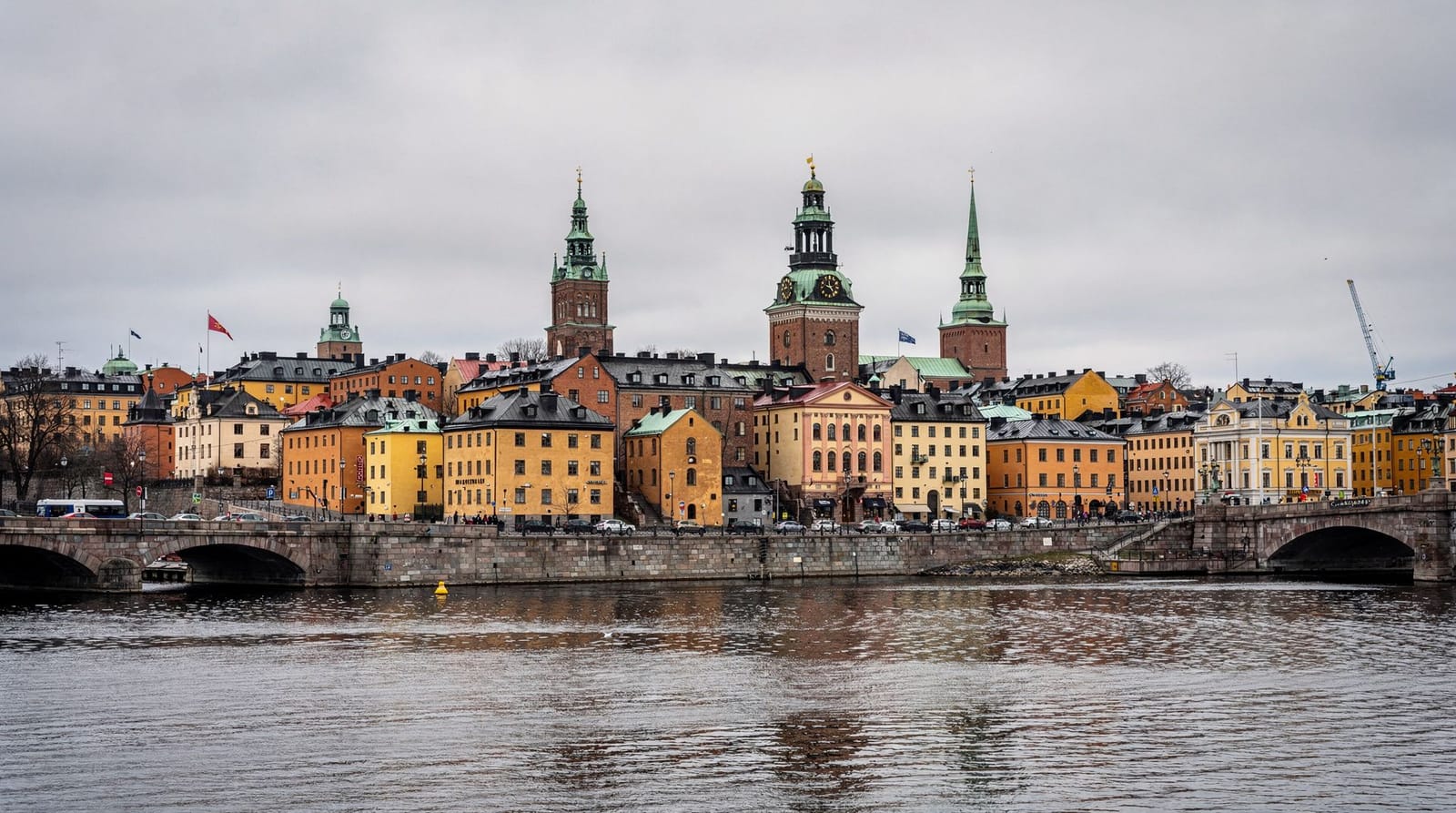
Stockholm’s photographic character is defined by water, colour, and light. The city sits at the intersection of lake and sea, with islands that create reflective surfaces at almost every angle. The coloured facades of Gamla Stan’s medieval houses — ochre, terracotta, dark red, faded yellow — are the most immediately recognisable visual identity. The elevated viewpoints of Södermalm translate the city’s island geography into sweeping panoramas.
| Where | Södermalm, Gamla Stan, Kungsholmen, Djurgården |
| Cost | Free at all outdoor spots; Skansen entry for the hilltop view (price varies by season, see skansen.se) |
| Time needed | 2–3 hours for the core Gamla Stan/Södermalm loop |
| Getting there | T-bana to Slussen, Gamla Stan, or Mariatorget |
| Best time | Early morning (7–9am) or summer golden hour (8:30pm+) |
Light quality is exceptional in Stockholm, particularly in summer. The high northern latitude (59°N) means golden hour stretches for 45–60 minutes before sunset, compared to 15–20 minutes in southern Europe. In June, the sun barely sets at all — the sky stays ambient until past midnight. This matters enormously for photography: you have far more time in the best light than you would in comparable cities further south.
This guide gives the practical information needed to reach each location, understand its best timing, and use it well photographically.
The top photo locations
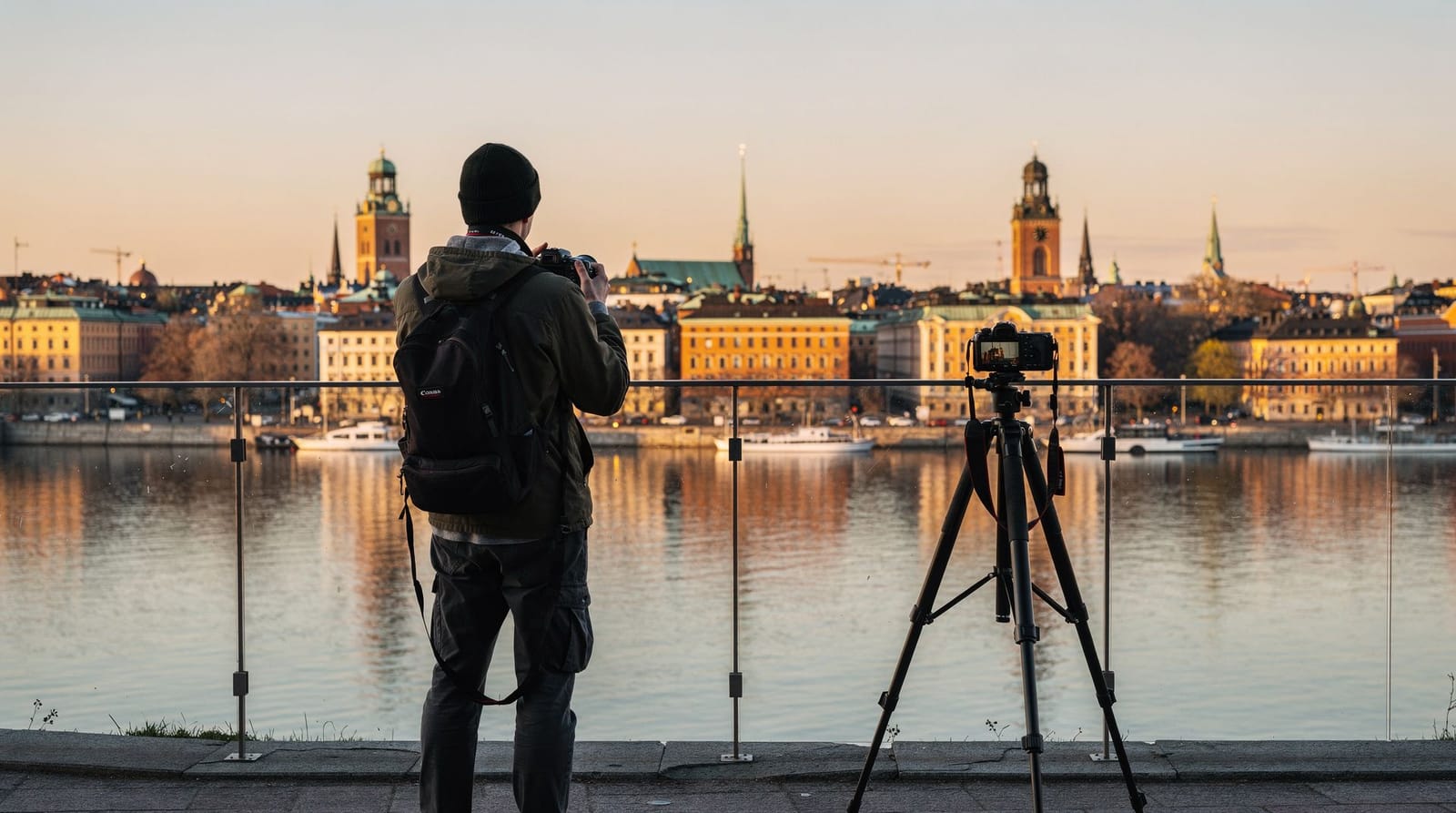
1. Monteliusvägen — the signature view
What it is: A 500-metre wooden promenade along the cliff edge of Mariaberget in Södermalm, looking north over Riddarfjärden to the City Hall, Gamla Stan’s spires, and Kungsholmen’s residential blocks.
Best timing: Evening golden hour in summer (approximately 8:30–9:30pm in June, 7:30–8:30pm in September). The City Hall’s tower catches the last light and can reflect in the water below. Morning is also good (east-facing sections); the full promenade faces roughly north.
Getting there: T-bana to Slussen (red/green line) → take the lift or stairs up to Katarinavägen → walk west to Bastugatan → the promenade entrance is at the junction. 15 minutes from T-Centralen total.
Practical photography notes:
- Best composition: City Hall framed between the railing posts, shot at 35–50mm equivalent
- Water reflections: best when Riddarfjärden is calm (mornings, windless evenings)
- Crowds: heavy from 6–9pm in July–August; early morning (7–9am) is much quieter
- Accessibility: the promenade is elevated and requires the climb from Slussen
What makes it Instagram-specific: The promenade railing provides a consistent compositional element. The view is already framed by the design of the space — your camera position is essentially guided by the promenade’s direction. This makes it easy to achieve good compositions even for casual photographers.
2. Stortorget — the colourful facades
What it is: Gamla Stan’s main square, ringed by tall merchant houses in terracotta, ochre, dark red, and faded yellow. One of the most-photographed squares in Scandinavia.
Best timing: Early morning (7–9am) before the tour groups arrive. The eastern facade catches morning light well. Midday light is harsh and the square is crowded.
Getting there: T-bana to Gamla Stan station (red/green line), then 5-minute walk south into the island’s centre.
Practical photography notes:
- Best composition: Shoot from the centre of the square looking south or north along the tall building face. A wide lens (24–28mm equivalent) gives the full facade height.
- The fountain in the centre catches light but can clutter the composition if you are shooting the buildings — either include it deliberately or position to exclude it
- The square is small enough that a full-frame wide lens from one side covers the facing buildings completely
Crowd management: On summer days, the square is full from 10am. The best window for empty-square shots is 7:00–8:30am. Otherwise, accept the people as part of the image — the liveliness of the square is part of its visual character.
3. Mårten Trotzigs Gränd — the narrow lane
What it is: Sweden’s narrowest street at 90 centimetres, a stepped lane descending through Gamla Stan, 36 metres long.
Best timing: Early morning for the empty lane effect. By 10am there are enough visitors that achieving an empty shot requires patience.
Getting there: From Stortorget, walk west towards Västerlånggatan. The entrance to Mårten Trotzigs Gränd is about halfway along, signed with a small plaque. It is easy to miss the first time.
Practical photography notes:
- Best composition: Shot from the top looking down the steps, with a 35–50mm equivalent lens. The converging walls create strong leading lines.
- Light: The lane is shaded most of the day; direct sun only at specific times depending on season. Diffuse morning light from above gives the most even illumination.
- The standard shot: a person (or empty lane) framed by the 90cm width with the steps extending into the frame. Adding a splash of colour (a red bag, a yellow jacket) helps the image read quickly.
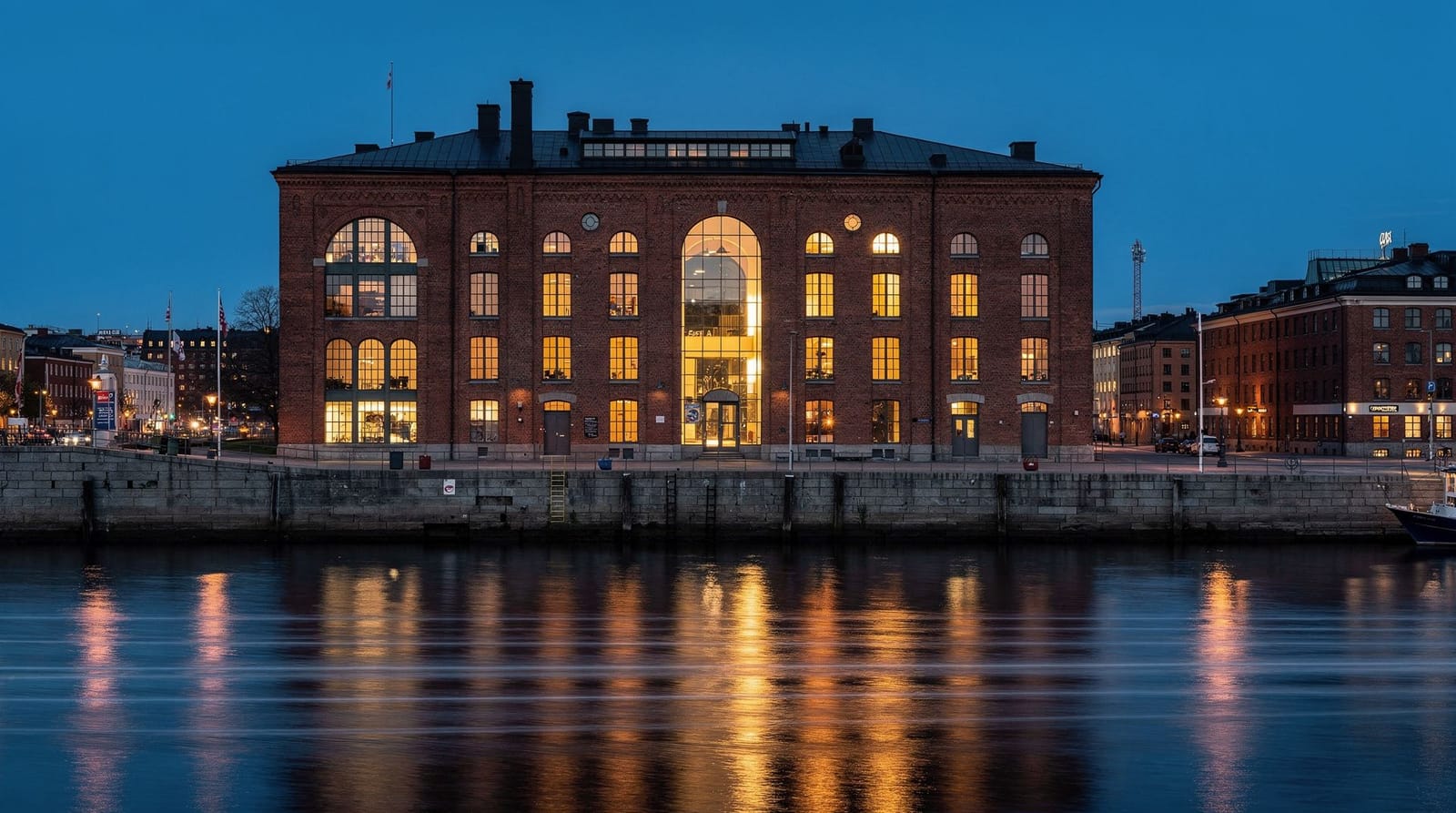
4. City Hall (Stadshuset) from the water
What it is: Stockholm’s City Hall, a 1923 brick tower on Kungsholmen, photographed from the water (Riddarfjärden) — the classic “Stockholm postcard” composition.
Best timing: Sunset from the Södermalm shore (Monteliusvägen or Söder Mälarstrand) looking northwest at the tower catching last light. Alternatively, from a kayak or boat on Riddarfjärden for a water-level composition.
Getting there (on land): From Söder Mälarstrand (the waterfront path below Södermalm’s cliff), looking northwest. Access from Slussen walking west.
Getting there (on water): Kayak rental from Skeppsholmen or Djurgårdsbrunn; the City Hall is visible from the water within 30–60 minutes of paddling west.
Practical photography notes:
- The tower’s slim profile works best at medium telephoto (85–135mm equivalent) from the south shore
- Water reflection requires flat, calm conditions — mornings or evenings when wind has dropped
- The red-brick colour deepens considerably at golden hour — worth waiting for this light specifically
If you would rather not organise your own boat, a sunset kayak outing on Lake Mälaren puts you at water level for exactly this composition. For the building itself, the Stockholm City Hall guide explains what you are looking at and how to see the inside.
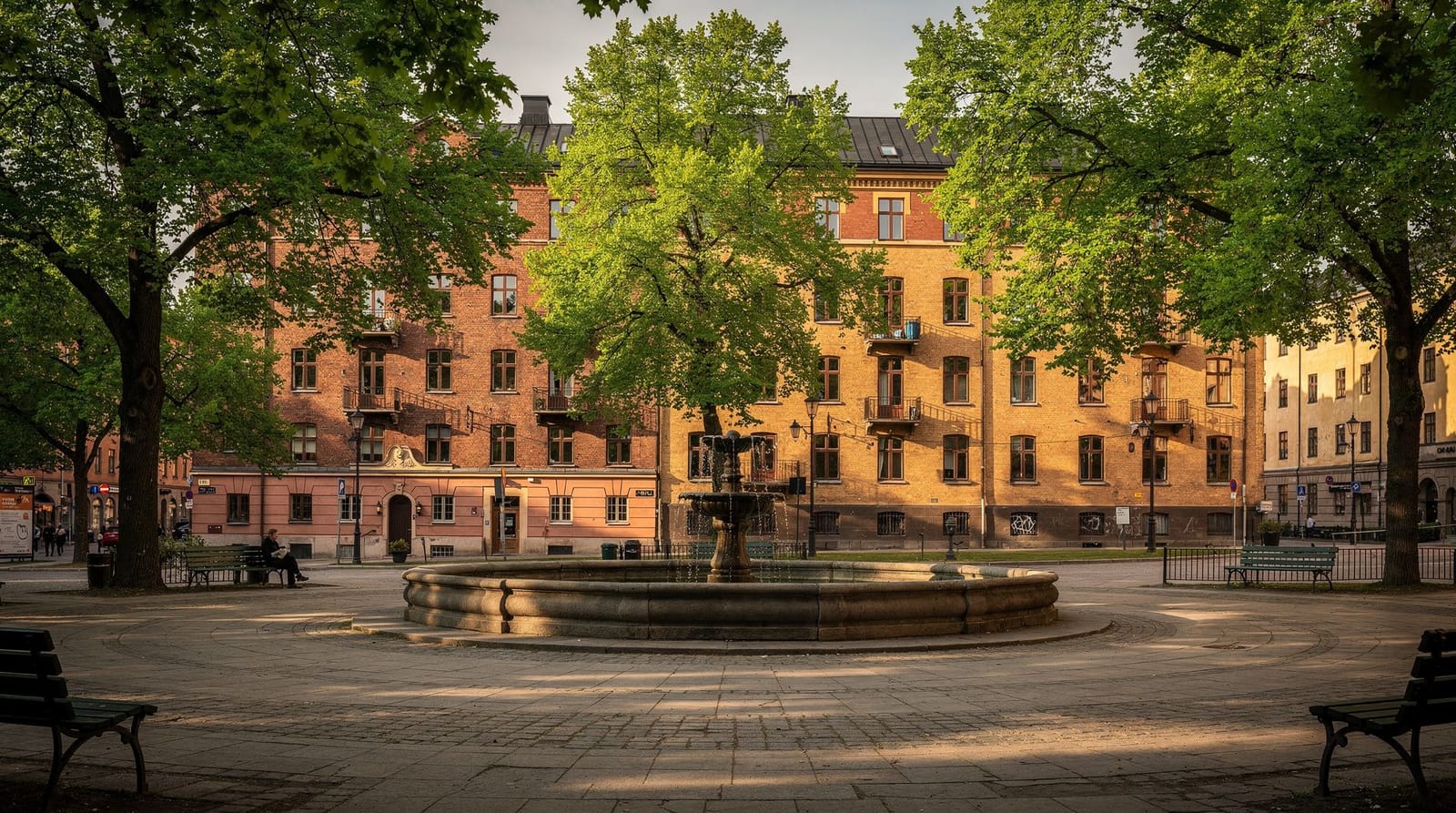
5. Mariatorget — swans and reflections
What it is: The main square of western Södermalm, with a central fountain, tree-lined paths, and in the right seasons, swans nesting in or near the fountain. A calmer, more local-feeling composition than the Gamla Stan shots.
Best timing: Spring (April–May) for swan activity near the water; any morning in summer for the classic tree-shadow and fountain composition. The square is also excellent in autumn when the leaves turn.
Getting there: T-bana to Mariatorget (red line), exit immediately into the square.
Practical photography notes:
- The fountain is the central compositional element; surrounding trees frame it naturally
- The square’s cafés have outdoor terraces — café culture shots work well here
- Best approach: walk the square’s circumference first to find the angle with best light and least clutter
6. Skansen hilltop at golden hour
What it is: The open-air museum on Djurgården occupies a hill with views over the surrounding water and the inner city. The hilltop at sunset gives a broad panorama that includes both Gamla Stan’s skyline and the archipelago direction.
Best timing: Golden hour before closing time (Skansen closes at 6pm outside peak season; later in summer — check current hours). Sunset from the hilltop café area is excellent in June and July.
Getting there: Enter Skansen (adult price varies by season; see skansen.se) and walk uphill to the viewing area near the Seglora Church and the open-air farm section. The ascent is about 10 minutes from the main gate.
Practical photography notes:
- The broader panorama works with a wide lens; specific compositions of the museum buildings below work with longer telephoto
- Late August golden hour is particularly warm in colour tone
Since the hilltop sits inside the museum, a Skansen admission ticket is the practical way to secure the shot. The Skansen open-air guide covers what else to see once you are inside, and the Djurgården walking route links the hilltop with the canal shot below.
Book a Stockholm Instagram photography tourLess obvious locations worth knowing
Djurgårdskanalen at dawn
The canal separating Djurgården from the mainland, photographed from the Djurgårdsbrunns Kanotuthyrning area at dawn (before 6am in June), is essentially empty of people and catches east-facing morning light on the museum buildings. A 25mm lens pointing east along the canal gives strong leading lines into the frame.
Strandvägen with the wooden boats
Östermalm’s main boulevard photographed from water level (or at low angle looking along the moored boats) gives a composition unique to Stockholm. Best in late afternoon when the western light hits the wooden boat hulls and the apartment facades behind them.
Fjällgatan (eastern Södermalm)
The cliff-edge street on the east side of Södermalm, above Fotografiska. Less visited than Monteliusvägen; faces east towards the archipelago rather than north towards the city. Good for morning light and for compositions that include the inner archipelago islands rather than the city centre.
Gamla Stan from the Söder Mälarstrand
Walking west along the Södermalm waterfront path (Söder Mälarstrand) gives a series of compositions of Gamla Stan and the City Hall visible to the north across the water. The best angle for including both Gamla Stan’s church spires and the City Hall tower is approximately midway along the Söder Mälarstrand path.
Building a photo walk around Gamla Stan and Södermalm
Most of this guide’s strongest locations cluster around two adjacent districts, which makes a single half-day photo walk realistic without much backtracking. Start in Gamla Stan for the early morning window (Stortorget and Mårten Trotzigs Gränd both want the 7–9am light before crowds arrive), then cross to Södermalm via Slussen and work up to Monteliusvägen for the water views. The Gamla Stan neighbourhood deep dive and Södermalm neighbourhood deep dive both go well beyond photography — useful if you want to understand what you’re shooting, not just how to frame it.
If you have a full day, Djurgården extends the walk naturally: the Skansen hilltop and the Djurgårdskanalen dawn shot both sit inside the island covered by the Djurgården neighbourhood deep dive. Östermalm’s Strandvägen composition pairs with the Östermalm neighbourhood deep dive if wooden boats and grand apartment facades are your focus.
Planning around weather, crowds and timing
Photo plans in Stockholm depend on light more than on any single location, so it helps to read a few companion guides before fixing your days. The best time to visit Stockholm guide shows how the seasons shape your options, and Stockholm in summer and the white nights explains why the evening window is so long in June and July. If you travel when the leaves turn, the autumn colours guide points to the places where the colour is strongest. In winter, the Stockholm winter guide helps you plan around the short days and the Christmas lights.
Rain does not have to cancel a photo day. Wet cobbles in Gamla Stan and wet stone in the lanes often photograph better than dry ones, and when the weather is truly bad the rainy-day museum options give you interiors to shoot instead.
Fitting photo stops into a wider trip
The spots in this guide slot easily into a longer visit. Use the Stockholm in 3 days overview or the three-day first-timer itinerary as a frame and place the early-morning shots on the days you start near Gamla Stan. If you only have a short stay, the Stockholm in 24 hours itinerary shows how to combine a sunrise or sunset viewpoint with the main sights. For getting between viewpoints cheaply, the SL pass guide explains how public transport works, and the self-guided walking guide suggests routes on foot. For a view from above the city, see Ericsson Globe and SkyView. A reminder for the early hours: the Gamla Stan destination page and the Södermalm destination page cover what is open when you finish shooting and want breakfast.
Photographing the archipelago from the water
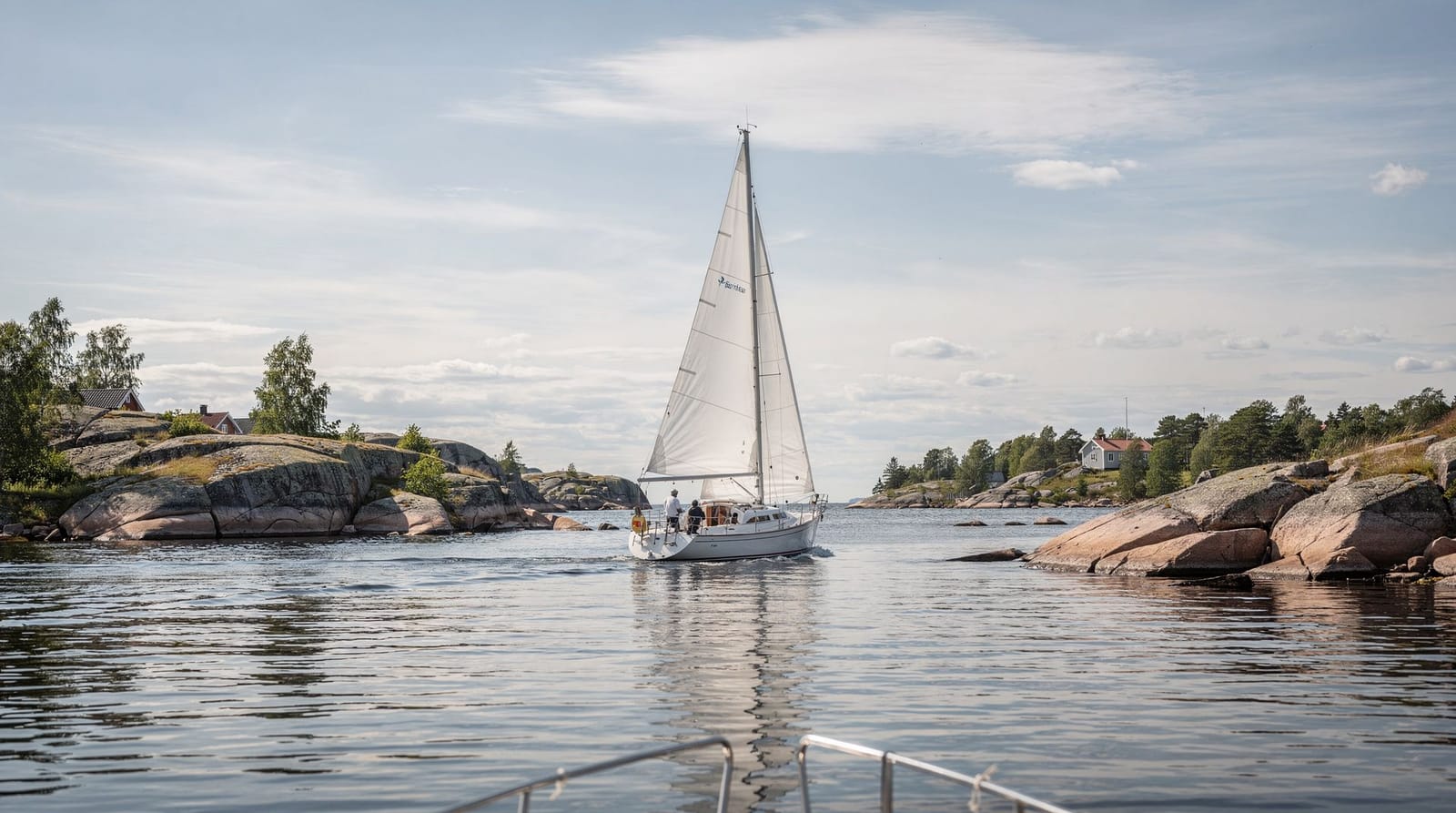
Beyond the city itself, the Stockholm archipelago offers a completely different photographic register — granite islands, open water, and light that behaves differently once you’re away from the city’s buildings and reflective canals. A short sailing trip gets you shots that no shoreline vantage point in the city can replicate. See sailing in the Stockholm archipelago for how to combine a photography-focused outing with an actual sail, including which routes give the best late-afternoon light on the water.
Seasonal photography notes
| Season | Light quality | Best conditions |
|---|---|---|
| June | Golden hour 9–10:30pm; midnight ambient | White nights, dramatic long light |
| July | Similar to June; busiest crowds | Go early morning for empty shots |
| August | Shortening days; warmer, amber light | Excellent overall |
| September | Sharpest light; autumn colours begin | Best photography month overall |
| December | Low-angle light 10am–2pm; Christmas lights | Atmospheric but brief |
Frequently asked questions about Stockholm photography spots
What is the best time of day to photograph Gamla Stan?
Early morning (7–9am) for empty streets and good light on the eastern facades. Evening (golden hour) for warm light on the western side. The key is avoiding the midday tour group rush from 10am to 5pm.
Can I take drone photos in Stockholm?
Drone photography in central Stockholm is subject to Swedish airspace regulations (Transportstyrelsen approval required for many inner-city locations). Most of the central areas (including Djurgården and above Gamla Stan) require specific authorisation. Check the Transportstyrelsen website before flying; unauthorised drone use results in significant fines.
Is there a guided photo tour of Stockholm?
Yes — see the Stockholm photo tour guide for details on guided instructional photography tours. Stockholm Photo Tours (a dedicated photography tour operator) runs 3-hour instructional tours (check the operator’s site for current prices), covering composition and technique alongside the best locations.
What camera equipment do I need for Stockholm photography?
Most of the locations in this guide work well with a smartphone camera if used at the right time of day (the golden hour timing matters more than equipment for most shots). For the water reflections and telephoto shots (City Hall from the south shore), a basic mirrorless or DSLR with a 24–85mm zoom covers everything. A tripod is useful for the twilight shots in June when light is beautiful but levels are low.
Can I photograph inside Stockholm’s museums?
Photography policies vary by museum. The Vasa Museum allows photography without flash (no tripods). ABBA The Museum allows personal photography throughout. Skansen allows photography everywhere outdoors; some indoor buildings have restrictions. The Nordiska Museet has restrictions in some gallery rooms. Check at the entrance or on the museum website before visiting.
Which Stockholm neighbourhood has the most photo spots per square kilometre?
Gamla Stan and Södermalm, by some distance — both are compact, walkable, and dense with distinct compositions within a few hundred metres of each other. See the Gamla Stan and Södermalm neighbourhood guides for a fuller sense of each district beyond the specific photo spots listed here.
Is it worth taking a boat out just for photography?
If you have half a day to spare, yes. The archipelago’s granite islands and open water light are visually distinct from anything in the city centre, and a short sail captures a side of Stockholm that no shoreline viewpoint reaches. See sailing in the Stockholm archipelago for options.
Top experiences
Bookable activities with verified prices and instant confirmation on GetYourGuide.