Stockholm Old Town walking tour — which company?
Gamla Stan has more walking tour operators per square cobblestone than anywhere else in Stockholm. On a Saturday morning in August, from our table in a café on Österlånggatan, we counted four separate tour groups pass within twenty minutes — flags raised, guides talking, tourists arranged in loose formations behind them.
We spent a week systematically taking Gamla Stan walking tours and then comparing notes. Here’s what we found.
| Best for accuracy | Small-group paid tours (200-280 SEK/person) |
| Best for depth | Private 2-hour Old Town tour, customisable route |
| Skip if rushed | Free tours in peak season — group sizes can hit 40 |
| Best time | Morning (9-11 AM), before free-tour crowds arrive |
| Length | Standard tours 2-2.5 hours; self-guided 1.5-3 hours |
What separates a good Gamla Stan tour from a mediocre one
First, the context: Gamla Stan is small. The island is about 600m north to south and 400m east to west at its widest. The main sights — Stortorget, the Royal Palace, Storkyrkan, Mårten Trotzigs Gränd, the German Church — are all within 10 minutes’ walk of each other. The historical density is extraordinary but the geographical density means every tour covers similar ground.
What separates tours:
-
What the guide knows and how they share it. The basic facts about Gamla Stan are on every tourist board. The interesting material — specific stories, documented events, the social history behind the architecture, the specific human lives in the buildings — requires a guide who has actually done the research.
-
Group size. A group of 8-12 is a conversation. A group of 30 is a lecture. Small is dramatically better.
-
Whether the guide speaks English as their second or third language. Most good Stockholm guides speak excellent English. Some speak it well enough to communicate facts but not well enough to tell a story. This matters on a 2-hour walking tour.
The formats available
Private tours: The premium option. A guide and your party only. Can be customised. Costs significantly more but the quality of interaction is incomparable. For two or more people staying several days, the per-person cost often makes sense.
Small-group paid tours: Group capped at 12-15. Fixed price (typically 200-280 SEK per person). Consistent quality because guides are paid regardless of tips. Most of our positive experiences came from this format.
Free tours: Variable group sizes (we saw groups of 40 in August). Guide quality varies. The tip structure creates incentives that align with entertainment rather than accuracy. We’ve described our experience with these at length in our walking tour rant.
Self-guided: Apps, audio tours, printed itineraries. Low cost, maximum flexibility, requires self-direction. Works well for repeat visitors; less good for first-timers who want context delivered rather than searched for.
The specific tours we’d recommend
For accuracy and atmosphere combined: The Gamla Stan secrets tour with fika option is the format we’ve returned to most. A guide who specialises in Gamla Stan rather than generic Stockholm history, a route that goes into the less-visited parts of the island (off Prästgatan, through the courtyards), a fika stop that’s integral to the experience rather than bolted on. Group size controlled.
For a private experience: The 2-hour private walking tour of Old Town is the right base from which to specify what you want. Tell the guide you want the hidden streets and the dark history rather than the main sights, and a good private guide will build accordingly.
For first-timers who want a genuine overview: The small-group Old Town walking tours that run twice daily cover the essential material competently and don’t overpromise.
What to avoid
Any tour that starts on Västerlånggatan. This is the main tourist shopping street of Gamla Stan, lined with Viking-themed souvenirs, overpriced restaurants, and crowds. A tour that begins here is oriented toward the tourist version of the island rather than the actual one.
Tours with group size over 20. Check the booking page. If it doesn’t specify a maximum group size, ask.
July and August on weekends without booking. The walk-up free tours in peak season attract enormous groups. Book in advance for any format.
Stockholm secrets of Gamla Stan guided tour with fika option Stockholm 2-hour Old Town private walking tourOur Gamla Stan guide covers the area in depth, with or without a tour. For the full walking tour comparison across all Stockholm neighbourhoods, see walking tours guide.
What a good Gamla Stan guide actually covers
For reference: here’s the material that distinguishes an excellent Gamla Stan tour from a decent one. Use this as a checklist when reading reviews or booking.
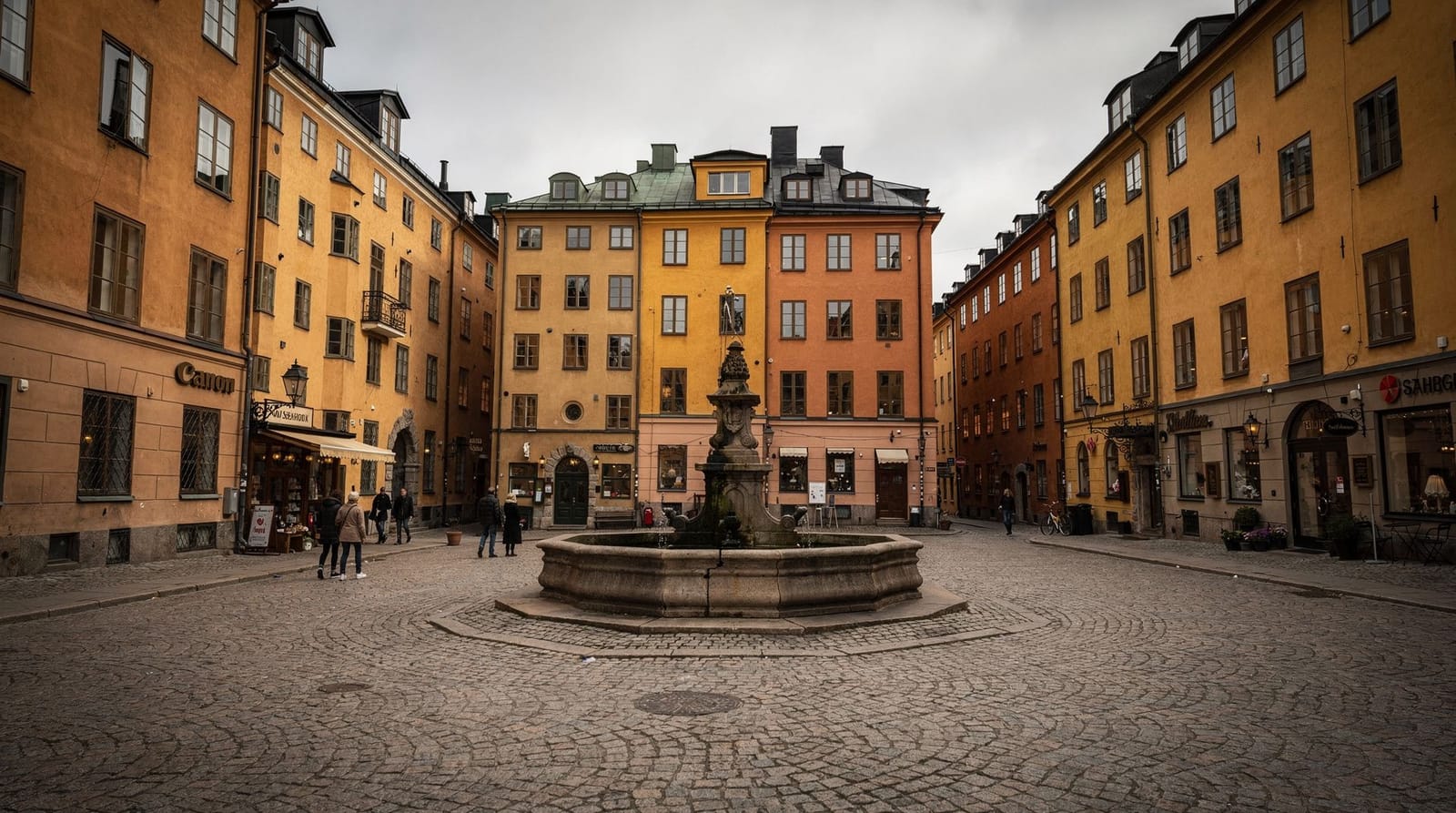
The basics (every tour covers this): Stortorget’s history as a marketplace and the site of the 1520 Stockholm Bloodbath, the iron ring embedded in the well (where cattle were tethered at market), the multicoloured building facades, the Nobel Museum.
What the better tours add:
The Stockholm Bloodbath deserves more than a sentence. In November 1520, Danish King Christian II invited Swedish nobles to a three-day feast at the palace above Gamla Stan, then arrested and executed approximately 90 of them in the square below — bishops, noblemen, and merchants — over two days. The blood running across Stortorget changed Swedish politics permanently. It led directly to Gustav Vasa’s revolt, the founding of an independent Swedish state, and the beginning of the Vasa dynasty that built the warship that now sits in the museum on Djurgården. A tour guide who traces this thread is giving you Stockholm’s actual story, not just its surface.
The German influence on Gamla Stan. The German Church (Tyska kyrkan) on Svartensgränden was built in 1638 for Stockholm’s large German merchant community. The Deutsche Schule (German school) was established here in the 17th century. For two hundred years, much of Stockholm’s commerce was conducted by German-speaking merchants who lived in the lanes around the church. This history is part of why Gamla Stan’s architecture looks slightly different from the rest of the city.
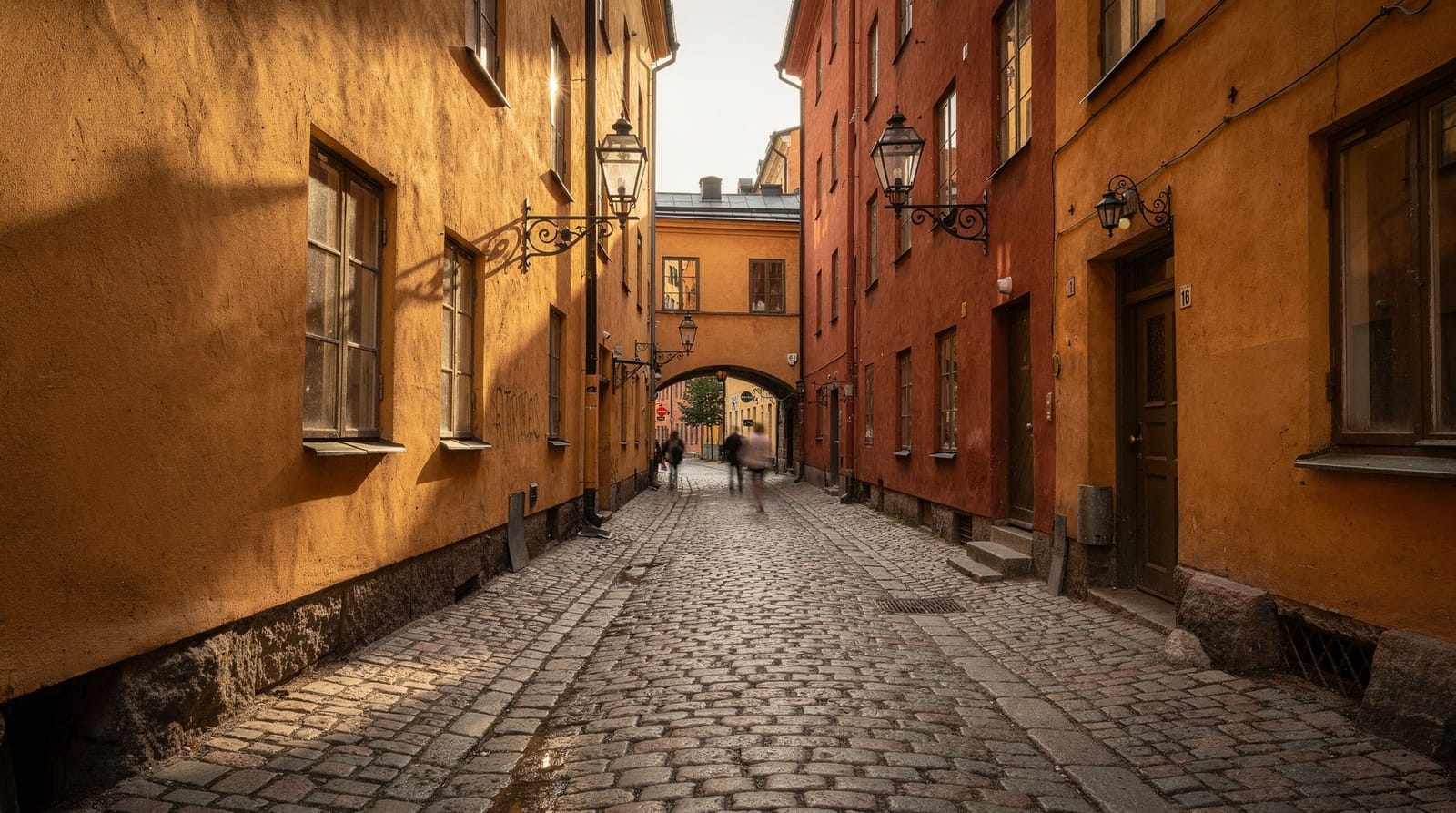
The specifics of medieval urban life. What the street layout tells you about the original function of the lanes (Prästgatan was the priests’ street, running parallel to the merchants’ streets to keep them separate). How the buildings were shared among multiple families per floor, accessed via a single staircase with a communal well in the courtyard.
A guide who mentions only the famous landmarks and not the social history of why they exist: Adequate.
A guide who can answer a follow-up question about the bloodbath, or the German community, or what the iron ring in the well was for: Excellent.
The time-of-day question
Morning tours (9-11 AM) have the best light and the fewest competing tourist groups. The popular Gamla Stan free tours typically start at 11 AM or later, creating afternoon crowds in the narrow lanes.
If you’re booking a paid tour, request or look for morning availability. If you’re doing a self-guided walk, leave your accommodation by 9:30 AM.
Format comparison at a glance
| Format | Group size | Cost | Best for |
|---|---|---|---|
| Private | Your party only | Highest, worth it for 2+ people | Customised route, follow-up questions |
| Small-group paid | 12-15 | 200-280 SEK/person | Consistent quality, reliable |
| Free (tip-based) | Up to 40 in peak season | Tips expected | Budget, if group size is checked first |
| Self-guided | N/A | Low | Repeat visitors, flexible pace |
Themed alternatives to the standard history tour
If you’ve already done a standard Gamla Stan history walk, or want something with a different angle, a ghost walking tour covers the same lanes with a folklore and darker-history focus, usually in the evening when the atmosphere does more of the work. For readers who want the historical material in written form before or after a tour, our Gamla Stan medieval secrets guide covers much of what a good guide would tell you, and the Gamla Stan neighbourhood deep dive goes beyond the tourist core into the residential lanes most tours skip.
Stockholm Gamla Stan ghost walking tourAfter the tour: where to eat
Most Gamla Stan tours end somewhere central, which is either convenient or a trap depending on where you eat next. Our Gamla Stan restaurants guide is honest about which places near the main tour routes are worth it and which are coasting on foot traffic, and the Västerlånggatan restaurants guide covers the specific street to be cautious on — the same street we’d steer you away from starting a tour on for the same reason.
Reading a real review before booking
Beyond the format comparisons above, our Gamla Stan walking tour review documents a specific booked experience in full, including what the guide covered and what we’d change about the route — useful if you want a concrete account rather than general category advice.
Frequently asked questions about Gamla Stan walking tours
How long does a typical Gamla Stan walking tour take?
Standard tours run 2-2.5 hours. Private tours can be adjusted to your pace. Self-guided walks covering the main sights take 1.5-3 hours depending on how much you stop and read.
Can I do Gamla Stan on foot without a tour?
Absolutely. Gamla Stan is one of the better self-navigable areas in Stockholm — it’s small enough that you can’t get permanently lost, and the main sites are all within easy walking distance. Use a printed map or app for the initial orientation, then follow the lanes that look interesting.
Is the free walking tour actually free?
No upfront cost. Tips expected. See our separate post on the tip speech reality if you’re considering a free tour.
Is a ghost tour a good alternative to a standard history tour?
Yes, especially if you’ve already done a general Gamla Stan history tour. It covers similar streets with a folklore and darker-history angle, usually in the evening, and works well as a second, different Gamla Stan experience rather than a substitute for the first.
Where should I eat after a Gamla Stan tour?
Away from Västerlånggatan, generally. Our Gamla Stan restaurants guide covers which nearby places are genuinely worth it versus which are coasting on tour-group foot traffic.