Midsummer in Stockholm — a survival guide from experience
We arrived at Arlanda on June 20th. Midsommar Eve. We knew it was a holiday. We didn’t know it was the holiday — the one where Sweden more or less stops.
The supermarket nearest our apartment was closed. The next one was closed. The one we found open was operating on a skeleton staff, and the shelves that usually hold fresh food were half empty by 2 PM because the suppliers weren’t running. The restaurant we’d booked online had sent a cancellation email to our spam folder that morning: closed for Midsummer. The backup restaurant was also closed.
We ate chips and a jar of pickles for dinner and watched fireworks from the apartment window.
This guide is written so you don’t do what we did.
| When | the Friday between 19 and 25 June (solstice) |
| What closes | most shops, most restaurants, reduced transport |
| What stays open | Skansen (10:00–22:00 on Midsommar Eve 2027); other attractions vary, check each |
| Where locals go | the archipelago and countryside summer houses |
| Best move | shop and book restaurants the day before |
What Midsummer actually is
Midsommar in Sweden falls on the Friday between 19 and 25 June — the solstice. It is not a minor public holiday. It is, practically speaking, more important than Christmas for many Swedish families. The entire country goes to the countryside. Stockholm empties.
The celebration is primally tied to the land: maypoles decorated with leaves and flowers, dancing, singing, picking midsommar flowers to put under your pillow (seven varieties, said to bring prophetic dreams), the white nights when it never fully gets dark. It is genuinely beautiful if you see it done properly. It is genuinely bewildering if you arrive expecting a functioning European city.
What closes
Almost everything. Specifically:
Shops: Most supermarkets, all smaller shops, most pharmacies. The major central Hemköp or ICA stores in Norrmalm may open reduced hours — check before the day.
Restaurants: The majority of Stockholm restaurants close for Midsommar Eve and Midsommar Day (sometimes both). Tourist-facing places in Gamla Stan and on Drottninggatan may stay open but often run reduced menus.
Transport: SL runs a holiday timetable — fewer departures, especially on Midsommar Day. Waxholmsbolaget ferries run, but check the specific schedule, because popular routes fill up.
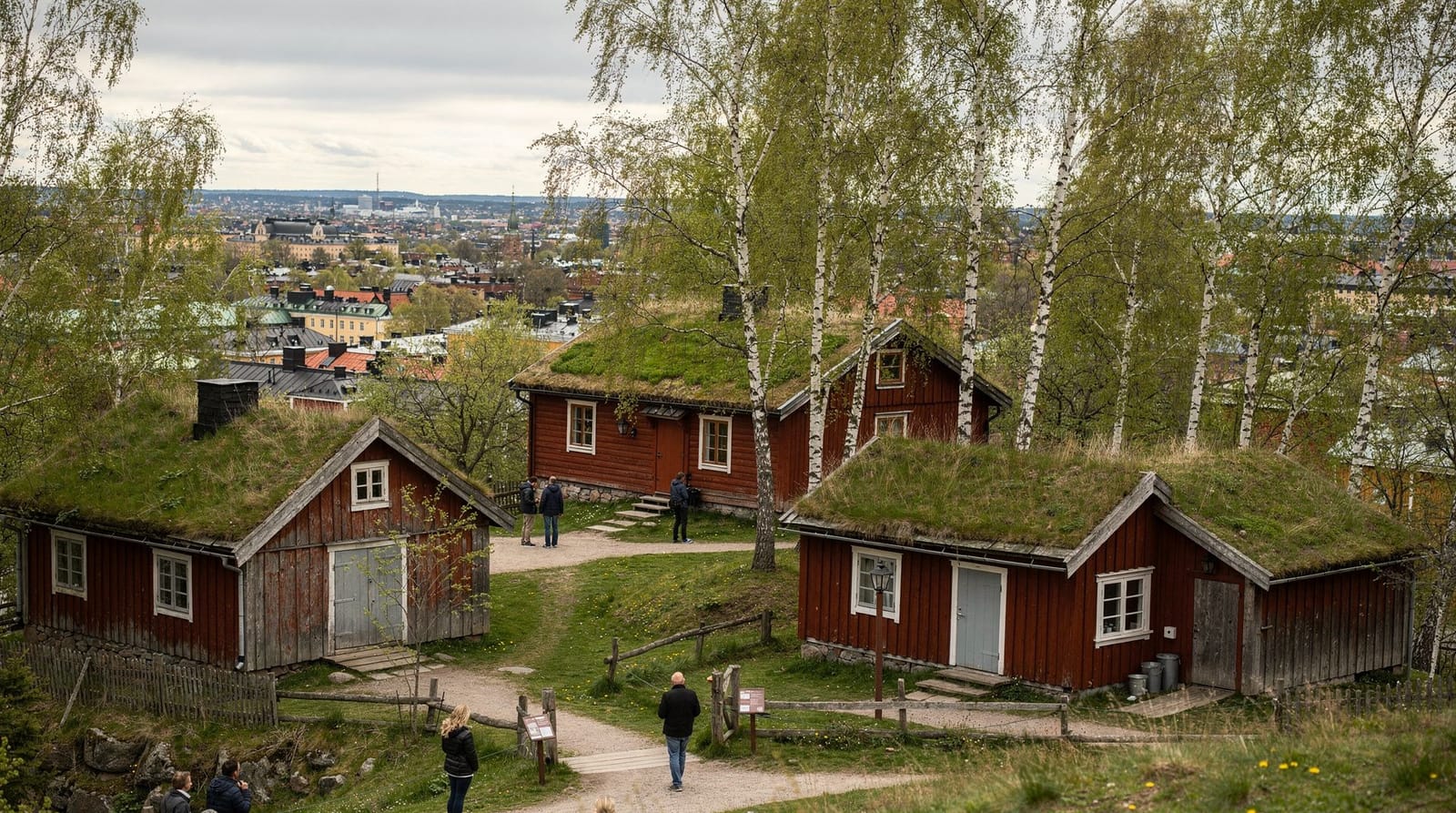
Attractions: Check each one individually. Skansen is open (10:00–22:00 on Midsommar Eve 2027); for other attractions such as Vasa and the ABBA Museum, check the hours individually. Skansen actually hosts a major Midsommar celebration — it’s one of the better places in the country to see it.
Museums and galleries: Variable. Government-run institutions may close; private ones typically stay open.
What actually works
Go to Skansen. The open-air museum on Djurgården hosts the largest public Midsommar celebration in Sweden — maypole raising, folk dancing, traditional music, flower crowns for sale near the entrance. It’s genuinely magical if you accept it for what it is: a large, slightly commercialized version of something very real. The crowds are significant but manageable if you arrive before noon.
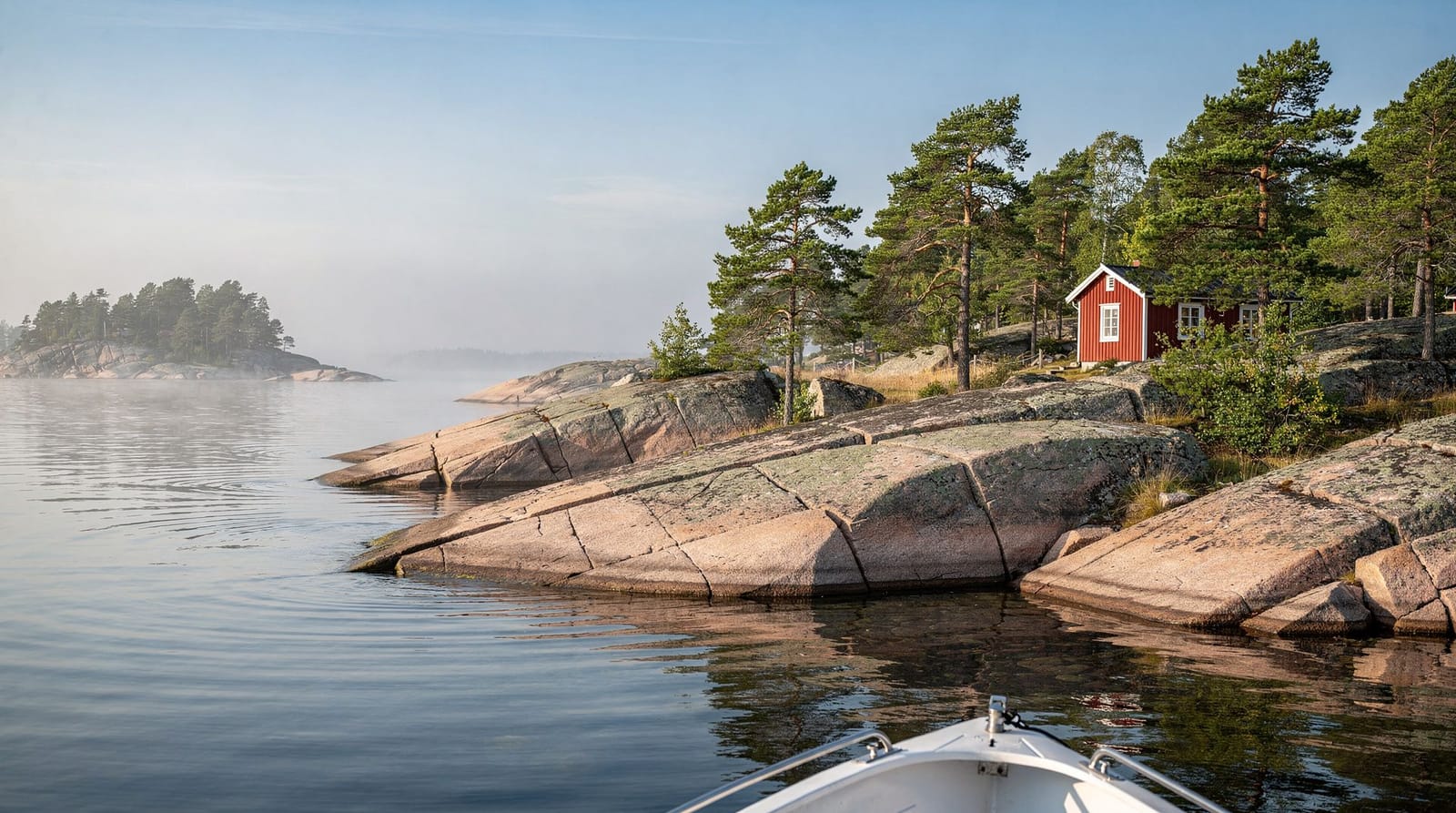
Take a ferry. The archipelago is where Stockholm goes for Midsommar. This means ferries run and are full of locals going to their summer houses, which is its own kind of experience. Book early if you want a specific time; the Strömma tourist ferries to Fjäderholmarna and the outer islands run on Midsommar, and Fjäderholmarna hosts its own celebration.
Get groceries the day before. Wednesday night or Thursday morning before Midsommar Eve: do your shopping. This is not overstating it.
Book restaurants in advance. The places that stay open — particularly on the waterfront in Södermalm and Östermalm — fill up weeks ahead for Midsommar weekend. This is one of the few Stockholm moments where same-day restaurant bookings don’t work.
Hotels are cheaper. Paradoxically, Midsommar weekend can offer relatively good hotel rates compared to the peak July weeks. Stockholm’s own population has left. International tourists thin out because the word has got out. If you don’t mind the operational difficulties, it’s actually a reasonable time to visit.
Getting around when the city slows down
Plan your movements around the holiday timetable rather than hoping for the usual frequency. Our guide to public transport explains how the system fits together, and the SL pass guide is worth a look before you decide whether a pass makes sense on a week with fewer departures. For the boats, Waxholmsbolaget ferries explained and the comparison of Strömma versus Waxholmsbolaget will help you pick the operator that suits your plan.
If you are landing right before the holiday, the Arlanda arrival guide covers the options for reaching the centre, and it is wise to settle your onward route before the shops and counters wind down. Taxis are a poor fallback in the chaos; read about avoiding taxi scams before you are standing at a kerb with no other choice.
The light is extraordinary
This deserves its own section because nothing quite prepares you for it. Around Midsommar, Stockholm has approximately 18.5 hours of daylight. More relevantly: it never fully gets dark. At midnight, the sky holds a deep blue-grey twilight. At 2 AM, there’s a glimmer on the eastern horizon. By 3:30 AM, it’s brightening again.
Your phone camera will not capture this. Your eyes will, and you’ll remember it.
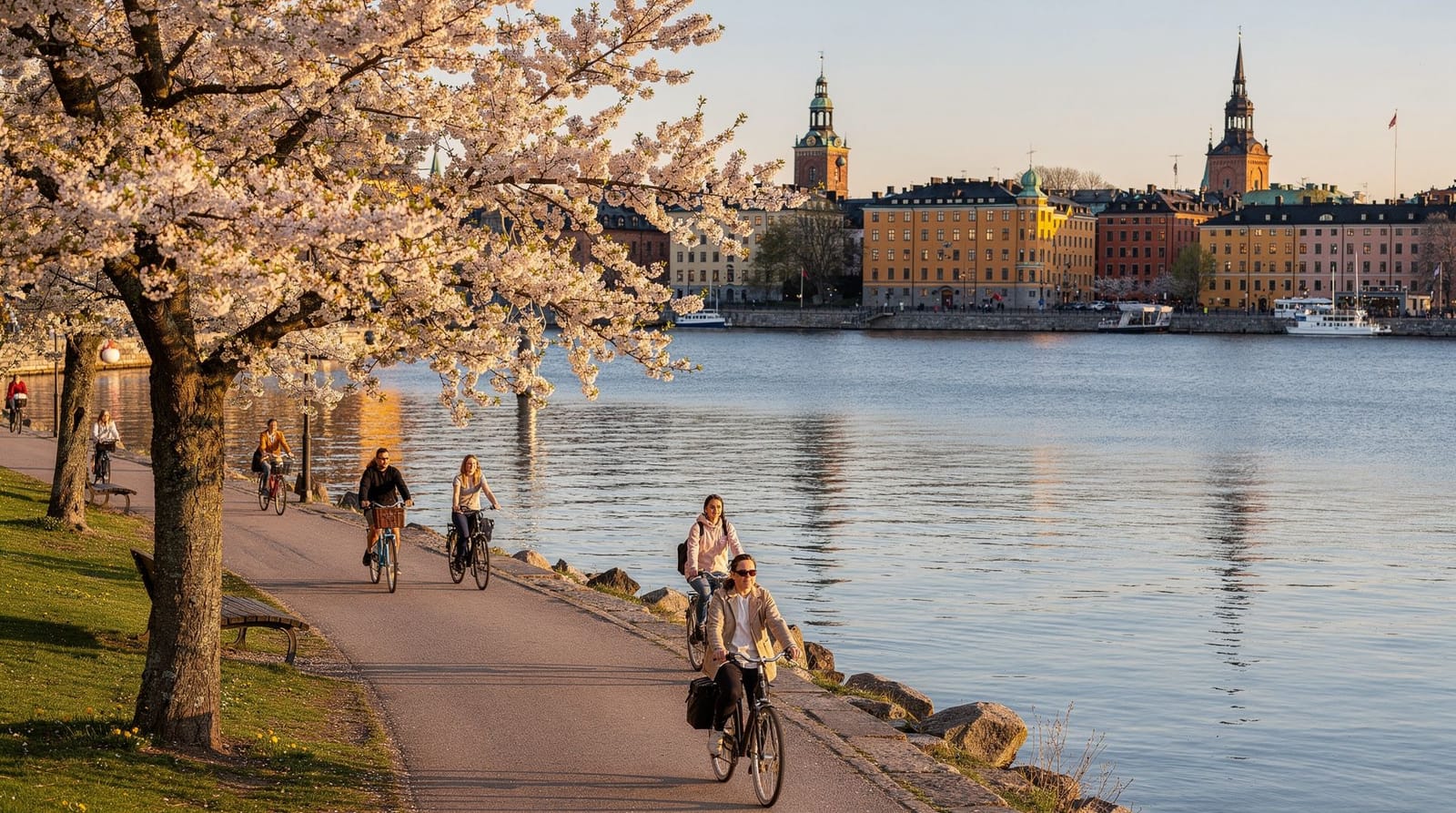
The practical consequence is that your body clock stops working. Dinner at 9 PM in broad daylight feels normal. Walking along Södermalm at 11 PM in what looks like late afternoon feels normal. You will not want to sleep. Take blackout curtains seriously when booking.
A revised plan for Midsommar
If we were doing it again:
Wednesday 23 June 2027: Arrive. Shop. Book the Thursday evening restaurant.
Thursday 24 June: A restaurant that has honoured the booking. Walk along the water after dinner at whatever hour it is — the light will be surreal.
Friday 25 June (Midsommar Eve): Skansen for the formal celebrations (open 10:00–22:00); arrive before noon.
Saturday 26 June (Midsommar Day): Take the ferry to Fjäderholmarna or Vaxholm. Bring a picnic bought the day before. Sit on granite. Swim if you’re inclined. Return to a much quieter Stockholm and enjoy it.
Sunday 27 June: City is coming back to life. Museums open. The weekend crowd has thinned because most Swedes went to the countryside on Thursday and are returning Sunday. This is actually a very good Stockholm day.
Stockholm Midsummer archipelago boat tour with live guide Stockholm guided archipelago boat tour to FjäderholmarnaFor seasonal Stockholm planning beyond Midsommar, our Stockholm seasonal guide covers every month in detail. For Skansen specifically, see our Skansen guide. Our dedicated Midsommar in Stockholm guide has year-specific dates and a fuller list of what’s running, and the Midsommar archipelago cruise guide covers the boat-based options in more depth than we go into here.
What’s open, at a glance
| Category | Status over Midsommar |
|---|---|
| Supermarkets | mostly closed; a few central Hemköp/ICA reduced hours |
| Restaurants | majority closed both days; some tourist-facing ones open reduced |
| Skansen | open; 10:00–22:00 on Midsommar Eve (2027) |
| Other museums (Vasa, ABBA) | check each museum’s hours |
| SL transport | holiday timetable, fewer departures |
| Archipelago ferries | running, but popular routes fill up |
What Midsommar looks like outside the city
Swedes spend Midsommar in the countryside, at summer houses (sommarstuga), on islands. The tradition is deeply rural: maypoles (majstänger) raised in village greens, ring dances around them, the specific flowers (seven varieties picked Midsommar Eve and placed under the pillow), the herring and new potatoes of the traditional meal.
Visitors who want to see Midsommar authentically — not the Skansen version but the actual village celebration — have two options: either know a Swedish family well enough to be invited to their sommarstuga, or find a rural celebration outside the city. Villages throughout the Stockholm archipelago hold their own Midsommar celebrations; Grinda island has one that is accessible to visitors who’ve planned ahead, and Fjäderholmarna, being closer to the city, is the easiest archipelago Midsommar to reach without an overnight stay.
The honest truth is that for most international visitors, the Skansen celebration is the right choice — it’s designed to be accessible, it represents the tradition authentically (even if at scale), and the alternative requires connections that most visitors don’t have on a first visit.
The food tradition
Midsommar has specific food: new potatoes (färskpotatis) with dill, pickled herring (several varieties — classic, mustard, garlic at minimum), soured cream (gräddfil), and hard-boiled eggs. Strawberries and cream for dessert. Aquavit (snaps) for the adults, with specific Midsommar drinking songs.
This meal structure appears in Skansen’s food offerings during Midsommar and in the open-air restaurant areas that do stay open. If you can eat this meal once, in any form, during Midsommar weekend, the trip is complete.
The herring is important. Swedish pickled herring (sill) is nothing like the British rollmop; it’s brined and then seasoned in various marinades that range from classic vinegar-and-sugar to more complex flavours. Eating it cold with warm new potatoes and dill is the combination that makes sense of it.
The music dimension
Midsommar is when traditional Swedish folk music (folkmusik) surfaces in the city. The fiddle (fiol) and the nyckelharpa (a keyed fiddle unique to Sweden) are the characteristic instruments. The ring-dance songs are modal and ancient-sounding in a way that connects to something pre-industrial about Sweden’s self-image.
At Skansen’s Midsommar celebration, there is always folk music — performed by musicians who know the tradition, not as background decoration but as the structural activity around which the dancing happens. Even for visitors who have no particular interest in folk music, the experience of watching several hundred Swedes doing traditional ring dances around a maypole to modal fiddle music at 9 PM in a light that won’t get dark is genuinely extraordinary.
Beyond the weekend itself
Midsommar sits inside the longer stretch of bright summer evenings, and our guide to Stockholm’s summer white nights shows how to make the most of them once the holiday is over. If you are building a longer trip around it, the summer itinerary with the archipelago is a natural companion, and the overview of the archipelago helps you choose which islands deserve your limited ferry time. For a wider view of the Swedish table, the fika culture guide is a good way to fill a quiet afternoon when most restaurants are shut.
Frequently asked questions about Midsommar in Stockholm
Should I avoid Stockholm during Midsommar?
Not necessarily. The city is unusually quiet, prices are manageable, and the cultural event is worth experiencing. The operational challenges (closed shops, limited restaurants) are real but survivable with planning. If your trip can’t flex around them, choose a different week.
When exactly is Midsommar?
The Friday between 19 and 25 June. In 2027 Midsommar Eve falls on Friday 25 June and Midsommar Day on Saturday 26 June.
Is Stockholm’s Midsommar celebration at Skansen worth the entrance fee?
Yes. The Skansen Midsommar is the most comprehensive public celebration available to visitors, with authentic folk culture content rather than tourist performance. Check skansen.se for the current admission price.
Can I still get a restaurant reservation for Midsommar if I’m booking a week ahead?
It’s tight but not impossible. Restaurants that stay open on the waterfront in Södermalm and Östermalm fill up weeks ahead, but options do occasionally open up. Book as early as you can, have a backup (like a Skansen or Fjäderholmarna picnic), and check for late cancellations a day or two out.
Does Midsommar affect hotel prices in Stockholm?
Yes, and usually in the visitor’s favour. With much of Stockholm’s own population leaving for the countryside and international tourism thinning slightly around the holiday, hotel rates over Midsommar weekend are often better than the surrounding peak-July weeks. It’s one of the few upsides to visiting during the shutdown.