Gripsholm Castle and Mariefred — Stockholm's most overlooked day trip
There is a specific category of travel experience: the place you go to because someone mentioned it once, half-expecting little, and which turns out to be the thing you recommend to everyone for the next year. Mariefred and Gripsholm Castle is that place for us in the Stockholm day-trip category.
Most Stockholm visitors go to Drottningholm. Some go to Birka. Fewer go to Mariefred, which requires slightly more logistical effort than either. This is an error.
| Where | Mariefred, 67km southwest of Stockholm on Lake Mälaren |
| Cost | castle entry around 140 SEK; steamship around 275 SEK each way |
| Time needed | full day |
| Getting there | SJ train + bus (90 min, year-round), or steam railway/steamship (summer) |
| Best time | summer for the steamship; November for solitude |
Getting there
Mariefred is 67 kilometres southwest of Stockholm on the southern shore of Lake Mälaren. The options:
Train: SJ regional train from Stockholm Central to Södertälje C, then bus 308 to Mariefred. Total journey: about 90 minutes. This is the year-round reliable option.
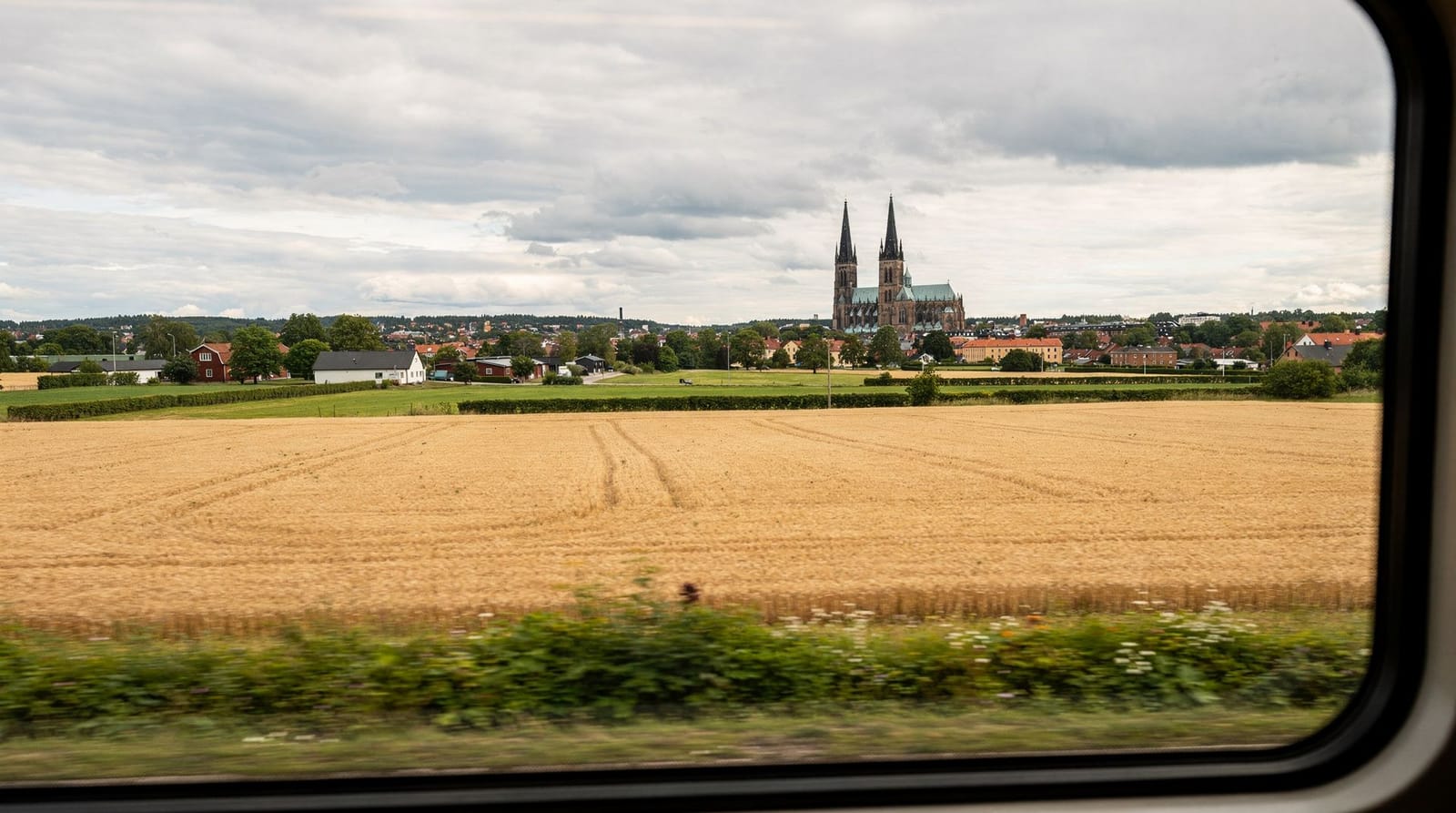
Narrow-gauge steam railway: In summer (May to September, weekends and some weekdays), the Östra Södermanlands Järnväg runs a vintage steam train from Läggesta station to Mariefred. Läggesta is accessible by commuter train from Stockholm. The steam railway takes 20 minutes from Läggesta through Swedish farmland. It is delightful. It is also the recommended mode for anyone who can time their visit around it.
Vintage steamship: Also in summer, the M/S Mariefred departs from Klara Mälarstrand in Stockholm and sails to Mariefred in 3.5 hours. The ship has been making this crossing since 1903. It is slow, scenic, and expensive-ish (around 275 SEK each way), and it is absolutely worth doing once. You arrive by water to a castle on a lake, which is the correct way to arrive.
Gripsholm Castle
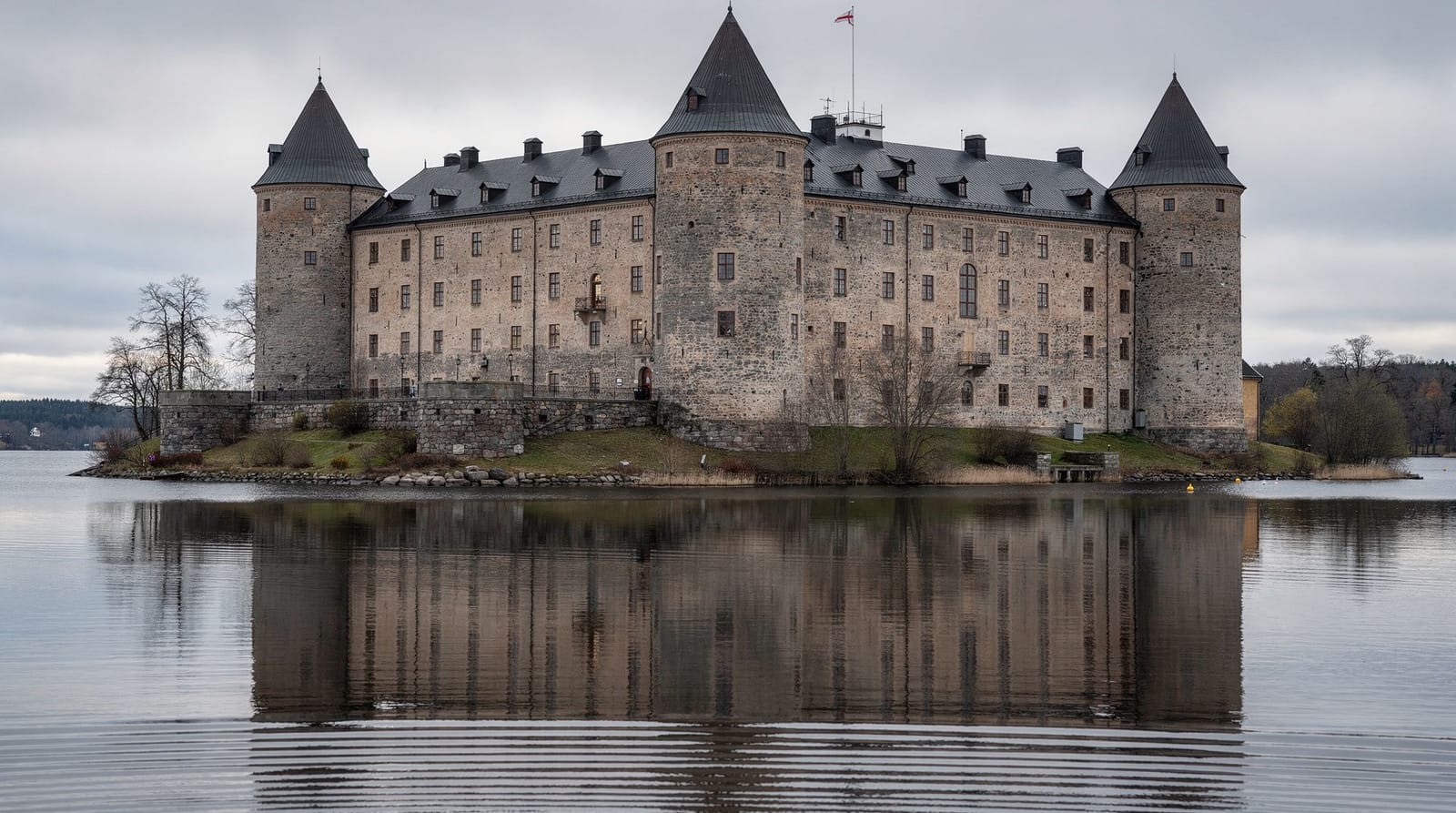
Gripsholm is one of those rare castles that keeps its promise. The first sight — round towers in warm grey stone reflected in the water, connected by heavy walls, sitting on a low promontory into Lake Mälaren — is exactly what the word “castle” should produce in your mind when you’re seven years old.
The castle was founded in 1380, destroyed, rebuilt by Gustav Vasa in the 1530s, and expanded and modified by successive Swedish monarchs until the late 18th century. The result is a building that is internally coherent despite its centuries of changes — the circular towers, the great hall, the theatre (Sweden’s best-preserved 18th-century court theatre, which also has a sibling at Drottningholm), and the prison tower where Erik XIV was imprisoned by his brother Johan III in the 16th century.
The collections inside are extensive: paintings going back to the 15th century, tapestries, the state rooms preserved in different periods’ styles. The National Portrait Gallery is housed here — around 4,000 portraits of Swedish monarchs and European nobility, some of which are masterpieces, most of which are interesting as historical documents. The room containing 17th-century portraits of the Swedish Riksdag is the kind of thing you stop in front of for longer than you expected.
What Gripsholm has that Drottningholm doesn’t: More interior access. More historical period diversity. Better explanatory signage. Less summer crowding.
Mariefred town
Mariefred (the name means “peace of Mary” in reference to the Carthusian monastery established here in 1493) is a small town of painted wooden houses on the Lake Mälaren shore that operates at a pace consistent with its setting. The main street, Kyrkogatan, runs between the harbour and the church; the walk from harbour to castle to church to harbour covers the entire town in forty minutes.
There are several cafés and a hotel restaurant (Gripsholms Värdshus, established 1609, which claims to be Sweden’s oldest operating inn — a claim we haven’t verified but which sounds plausible). The lake views from the castle’s north-facing windows, and from the harbour waterfront, are exceptional.
In November, when we last visited, Mariefred was nearly empty of tourists and fully occupied by itself: schoolchildren in the square, an elderly man feeding ducks at the harbour, a café with two tables outside and a fire visible through the window. The atmosphere was exactly what a small Swedish town in late autumn should be.
The practical verdict
Worth it over Drottningholm? For visitors who like the interior of buildings and the detail of historical collections: yes. Gripsholm’s interior is more accessible and more interesting than Drottningholm’s.
For the 90-minute transit from Stockholm: The journey itself, particularly via the steam railway, is part of the experience. Budget a full day.
In summer: Book the steamship one way (Stockholm to Mariefred) and return by train. This gives you the scenic arrival by water and the efficient return.
Stockholm Mariefred and Gripsholm Castle private day tripOur Mariefred destination page has full logistics including train and steamship schedules. For a comparison with other day trips, see our Stockholm day trips guide and the dedicated Gripsholm castle guide for opening hours and current ticket prices.
Gripsholm versus the other big day trips
If you’re deciding between Mariefred and Stockholm’s other popular day trips, it helps to know what each does best. Drottningholm wins on gardens and the working court theatre; Birka wins on raw historical intrigue if Viking history interests you more than Renaissance royalty; Sigtuna is the easiest half-day option if you don’t want to commit a full day. Mariefred sits between these — more substantial than Sigtuna, less crowded than Drottningholm, more accessible (in terms of interior content) than Birka. Our Gripsholm versus Mariefred day trip guide walks through the comparison in more detail.
What makes Gripsholm’s interior special
Most Swedish castles open to visitors have a similar problem: the grand historical rooms are roped off, the furniture is behind glass, and you’re moving through spaces that feel preserved rather than inhabited. Gripsholm handles this better than most.
The portrait gallery is the specific differentiator. Sweden’s National Portrait Collection, housed here, covers approximately 500 years of Swedish and European history in paint. The portraits are arranged chronologically and contextually — each room covers a period, with enough wall text to explain who these people were and why they’re looking out at you with that specific 17th-century expression.
The theatre is Erik XIV’s contribution. Built in the 1570s in the tower where Erik himself was eventually imprisoned (by his brother Johan III, who had him poisoned in 1577, possibly with an arsenic-laced pea soup — Swedish history is dark), the small court theatre is the oldest surviving Swedish theatre space. It’s not usually the Drottningholm theatre’s equal in grandeur, but it’s older and the story attached to it is considerably more dramatic.
The prison tower itself: you can visit the rooms where Erik XIV was held. The painted inscriptions he made on the walls during his imprisonment are still visible.
The steamship experience
The M/S Mariefred has been making the Stockholm-Mariefred crossing since 1903, which is worth pausing on. The same journey, on the same vessel, has been available for over 120 years. The ship is a working tourist boat, not a replica; it was built for this route and has continued it ever since.
The 3.5-hour crossing gives you:
- Lake Mälaren’s archipelago interior, different from the Baltic archipelago in character — less granite-and-sea, more forested islands and farmland shores
- The approach to Mariefred by water, which is the correct approach
- A meal or coffee on board (the ship has a small restaurant)
The return by train from Läggesta takes about 1.5 hours to Stockholm Central. This combination — 3.5-hour scenic arrival, 4 hours in Mariefred and the castle, 1.5-hour efficient return — works as a long summer day.
Fitting Mariefred into a longer Stockholm stay
Mariefred works best as the quiet counterweight to the busier days of a trip. If you have a few days in the city, give the dense, crowd-heavy sights their own time first: the Vasa Museum, the Royal Palace and the lanes of Gamla Stan. A guided stroll through the old town, such as a small-group walk through the medieval streets of Gamla Stan, sets up the royal and Vasa-era history that Gripsholm then lets you see in much more detail. The Stockholm in 3 days overview and the 4 days with the archipelago itinerary both show where a day out west can slot in without rushing.
Think of the trip as a change of tempo rather than another item on a list. After a few days of museums, ferries and queues, a day in a town where nothing is urgent is a relief. Our Stockholm day trips by train guide covers the other rail-friendly options if Mariefred ends up not fitting your dates.
If you are weighing water against rail, the Stockholm public transport explained page helps you make sense of the commuter train leg, and the ferries for day trippers guide explains how boat days generally work. For readers who enjoyed the boat idea but want something closer to the city, the Drottningholm by boat guide is the shorter cousin of the Mariefred crossing, and the royal palaces comparison lays out how Gripsholm sits beside the other royal residences. History-minded travellers may also like our Viking heritage guide, which pairs naturally with the Birka option, and our post on three day trips better than Drottningholm for a second opinion on where else to go.
Seasonal notes
Summer (June-August): The castle is fully open, the steamship and steam railway run regularly, the town is at its liveliest. Book the steamship well in advance for July.
Spring and autumn (April-May, September-October): The castle operates on slightly reduced hours (check the Gripsholm website). The steamship runs on weekends only in the shoulder seasons; the steam railway is weekends only from May. Train connection from Stockholm is year-round.
Winter: The castle interior is partially open on weekends. The steamship and steam railway are not running. The town is quiet and beautiful. The SJ train is the only way there. A winter day trip to Mariefred is underrated if the weather cooperates.
Frequently asked questions about Mariefred and Gripsholm
How long does Gripsholm Castle take to visit?
Allow 2-3 hours for the interior if you engage with the portrait collection. A quick visit to the main rooms is possible in 90 minutes. Add walking around the castle exterior and the waterfront, and a half-day in total is comfortable.
Is Gripsholm Castle better than Drottningholm?
Different strengths. Gripsholm has more interior access, a more dramatic history (the prison tower, Erik XIV), and the portrait collection. Drottningholm has better gardens and the court theatre with ongoing opera performances. For interior history, Gripsholm wins. For grounds and setting, Drottningholm competes closely.
What else is there to do in Mariefred?
Beyond the castle, the town is the activity. The Gripsholms Värdshus (possibly Sweden’s oldest inn) has good food. The narrow-gauge steam railway is delightful for a short ride. Walking along the lake shore and through the town takes an easy hour. There’s a small local history museum. It’s a town to relax in rather than programme tightly.
Can I do Mariefred as a half day instead of a full day?
Technically, if you take the train both ways and move quickly through the castle, but it doesn’t showcase the trip well. The 90-minute journey each way already commits most of a half day; adding the town walk and a proper look at the portrait collection makes a full day the more satisfying option.
Is Mariefred suitable for a first-time Stockholm visitor, or should it wait for a second trip?
It works for either, but a first-time visitor with only two or three days is usually better served by a closer, higher-density day like Drottningholm or the archipelago. Mariefred is the trip we’d recommend to someone on their second or third Stockholm visit, or a first-timer with four days or more who has already covered the essentials in the city.