Gripsholm Castle guide: Sweden's National Portrait Collection in Mariefred
Stockholm: Mariefred & Gripsholm Castle private day trip
Duration: ~8 hours
Is Gripsholm Castle worth visiting from Stockholm and how do you get there?
Gripsholm Castle in Mariefred is one of Sweden's best-preserved Renaissance castles, housing the National Portrait Collection of Sweden — 4,000+ portraits from the 16th century to the present. Getting there takes 60–90 minutes from Stockholm (train + bus, or summer steamboat). Open primarily May–September for full access; limited winter access. The castle and the charming town of Mariefred together make a strong full-day trip.
Gripsholm: the castle Sweden built to house its history
Most royal castles in Europe are primarily about architecture — the rooms, the ceilings, the gardens that record the tastes of successive monarchs. Gripsholm is that too, but it has an additional identity: it is a portrait archive. Sweden’s rulers had the idea, over several centuries, of collecting portraits of every significant Swedish person — kings and queens, obviously, but also bishops, admirals, artists, scientists, and ministers. The resulting National Portrait Collection at Gripsholm now holds over 4,000 works and constitutes one of the world’s great repository portrait collections.
Walking through Gripsholm’s rooms involves two parallel experiences: the physical space of a Renaissance castle that has been occupied, modified, and lived in across five centuries, and the accumulated faces of Sweden’s history looking down from the walls. It is a strange, layered experience that rewards more attention than a standard castle visit.
Mariefred, the small town at the castle’s gate, adds a third layer. It is a lakeside village that time has treated gently — wooden houses, a marina, a medieval church — and it gives the day trip a completeness that an isolated castle would not have. For how Gripsholm fits among Stockholm’s other royal sites, see the royal palaces comparison guide.
Stockholm: Mariefred and Gripsholm Castle private day trip Book a one-day royal palace and castle tour from StockholmHistory of the castle
Gustav Vasa and the founding: In 1537, Gustav Vasa — the king who founded the Vasa dynasty and unified Sweden as a modern state — ordered the construction of a fortified palace at Mariefred. The site already held a Carthusian monastery, which Vasa had dissolved as part of Sweden’s adoption of Lutheran Protestantism in 1527. The monastery stones became part of the new castle.
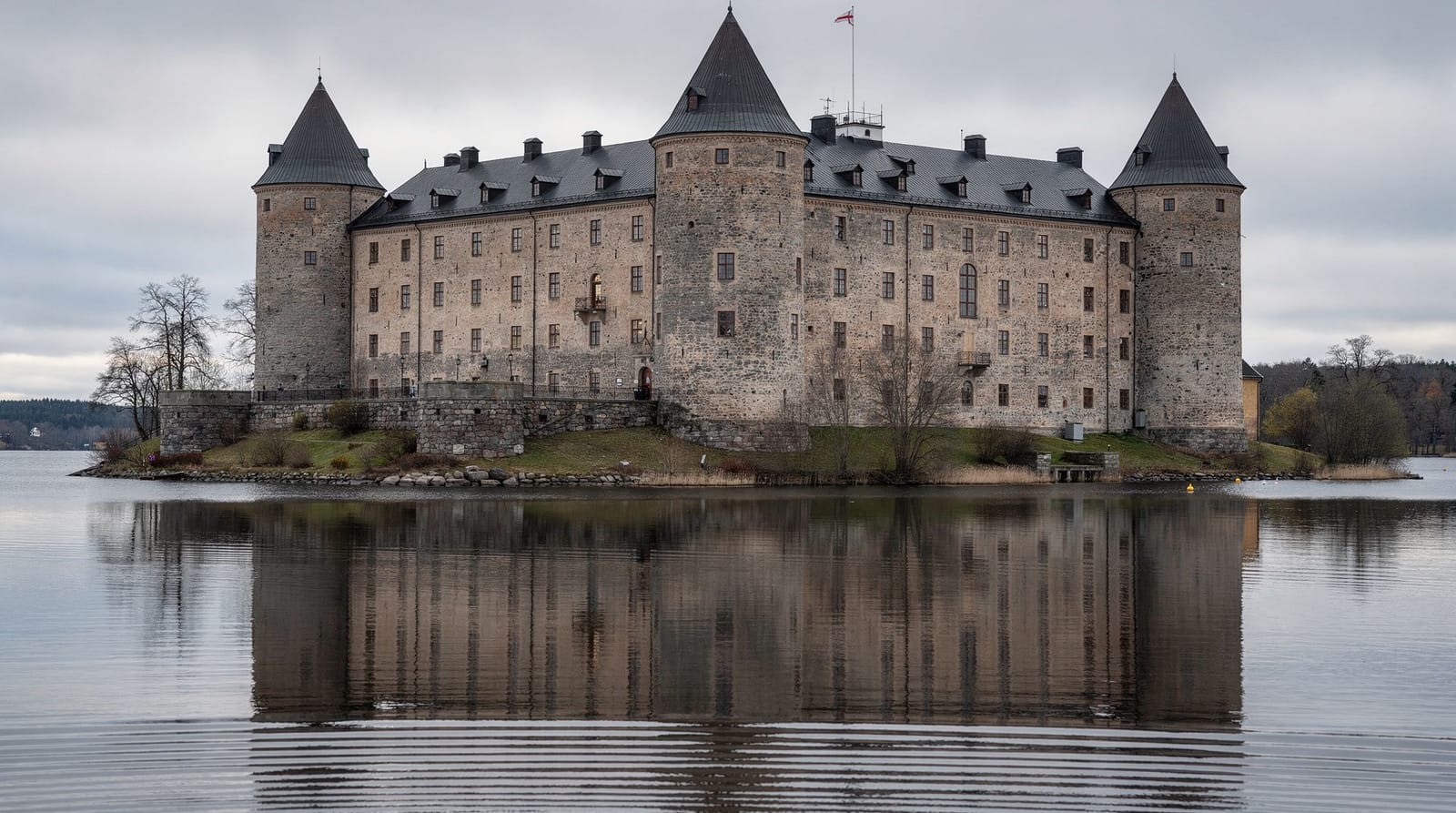
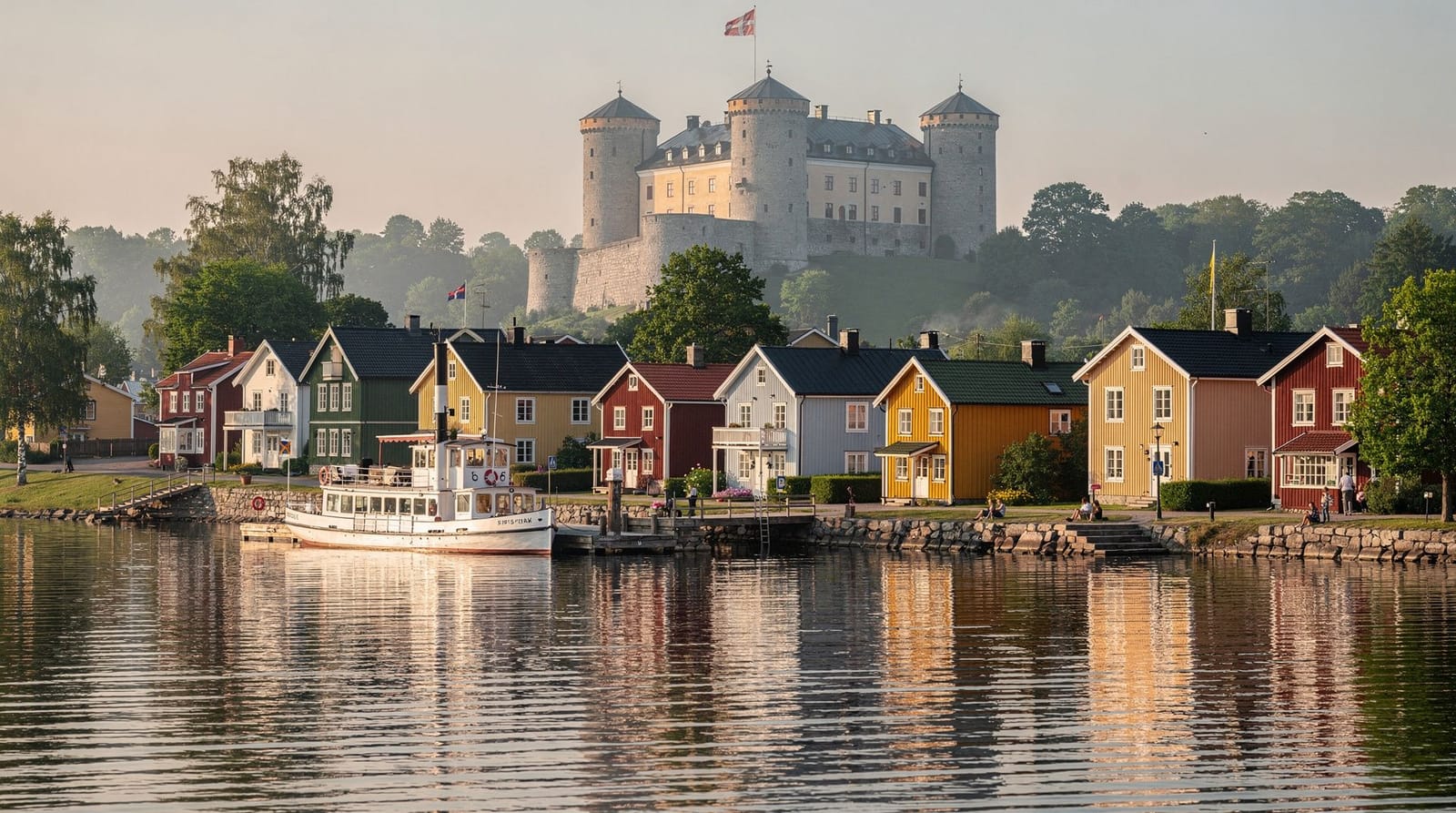
Gustav Vasa’s castle was primarily a fortress: the characteristic round towers at the corners (Gripsholm has three round towers) reflect the Renaissance theory of fortification, designed to deflect cannon fire with curved surfaces rather than flat walls.
Johan III and the royal expansion: Gustav Vasa’s son, Johan III, expanded the castle significantly in the 1570s–80s, adding interior rooms in the ornate Renaissance style he preferred. The Johan III Salon is the most important interior survival from this period.
Karl IX and the stateroom theatre: Karl IX converted an upper room into Sweden’s first purpose-built theatre (Slottsteatern) in the early 17th century. This small theatre — 100 seats — still functions and is used for summer performances, making Gripsholm one of the few castles in Europe with an operational period theatre.
The Portrait Collection: The systematic collection of Swedish historical portraits began in the 17th century and was formalised as a national collection in the 18th century, when the collection was definitively installed at Gripsholm. The collection has continued to grow; Swedish society figures continue to be added.
What to see inside
The Portrait Rooms
The Portrait Collection is distributed through multiple rooms, organised roughly by period and subject category:
The Royal Gallery: The sequence of Swedish monarchs from Gustav Vasa to the present. Comparing the portraits across centuries — from the formal Renaissance portrait style through Baroque grandeur to the more naturalistic modern portraits — tells a visual history of both Swedish political history and European portrait conventions.
The Scientific and Cultural Figures: Swedish scientists (Linnaeus, Berzelius), writers (Strindberg, Lagerlöf), composers, and artists. These rooms give the collection its depth beyond the royal family.
Contemporary portraits: The collection continues to add significant living and recently deceased Swedes. Contemporary portrait photography is also included, documenting 20th- and 21st-century figures.
The Johan III Salon
The most spectacular single room: a late Renaissance hall with painted ceiling and wooden panelling dating from Johan III’s expansion. The combination of period decoration and accumulated portrait history (the walls are hung with 16th- and 17th-century portraits) gives the room an extraordinary density of historical reference.
The Stateroom Theatre (Slottsteatern)
Karl IX’s late 16th-century theatre — the oldest purpose-built theatre in Sweden. The space is small by later standards but perfectly preserved in its essentials. Summer performances run here; even without a performance, the room is accessible on guided tours.
The Round Towers
The three round towers contain smaller rooms with specific historical collections — weapons, furniture, armour. The tower interiors show the castle’s functional origin as a fortification, with the rough stone walls contrasting with the more finished interior rooms.
Getting to Gripsholm
By train: Stockholm Central → Läggesta station (towards Eskilstuna, approximately 40 minutes). From Läggesta, a local bus covers the remaining 4 km to Mariefred, and in warmer months a heritage steam train also runs from Läggesta. Check SJ and Sörmlandstrafiken for tickets and times.
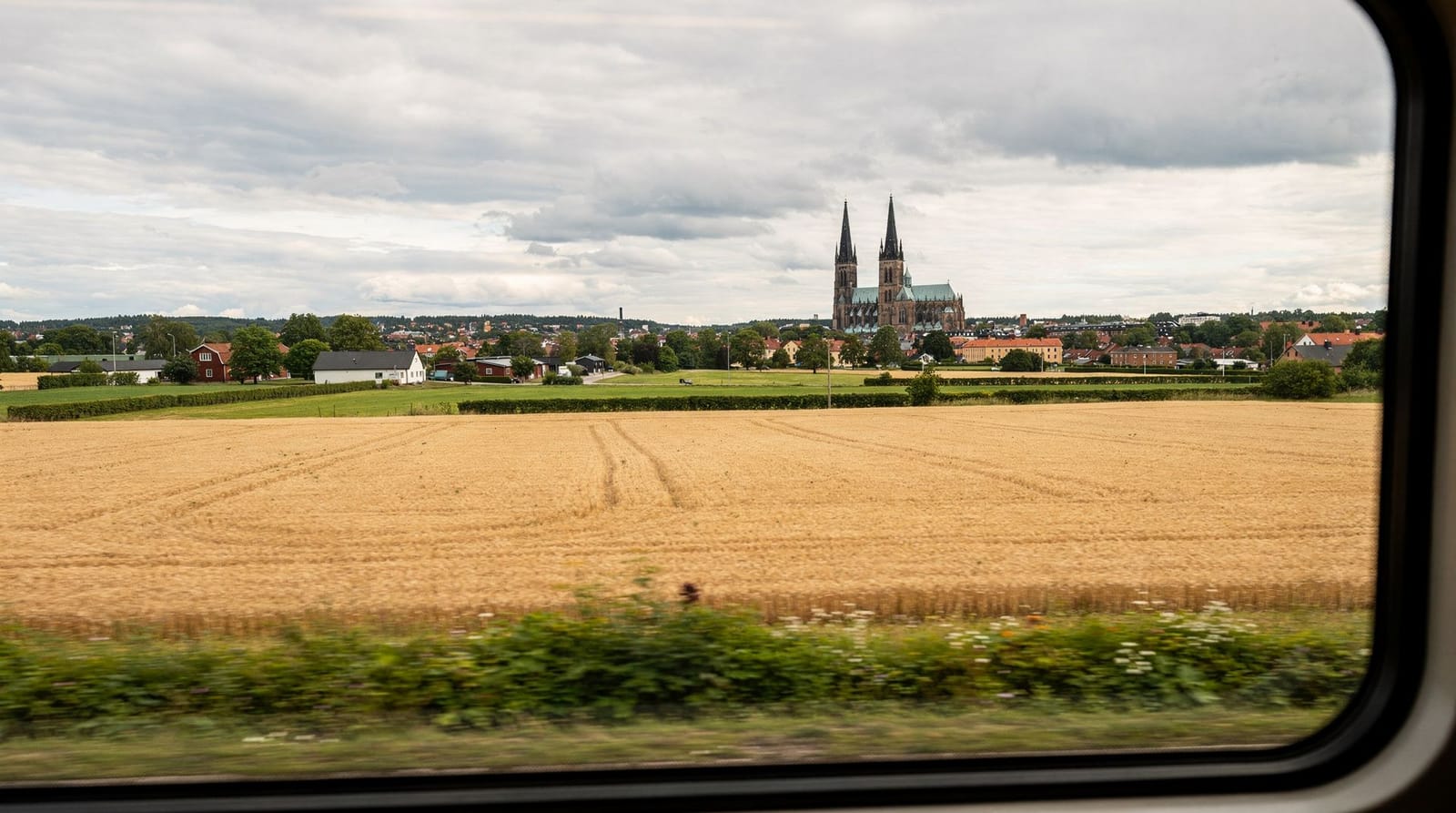
By summer steamboat: The S/S Mariefred, a vintage steamboat built in 1903, runs on selected summer days (in 2026: Saturdays in June, then Wednesday, Thursday, Saturday and Sunday from 1 July to 2 August). Departure from Klara Mälarstrand (near T-Centralen, 20-minute walk from Stockholm Central). The crossing takes 3.5 hours each way across Lake Mälaren. Return the same day on the boat (departing Mariefred 16:30) or by train. The steamboat journey is slow but extraordinarily atmospheric — the approach to Mariefred by water with the castle appearing above the lakeside is the intended arrival.
By private tour: Several operators offer guided private day trips from Stockholm, handling all transport logistics. This is the most efficient option for groups or those who prefer not to navigate commuter trains and local buses.
By car: 65 kilometres via route E20, approximately 1 hour. Free parking near the castle.
Mariefred town
Allow 1–1.5 hours for Mariefred beyond the castle. The town is compact and pleasant:
Mariefred Church (Mariefreds kyrka): Medieval Gothic church, open most days in summer. The churchyard contains some interesting 17th- and 18th-century grave monuments.
Gripsholms Värdshus: The traditional inn (värdshus) just outside the castle, established in the 18th century, is one of the oldest inns in Sweden. Lunch here is the appropriate midday break — traditional Swedish husmanskost (home-style cooking) in a building that has been feeding castle visitors for 200 years.
The harbour and Lake Mälaren waterfront: Mariefred’s marina is where the steamboat docks. The view from here back to the castle is the classic Gripsholm image — the round towers reflected in the water.
The Narrow-Gauge Railway: Ostra Södermanlands Järnväg (ÖSIJ), a narrow-gauge heritage railway, runs between Mariefred and Läggesta station (where the main train arrives) — a brief but charming connection that links the two transport modes and provides an additional experience for train enthusiasts.
Practical essentials
| Detail | Information |
|---|---|
| Location | Mariefred, 65 km west of Stockholm |
| Train + bus from Stockholm | about 1 hour |
| Summer steamboat | 3.5 hours each way (selected days, June–early Aug 2026) |
| Castle opening (summer) | May–Sep: check kungligaslotten.se (Sep 2026: daily 10:00–16:00) |
| Castle opening (winter) | Weekends only, limited access |
| Adult admission | 170 SEK (students 150 SEK, ages 7–17 85 SEK) |
| Recommended time | 4–6 hours (castle + town + lunch) |
Gripsholm versus Stockholm’s other royal sites
Gripsholm is one of several royal castles within reach of Stockholm, and each offers a genuinely different day out. Deciding between them depends on time budget and what you want from the visit.
| Site | Distance/time | Character | Best for |
|---|---|---|---|
| Gripsholm (Mariefred) | 60–90 min | Renaissance fortress + portrait collection + small town | A full-day historical trip with a complete change of pace from Stockholm |
| Drottningholm | 30–40 min | Working royal residence, baroque gardens, Chinese Pavilion | A shorter, easier royal day trip, still with genuine substance |
| Royal Palace, Gamla Stan | In central Stockholm | State apartments, Treasury, Changing of the Guard | Visitors without time for a day trip at all |
For the full logic behind choosing among Stockholm’s day-trip options generally, not just the royal sites, see the day trips from Stockholm guide. If Gripsholm and Mariefred are your focus specifically, the dedicated Gripsholm–Mariefred day trip guide covers the itinerary logistics in more granular detail than this castle-focused guide.
A suggested itinerary for the day
Morning departure (08:00–09:00): Take the train to Läggesta, then the local bus or the narrow-gauge heritage railway into Mariefred. Arrive by around 10:00.
Late morning (10:00–12:30): Visit the castle first, while it’s quieter — start with the Portrait Rooms and the Johan III Salon, then the Stateroom Theatre and the Round Towers. Budget 1.5–2 hours for a thorough visit, less if you’re using the targeted-navigation approach described below.
Lunch (12:30–14:00): Gripsholms Värdshus, just outside the castle gates, for traditional husmanskost. Book ahead in July.
Afternoon (14:00–16:00): Walk Mariefred itself — Kyrkogatan’s painted wooden houses, the medieval church, the harbour. This is unhurried time; the town rewards wandering more than a checklist.
Return (16:00–17:00): Train back via Läggesta, or the Saturday steamboat if your visit lands on that day and you’ve booked ahead — arriving back in central Stockholm by around 20:00.
This rhythm — castle first while fresh, lunch as the midday break, town in the calmer afternoon — makes efficient use of a day that otherwise involves a fair amount of travel time.
Combining Gripsholm with other day trips
Mariefred–Strängnäs combination: If travelling by car, combining Gripsholm with the medieval cathedral city of Strängnäs (35 kilometres west of Mariefred) makes a good full-day loop. Strängnäs Cathedral contains the tomb of several Swedish kings. This combination works best by car since public transport between the two towns is limited and adds significant time compared with the direct Stockholm–Mariefred routes.
Gripsholm and Sigtuna: The Sigtuna day trip guide covers another dimension of Swedish history — the Viking-age and medieval founding town. Combining Sigtuna (north of Stockholm) with Gripsholm (west) requires a car or careful public transport planning, but the two are naturally complementary for visitors focused on Swedish historical depth.
The portraits in depth: navigating 4,000 works
The National Portrait Collection is not a gallery you sprint through. It is an archive that rewards patience and attention. For visitors with Swedish historical knowledge, the sequence of royal portraits from Gustav Vasa to the present is a visual history of Swedish power dressed differently across five centuries. For visitors without that context, the most effective approach is to use the collection selectively:
The Tudor parallel: Gripsholm holds Sweden’s 16th-century portraits, many painted at the same moment as the English Tudor portraits that visitors from Anglophone countries may know from the National Portrait Gallery in London. Comparing the contemporaneous portraits — Swedish and English monarchs from the 1550s–1580s, shown in the same European court fashion, with the same conventions of regal presentation — is a lateral way into understanding the period.
The artist portraits: The collection includes portraits of major Swedish cultural figures — August Strindberg, Selma Lagerlöf, Carl Larsson, Anders Zorn. For visitors interested in Swedish culture rather than purely political history, these rooms are often more interesting than the royal sequence.
The modern additions: The National Portrait Collection is a living institution; significant Swedes continue to be added. The 21st-century portraits use photography and mixed media alongside traditional painting. The juxtaposition of a 16th-century oil portrait and a contemporary photographic portrait in the same collection makes an implicit argument about continuity and change.
Orientation tip: Pick up the collection map at the entrance and identify three or four rooms you specifically want to see. The collection is too large to absorb in full; targeted navigation is more satisfying than trying to see everything.
Payment and practicalities inside the castle: Sweden is almost entirely cashless, and Gripsholm is no exception — tickets, the small gift shop, and Gripsholms Värdshus all accept cards without issue. Guided tours in English typically run at set times in summer; check the current schedule at the entrance or on nationalporträttet.se, since unguided visitors can still follow the room information cards at their own pace. Bag storage is available near the entrance for larger backpacks, which is useful if you’re arriving by train with luggage for a wider Sweden trip.
Mariefred in depth: beyond the castle
Mariefred is worth half a day in its own right, separate from the castle.
Stadshotellet and the main street: The town’s central street (Kyrkogatan and the surrounding streets) is lined with painted wooden houses from the 18th and 19th centuries. The scale is that of an 18th-century Swedish town — compact, human-scale, with the lake visible at the end of every street running south. Unlike many Swedish towns that have been partially modernised, Mariefred’s centre retains substantial pre-20th-century character.
Gripsholms Värdshus: The inn (värdshus) outside the castle is one of the oldest continuously operating inns in Sweden. The current building dates from 1609. The menu focuses on Swedish traditional cooking — husmanskost — appropriate to a building that has been serving castle visitors for over 400 years. Booking ahead is recommended for lunch; the restaurant fills in summer with day-trippers from Stockholm.
Lake Mälaren waterfront: Mariefred’s marina is where the steamboat docks and where the castle’s reflection is most clearly visible in calm water. The castle’s south face — two round towers and the main residential block — seen from the water is the image that appears in virtually every photograph of Gripsholm. In the morning light, the reflection is particularly sharp.
The medieval church: Mariefreds kyrka, a late medieval church with 17th-century modifications, contains some notable 17th-century grave monuments. The churchyard is atmospheric — old Swedish graves with carved sandstone markers.
The S/S Mariefred steamboat experience
The S/S Mariefred is a genuinely remarkable survival: a passenger steamboat built in 1903 that still runs on its original single-cylinder steam engine. The boat was designed specifically for the Stockholm–Mariefred route and has been in service, with various interruptions, ever since. It is now maintained by a preservation society.
The 3.5-hour crossing runs on selected summer days (in 2026: Saturdays in June, then Wednesday, Thursday, Saturday and Sunday from 1 July to 2 August). Departure is from Klara Mälarstrand in central Stockholm (a 20-minute walk from Stockholm Central Station). The pace is slow by modern standards (7–8 knots), the route is scenic (through western Lake Mälaren, past several islands and manor houses), and the boat’s vintage atmosphere — the steam engine visible, the wooden deck, the pre-war navigation equipment — creates a specific time-travel quality.
Return the same day: the boat departs Mariefred at 16:30, arriving back in Stockholm around 20:00. This makes for a long day (10 hours total) but is the most memorable way to reach Gripsholm if the schedule permits.
The steamboat is a popular Swedish heritage activity; book in advance for summer Saturdays.
Fitting Gripsholm into a wider Stockholm trip
Gripsholm works best as the one day in a longer stay that you spend away from the capital. If you are still shaping the rest of the week, the 3 days in Stockholm itinerary for first-timers shows where a day trip slots in without crowding out the central sights. The Mariefred and Gripsholm destination page gathers everything about the area in one place.
Because the commuter rail leg is part of ordinary public transport, the SL pass guide is worth a look before you buy tickets, and the overview of day trips by train helps you compare Mariefred with other rail-friendly options. For a first-hand account of how the visit feels, the blog post on Gripsholm as an overlooked gem is a useful companion to this guide.
On the days you stay in the city, the Vasa Museum guide covers the other great royal-era story in Stockholm, and it pairs naturally with Gripsholm: both bring the Vasa-era story into physical form, one in the city and one on the shores of Lake Mälaren. Between sights, the guide to fika culture explains the coffee-and-bun break that suits Mariefred’s café streets, and the Swedish cinnamon bun guide tells you what to order. Travelling with younger visitors? The Stockholm with kids family guide helps you judge whether a castle day suits your group.
Frequently asked questions about Gripsholm Castle
Is Gripsholm worth visiting if you only have one day in Stockholm?
No — it requires 4–6 hours total including travel. For a one-day Stockholm visitor, the city’s central museums (Vasa, Royal Palace) are more efficient. Gripsholm is excellent for a 3+ day Stockholm visit where one day is available for a day trip.
Can you photograph in the Portrait Collection?
Photography of the collection for personal use (no flash) is generally permitted. Commercial photography requires permission. The castle’s specific photography rules may vary by room — follow signs and staff instructions.
What is the best season to visit Gripsholm?
May–September, with June and September as the optimal months: full castle access, reasonable weather, and without July’s peak crowds. The steamboat service makes the summer period particularly atmospheric. Winter visits are limited in access but not without merit for those specifically interested in the portrait collection over the castle architecture.
How far is Gripsholm from Stockholm by car?
Approximately 65 kilometres via the E20, around 1 hour’s drive. Parking is available near the castle (free or low-cost). A car gives flexibility to combine Gripsholm with other sites in the Mälaren valley — Strängnäs Cathedral (35 km further west) is a natural combination for castle and church enthusiasts. The route via road passes through characteristically Swedish agricultural landscape — flat lake-edge farmland, occasional manor houses, and the specific light-and-water quality of the Mälaren region.
What is the connection between Gripsholm and Gustavus Vasa?
Gustav Vasa (reigned 1523–1560) is arguably the most consequential figure in Swedish history: the king who broke Swedish dependence on Denmark, introduced the Lutheran Reformation, reorganised the Swedish state, and founded the Vasa dynasty that would rule Sweden for over a century. Gripsholm is his castle — built beginning 1537 as a primary royal residence and fortress. The castle’s stones include material from the Carthusian monastery at Mariefred that Vasa dissolved as part of the Reformation.
Visiting Gripsholm with this context makes the castle more than a portrait gallery — it is the physical location from which one of the most consequential medieval-Renaissance state-formation processes in northern Europe was administered. The round towers and high walls are not decorative; they represent a king who secured his throne through civil war and foreign conflict and built accordingly.
What should you eat in Mariefred when visiting Gripsholm?
Lunch at Gripsholms Värdshus (outside the castle, Sweden’s oldest continuously operating inn) is the traditional choice — husmanskost (Swedish traditional cooking: smoked fish, meat dishes, root vegetables) in a setting that has fed castle visitors since 1609. For lighter eating or fika: the town’s cafés on Kyrkogatan offer kanelbulle and coffee in the characteristic Swedish style. The Mariefred bakery typically has fresh-baked goods. If you arrive by the steamboat, the boat café serves coffee and simple sandwiches for the 3.5-hour journey in each direction — useful for hungry travellers who want to eat on the water rather than before or after.
Is Gripsholm child-friendly?
More so than many portrait collections, but less so than Drottningholm or the Royal Palace’s Changing of the Guard. Children aged 10+ with historical interest often find the castle’s physical structure — the round towers, the steep stone walls, the moat-like water on two sides — engaging. The National Portrait Collection is less accessible for children under 12. The steamboat journey (for those travelling Saturdays) is a strong draw for children who love boats. The narrow-gauge railway (ÖSIJ) between Mariefred and Läggesta is a genuine children’s highlight. For families with children under 10 without specific historical interest, the Royal Palace’s Changing of the Guard and the Viking Museum on Djurgården are more immediately engaging.
Top experiences
Bookable activities with verified prices and instant confirmation on GetYourGuide.