Stockholm ghost walking tour review: bloody history and dark folklore
Stockholm: bloody Stockholm — ghosts, horror & dark folklore
Duration: 2 hours
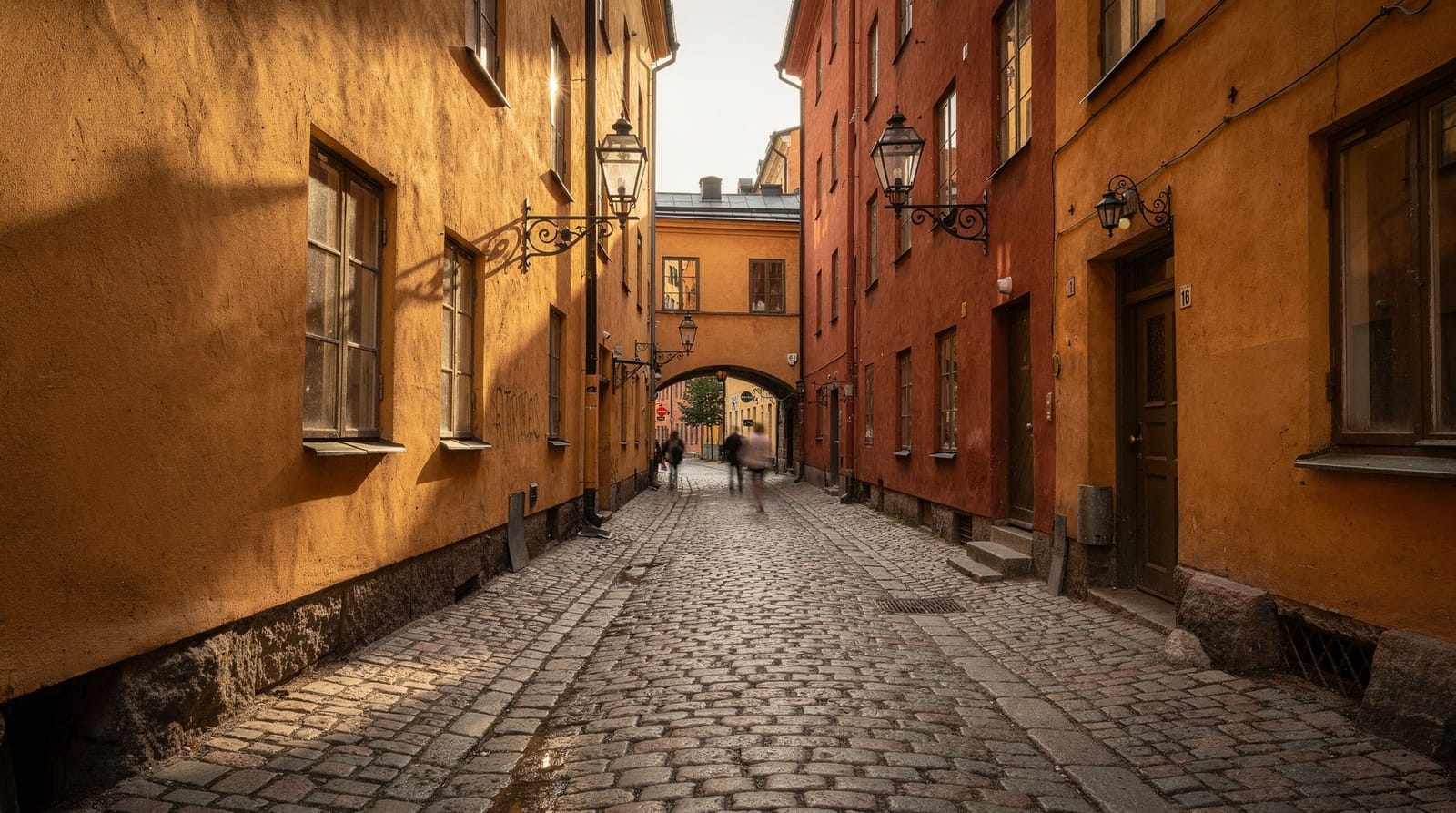
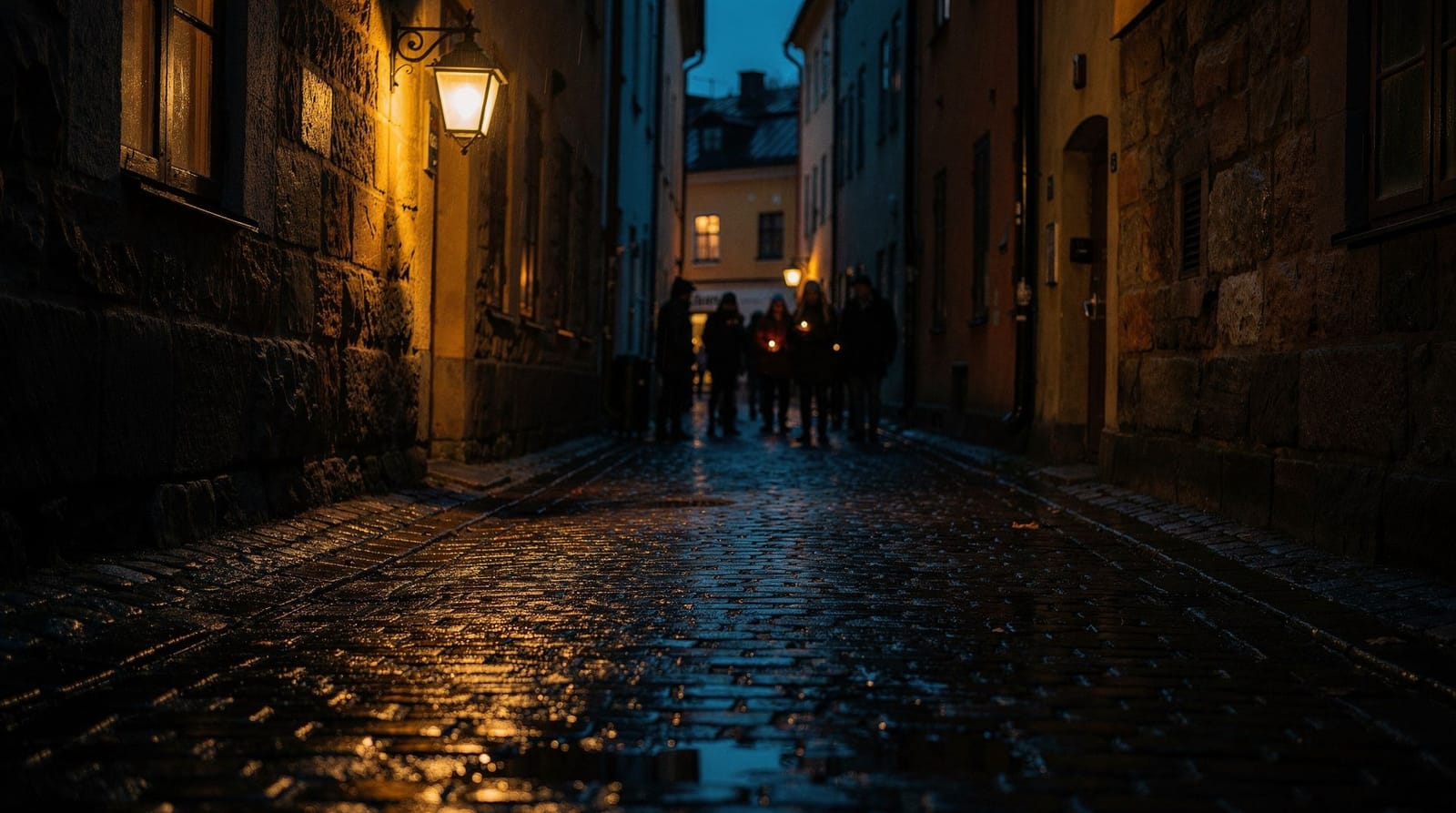
Gamla Stan by day is postcard-pretty and packed with tourists; the same streets after dark, with a guide walking you through the 1520 Bloodbath and three centuries of plague and execution, feel like a genuinely different place. This review covers how dark the content actually gets, whether the “ghost” framing oversells it, and when to book for the best atmosphere.
| Where | Meets at Stortorget or Gamla Stan’s northern entrance near the Royal Palace |
| Cost | set by the operator, see the booking page |
| Time needed | 1.5–2 hours, entirely outdoors |
| Getting there | 5-minute walk from Gamla Stan T-bana station |
| Best time | September–October evenings for genuine darkness |
Quick verdict
Top 3 reasons to book the bloody Stockholm ghost tour:
- Stockholm’s medieval history is genuinely dark — the 1520 Bloodbath, plague years and public executions are not tourist inventions but real events with specific, locatable sites. The tour gives these events a geographic anchor.
- Evening Gamla Stan has a different atmosphere from the daytime tourist rush — the tour is a good reason to be there after the crowds have thinned.
- The theatrical delivery is well-calibrated: engaging and dramatic without crossing into gimmick territory.
One reason to skip it:
- If you’ve already done a thorough Gamla Stan walking tour covering the historical background, the ghost tour’s content overlaps significantly. The framing is different (horror vs history) but the events and locations are largely the same.
What’s included
- 2-hour guided evening walking tour of Gamla Stan (Old Town)
- Stories of the 1520 Stockholm Bloodbath, plague years, medieval executions
- Dark folklore connected to specific buildings and passages
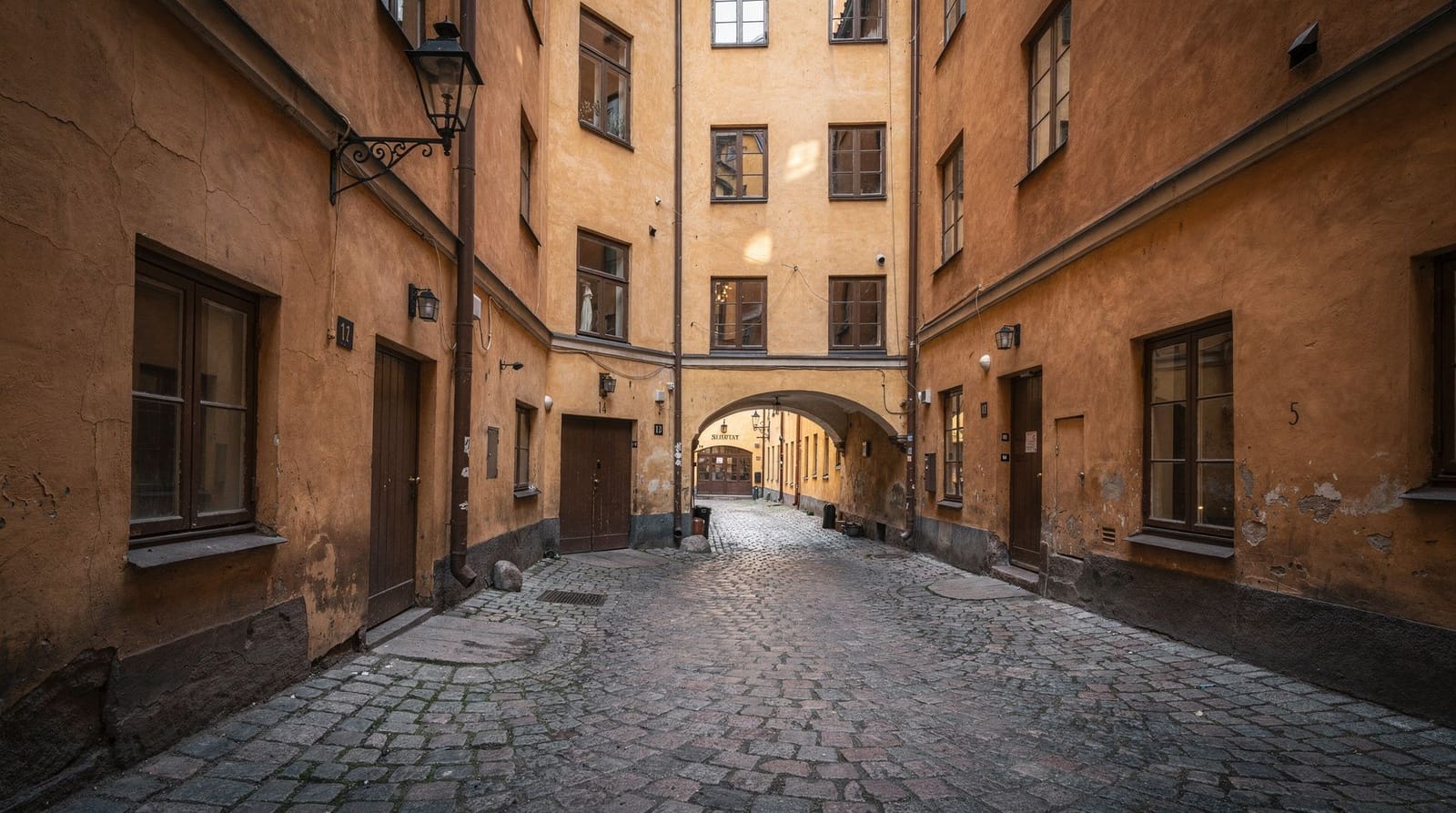
- Access to hidden passages and less-frequented parts of Gamla Stan’s street network
- Small group (typically 10–15 people)
What’s excluded
- Interior access to any buildings
- Food and beverages (some operators offer a post-tour drink option at a nearby bar — check the listing)
- Entry to museums or historical sites
Pricing and duration
| Option | Price (approx.) | Duration |
|---|---|---|
| Bloody Stockholm ghost tour | Price on the booking page | 2 hours |
| Ghost walk historical tour | Price on the booking page | 1.5 hours |
| Ghosts of Stockholm horror tour | Price on the booking page | 1.5–2 hours |
| Gamla Stan secrets tour (non-ghost) | Price on the booking page | 2 hours |
The three ghost tour options cover overlapping material with different emphasis and theatrical style. The “bloody Stockholm” version leans hardest into the historical horror aspect.
Where and when it runs
Meeting point: Stortorget (the main square) or at Gamla Stan’s northern entrance near the Royal Palace. Check your specific booking for the exact meeting point.
Season: Year-round. Evening tours run from approximately 19:00 in summer; winter evening tours may start as early as 17:00 given the shorter days.
Best season: September and October for genuine darkness and reduced tourist crowds. Summer white nights (mid-May to late July) work but the sky never goes fully dark — the atmosphere is muted compared to autumn.
Languages: English-language tours are the most frequent. Swedish tours also run. Other languages by private arrangement.
The stories: what you’ll actually hear
The guide’s repertoire varies but the following are typically covered:
The 1520 Stockholm Bloodbath: The mass execution of Swedish nobles (approximately 80–90 people) on Stortorget over three days in November 1520, ordered by Danish King Christian II. The guide visits the square and describes the mechanics of the event — and the subsequent Swedish uprising that ended Danish rule. The Bloodbath is not a ghost story but it is genuinely bloody.
Plague epidemics: Stockholm experienced several major plague outbreaks, most significantly in 1710–1711 when roughly one-third of the city’s population died. The guide covers burial sites, the social collapse during epidemic periods, and folk beliefs about the spread of disease.
Execution sites: Before the modern era, public executions were held within and near Gamla Stan. The guide identifies specific locations and the types of punishment associated with them — the details are historically accurate and deliberately gruesome.
Restless spirits and folklore: Swedish folk tradition has a rich supernatural vocabulary — the draugr (restless dead), the gast (ghost), the strå (spirit of a murdered person). The guide weaves these into the historical narrative as expressions of how contemporary Swedes understood violent death.
Specific building stories: Several buildings in Gamla Stan have specific, documented histories of violent events. The guide connects these to folk legends that developed afterward.
Sample itinerary (evening tour)
19:00 Meet at Stortorget. The square at dusk, already emptied of most tourists.
19:05 Guide opens with the 1520 Bloodbath — standing on the square where it happened. The guide typically asks how many visitors already know this event.
19:25 Move into the western alleyways of Gamla Stan, away from Västerlånggatan. A passage the guide identifies as connected to a specific 17th-century execution.
19:45 The plague narrative — walk to the medieval church courtyard where mass graves have been documented archaeologically. The guide explains the scale of the 1710 epidemic with contemporary source quotations.
20:00 A less-visited passage on the eastern side of the island. Folk legend attached to a specific building facade.
20:20 Return toward the northern part of Gamla Stan — the area nearest the Royal Palace and the medieval city walls. The guide covers execution methods of different categories of criminals.
20:50 Final location: a specific spot connected to the most dramatic story in the guide’s repertoire (varies by guide, but typically involves a restless spirit or an unresolved crime).
21:00 Tour concludes. Optional continuation at a nearby bar if the guide offers it.
Pros
- The historical content is genuinely dark and well-researched — this is not invented folklore but documented events retold with care.
- Evening Gamla Stan is a different experience from daytime — the streets clear of most tourists by 19:00, giving the tour a more intimate atmosphere.
- The theatrical delivery is engaged without being overdone. The guides on this tour tend to be history graduates with an interest in the darker periods.
- Small group size (10–15) means good access to the guide and the ability to ask questions.
- A legitimate reason to be in Gamla Stan after the standard tourist day ends.
Cons
- “Ghost tour” slightly misrepresents the content — this is dark history tourism with folklore elements, not a paranormal experience. If you’re hoping for something more supernatural in character, expectations need adjustment.
- Overlap with the daytime Gamla Stan secrets tour is real — if you’ve already done that tour, the location set is similar and some stories repeat.
- Not suitable for children under 10 in content; the late evening timing is also impractical for younger children.
- Summer white nights reduce the atmosphere — the 21:00 Stockholm sky in June is still lit. The tour is better in autumn.
Tips from us
Book the September or October slot if your dates allow. September evenings in Stockholm combine genuine darkness with mild temperatures — the ideal conditions for this type of tour. June–July the sky stays light past 22:00.
Combine with dinner in Gamla Stan before the tour. The 17:00–19:00 window is the best time for a sit-down meal at one of the better Gamla Stan restaurants (Österlånggatan area). Arrive at the meeting point fed and comfortable.
Wear flat shoes with grip. Gamla Stan’s cobblestones are the same by night as by day, but the reduced lighting makes uneven sections harder to anticipate. Heels are a bad idea.
Bring a light layer. Stockholm evenings cool quickly even in summer — by 20:00 even a July evening in the streets can feel noticeably cooler than midday.
Pairing the tour with the rest of Gamla Stan
Because the ghost tour only covers a fraction of Gamla Stan’s history — the violent fraction — it works best paired with broader context rather than as a standalone visit. The Gamla Stan medieval secrets guide and the Stockholm Bloodbath history guide both go deeper into the events the tour only has time to sketch. If you haven’t yet done a daytime orientation walk, the Gamla Stan walking tour guide is worth doing first so the ghost tour’s geography makes sense rather than being a blur of unfamiliar alleyways.
For food before or after, the Gamla Stan restaurants guide and the Västerlånggatan restaurants review cover the Österlånggatan and Västerlånggatan dining strips honestly, including which spots are tourist traps to avoid before an evening tour on a full stomach. Visitors staying nearby can also check the Gamla Stan destination guide for a fuller sense of the island beyond the ghost stories — by day it’s one of the best-preserved medieval old towns in Northern Europe, not just a backdrop for dark history.
Travellers weighing up an evening free from other plans might also consider stacking the ghost tour with an afternoon at the Royal Palace museums, since both sit within the same small island and a full day dedicated to Gamla Stan avoids the need to return on a separate visit. Just pace it sensibly — a full day of palace museums followed immediately by a 2-hour evening walking tour is a lot of standing and walking for one day, especially for visitors also managing jet lag early in a trip.
Group bookings and private tours are also worth asking about directly if you’re travelling with a larger party. Standard departures cap at around 10–15 people, which keeps the atmosphere intimate, but some operators offer a private version for families or friend groups who’d rather not mix with strangers on an evening walk through unfamiliar alleyways.
Best for / Skip if
Best for: Visitors with an interest in medieval and early modern history, those who want to be in Gamla Stan after the tourist crowds have left, travellers who enjoy gothic and dark tourism experiences, adult groups and older teenagers.
Skip if: You have young children (under 10), have already done an in-depth Gamla Stan walking tour covering the same historical ground, or are visiting in June–July and specifically want the atmospheric darkness that makes ghost tours most effective.
Cancellation policy
Free cancellation up to 24 hours before the tour. The tour runs in light rain. Heavy rain or severe weather may result in operator cancellation with full refund.
Check departure times and book your placeHow the ghost tours compare
| Bloody Stockholm (2h) | Ghost walk historical (1.5h) | Ghosts horror tour | Gamla Stan secrets (daytime) | |
|---|---|---|---|---|
| Price | See booking page | See booking page | See booking page | See booking page |
| Duration | 2 hours | 1.5 hours | 1.5–2 hours | 2 hours |
| Historical depth | High | Medium | Medium | High |
| Horror/theatrical | High | Medium | High | Low |
| Time of day | Evening | Evening | Evening | Morning/day |
| Best for | Dark history fans | Quick ghost tour | Atmosphere seekers | Historical learning |
For the broader dark history context, see the Stockholm ghost tour guide and the Stockholm Bloodbath history.
Frequently asked questions about the Stockholm ghost walking tour
How scary is it?
More dark history than horror. The content covers real executions, plagues and folklore. Jump scares are minimal. Children aged 10+ typically manage it well.
What historical content does it cover?
The 1520 Stockholm Bloodbath, 17th-century plague epidemics, medieval execution sites and Swedish folk beliefs about restless spirits.
Is it suitable for children?
Ages 10+ are typically fine. Content involves executions and death — younger children may find it disturbing. Evening timing is also impractical for young children.
What time does it run?
Evening departures (typically 19:00–21:00) are standard. Summer white nights (May–July) reduce the darkness; September–October offers the best atmosphere.
Is it walking tours only or does it include interior visits?
Entirely outdoors — external locations in Gamla Stan’s streets and passages.
How long is the tour?
The “bloody Stockholm” version runs approximately 2 hours. The shorter historical ghost walk runs 1.5 hours.
Does it overlap with the regular Gamla Stan walking tour?
Some location overlap, but the framing is different. Both tours visit Stortorget and some of the same passages — the ghost tour focuses specifically on death-related folklore and events.
What is the cancellation policy?
Free cancellation up to 24 hours before the tour. Operator-cancelled tours (severe weather) are fully refunded.
Book the ghost tour — free cancellation up to 24 hours beforeCompare alternative tours
| Tour | Duration | Rating | Price | Highlights | |
|---|---|---|---|---|---|
| Stockholm: bloody Stockholm — ghosts, horror & dark folklore | 2 hours | — | — | — | Check |
| Stockholm: ghost walk and historical tour | 1.5 hours | — | — | — | Check |
| Stockholm: ghosts of Stockholm — horror and dark folklore tour | — | — | — | — | Check |
| Stockholm: secrets of Gamla Stan guided tour with fika option | ~2 hours | — | From ~$20–$23 | — | Check |