What to pack for Stockholm: season-by-season packing guide
Vaxholm: traditional sauna with polar plunge in the Baltic Sea
What should I pack for Stockholm?
The single most important item for Stockholm in any season is a good waterproof jacket — rain is possible year-round. For winter, add serious thermal layers and waterproof boots; Stockholm's -5°C with wind chill is genuinely cold. For summer, pack both layers (evenings cool down) and sun protection (long days and UV at high latitude).
Packing for Stockholm’s variable climate
Stockholm’s climate varies more between seasons than most of Western Europe. A January visit and a July visit require almost entirely different wardrobes. This guide is organized by season, with a universal packing list at the end covering what you need regardless of when you arrive.
| Non-negotiable item | Waterproof jacket — rain is possible year-round |
| Winter (Nov–Mar) | Thermal layers, waterproof boots, warm hat — around -5°C with wind chill |
| Summer (Jun–Aug) | Layers plus sun protection — 18–23°C, but ferries and evenings are cooler |
| Where to buy forgotten items | Åhléns (Drottninggatan), Stadium, Naturkompaniet |
| See also | Best time to visit Stockholm |
Universal items (all seasons)
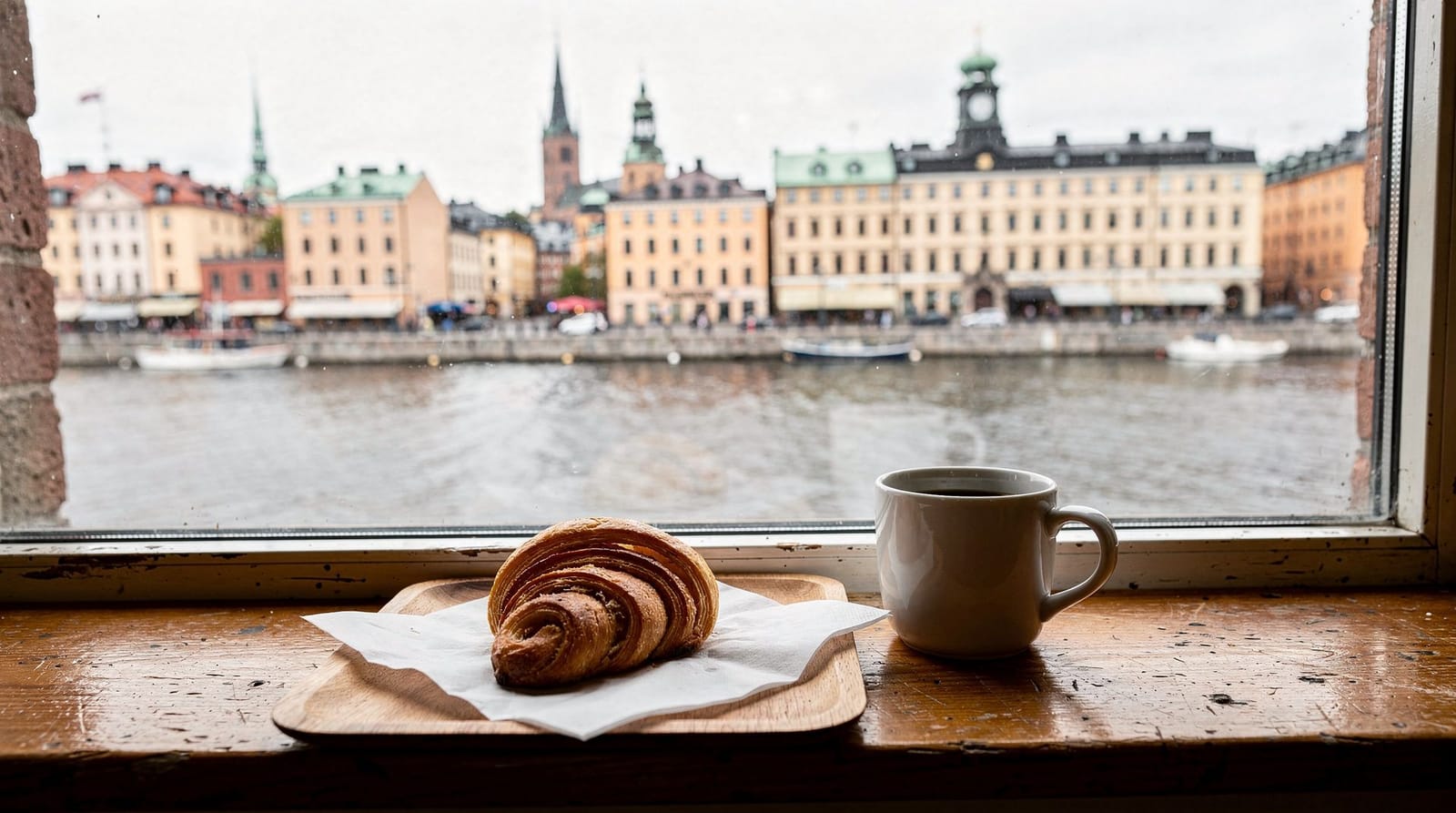
Waterproof outer layer This is non-negotiable. Stockholm receives rain in every month of the year. A good waterproof jacket (not just water-resistant, but properly sealed) with a hood is your most important item. Packable down jackets do not substitute for a waterproof layer; in Stockholm rain, you need proper rain gear.
Comfortable walking shoes Stockholm’s terrain is manageable but varied: smooth pavement in Norrmalm, cobblestones in Gamla Stan, forest tracks in Djurgården and Ekoparken, slippery ferry gangways. A shoe that handles mixed terrain — cushioned but grippy — is better than fashion trainers or shoes without ankle support.
Reusable water bottle Stockholm’s tap water is excellent — one of the cleanest in Europe. Carrying a reusable bottle saves money and plastic across a multi-day visit.
Portable charger Stockholm is a city of apps: SL for transit, hotel apps, maps, museum booking. A day of navigation and museum QR codes drains phones faster than expected. A portable charger (10 000 mAh minimum) is a daily essential.
European Type C/F plug adapter Sweden uses standard European two-round-pin plugs. Bring an adapter for any UK, US, Australian, or non-European devices. Universal adapter plugs work everywhere and save the trouble of researching specifically.
Debit/credit card with contactless This is your primary payment tool in Stockholm. A backup card (different bank) in a separate bag is wise. See swish and payments for how payments work in Sweden.
How to build a Stockholm wardrobe that works
The easiest way to pack for Stockholm is to think in layers rather than in outfits. Swedes dress for a day that may begin cool, warm up by lunchtime and turn windy again once you are near the water, so a base layer, a mid-layer and a waterproof shell that can each be added or removed beat any single heavy garment. Neutral colours help too: pieces in black, grey, navy and muted earth tones mix and match easily, which keeps the suitcase small and still lets you look at home in a design-conscious city.
Shoes deserve the most thought. A typical Stockholm day mixes museum floors, long walks along the waterfront, cobblestones and the occasional ferry deck, so the pair you wear most should be broken in before you leave home. New shoes on the first day of a city break are a reliable way to ruin the second one. If you want to see how a day on foot can unfold, the self-guided walking tour of Stockholm gives an idea of how much walking a normal sightseeing day involves.
Think about how you will move around as well. Public transport is easy and weatherproof for most of the city, which is explained in the SL pass guide, but the waits at stops, the walk from the station to the sights and the open ferry decks are where clothing choices really show. Pack for those moments, not for the heated carriage.
Summer packing list (June–August)
Stockholm summer is mild to warm (18–23°C) with extraordinarily long days. The white nights period (mid-May to late July) means it never fully darkens — this is wonderful but disrupts sleep if you are sensitive to light.
Essentials:
- Waterproof jacket (still rains in summer)
- 2–3 t-shirts and lightweight tops
- 1–2 pairs of shorts or light trousers
- 1 pair of light long trousers (for cooler evenings)
- Light sweater or fleece (evenings on ferries and in archipelago)
- Comfortable walking shoes
- Sandals or casual shoes for warm afternoons
Special summer considerations:
Sun protection: Stockholm sits at 59°N latitude. The sun is lower in the sky than at more southerly destinations, meaning UV is spread across longer hours. On clear summer days, UV index reaches moderate to occasionally high. Sunscreen (SPF 30+), sunglasses, and a hat or cap are necessary for outdoor days on Djurgården, ferries, or in parks.
Sleep mask or blackout curtains: The white nights (twilight at midnight, pre-dawn glow by 03:00) disrupts sleep for many visitors. Most hotels in Stockholm have blackout curtains — confirm this when booking if you are light-sensitive. Alternatively, a soft sleep mask takes no luggage space and solves the problem completely.
Layers for archipelago ferries: Even on hot days, a 90-minute ferry journey to Vaxholm involves wind. Pack a thin fleece or zip-up for ferry decks — you will appreciate it.
Allergy medication: Late spring and early summer bring birch pollen season to Stockholm. If you have pollen allergies, pack antihistamines. The birch pollen season typically peaks in May and early June.
Summer is also the season when plans change most easily with the weather. A bright morning can turn into a grey afternoon, so keep a compact rain layer in your day bag rather than at the hotel. For more on what the long light means for your days, read the Stockholm summer and white nights guide, and if you plan to be on the water, the kayaking guide for the archipelago covers what the day on the water looks like. Quick-dry clothing is the sensible choice for anything involving boats or swimming.
Spring and autumn packing list (April–May and September–October)
The shoulder seasons see temperatures between 5–16°C, variable weather, and some of Stockholm’s most beautiful days. Pack for both warm and cool conditions.
Essentials:
- Waterproof outer jacket
- Mid-layer fleece or sweater
- Light thermal top for cooler mornings
- Long trousers (jeans or walking trousers)
- 1–2 lighter shirts/tops for warmer days
- Comfortable waterproof walking shoes or ankle boots
- Light scarf (useful from mid-September)
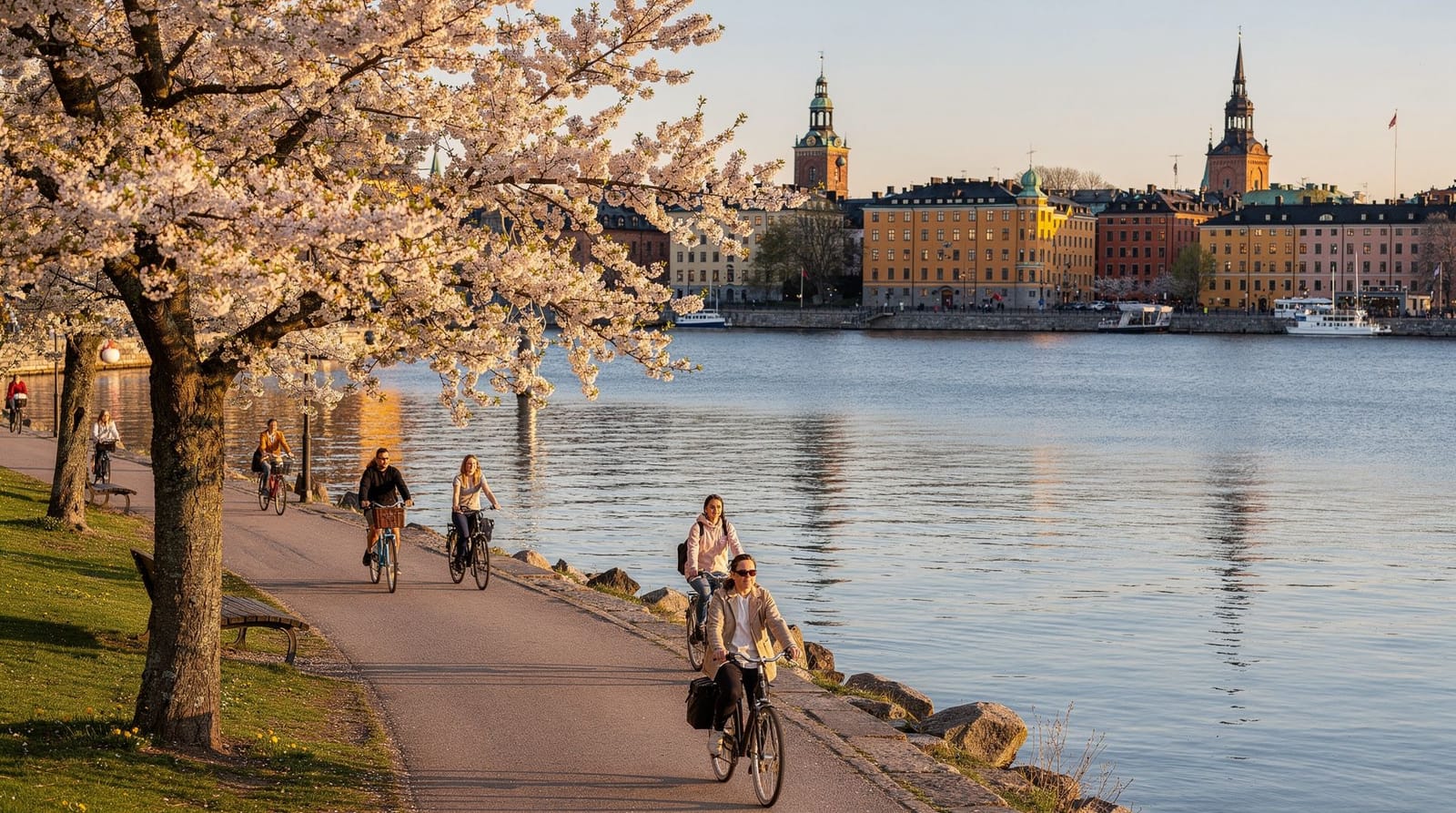
Spring specific: Cherry blossom in Kungsträdgården (usually mid-April) is worth timing a visit for — bring a camera (or just your phone). Rain is frequent but interspersed with genuinely beautiful sunny days.
Autumn specific: September colours in Ekoparken and Djurgården are spectacular. An umbrella is more useful in autumn than in summer — the rain pattern shifts to more persistent drizzle. A full-length folding umbrella is preferable to a small pocket one for extended walks.
The shoulder seasons reward flexibility. Mornings can feel like winter and afternoons like early summer, which is why a stack of thin layers is more useful than one thick sweater. Our guides to spring in Stockholm and to Stockholm’s autumn colours describe what each of these months feels like on the ground, and they are worth reading before you decide how many warm items to bring.
Winter packing list (November–March)
Stockholm winters are genuinely cold — not extreme by Scandinavian standards, but requiring proper preparation. Average temperatures hover around 0 to -5°C, with wind chill making it feel colder near the waterfront. Snow is possible but not guaranteed every winter.
Essentials:
- Heavy waterproof winter jacket (down-filled recommended for -5°C)
- Thermal base layers (top and bottom)
- Mid-layer fleece
- Waterproof winter boots with warm lining (essential — footpaths can be icy, slushy, or snowy)
- Warm hat covering ears (not just a cap — proper beanie)
- Gloves or mittens (waterproof outer shell)
- Scarf
- Wool or thick thermal socks
- Hand warmers (packets available in Stockholm if you forget)
What happens if you underprepare for winter: Stockholm at -5°C with wind off the water at Strömkajen is significantly colder than -5°C in a sheltered city. Museums and the T-bana are warm, but the walk between them is not. Under-dressing for Stockholm winter is a common tourist mistake, and once cold, warming up while sightseeing outdoors is difficult.
Daylight: In January, Stockholm has about 6 hours of usable daylight. The sun rises around 08:45 and sets around 15:00. Plan outdoor activities accordingly — a morning walk after 10:00 and back indoors by 15:00 fits the light. Museums are the main activity in winter, and evenings in Stockholm’s restaurant and bar scene are long and warm in every sense.
Ice on paths: Stockholm pavements in winter after freezing rain are slippery. Winter boots with ice grip (or removable ice grips available in sports shops) are genuinely useful. The T-bana system means you rarely need to walk more than a few minutes outdoors, which mitigates the ice issue considerably.
Packing for a sauna and polar plunge: If a winter archipelago sauna experience is on your itinerary, add a swimsuit, sauna sandals, and a warm robe or oversized towel to your winter list — the sauna typically provides towels but confirm when booking.
Book a traditional sauna with polar plunge in the Baltic SeaDressing in layers in winter: The trick is to avoid sweating on the way in and freezing on the way out. Wear the thermal base layer and fleece indoors, add the heavy jacket only for the walk, and open it up inside museums, cafés and the metro. Cotton next to the skin holds moisture, so wool or a synthetic base layer is the better choice. Dry gloves and a spare pair of socks in your day bag are small items that rescue a cold afternoon.
If you would rather not bring bulky gear: Heavy winter clothing takes up a lot of luggage space, and some visitors prefer not to carry it at all. Our winter clothing rental guide explains the alternative, and the broader Stockholm winter guide helps you judge how much cold-weather kit you really need. For planning the days themselves, the 3-day winter itinerary shows how a cold-weather trip is usually structured around indoor stops and short outdoor stretches.
Winter on the water: Boat trips in the cold season are some of the most atmospheric things you can do, but the open deck is where you feel the temperature most. A wind-proof outer layer, a hat and good gloves are non-negotiable, and a flask of something hot is a pleasant extra. If you want to see the city from the water without freezing, a winter sightseeing cruise through the city and its waterways is a good way to put your layering to the test. For the wider picture of the season on the islands, see the winter archipelago guide.
December special additions
A December Stockholm visit adds specific requirements:
- Warm formal clothes for evening events (Christmas concerts, Lucia processions, restaurants)
- Quality boots for navigating Christmas market cobblestones in Gamla Stan
- A large bag or collapsible tote for Christmas shopping
Stockholm’s Christmas markets sell glass, pottery, Swedish textiles, Dalecarlian horses, and food. If you plan to shop, budget weight and volume in your luggage accordingly.
Evening events in December mix cold streets with warm, crowded interiors, so dress in pieces that come off easily. For Lucia, expect to stand outside or in a queue before you get in, which makes warm footwear and a proper hat more valuable than a smart coat. The Lucia Day guide explains what to expect, and the Christmas markets overview helps you plan which markets to visit and how long you will be outdoors.
Family and children’s packing
For families with children, add:
- Stroller-friendly footwear (flat-soled boots in winter for pushing on cobblestones)
- Children’s waterproof layers (rainsuit for toddlers in any season)
- Children’s sunscreen (SPF 50+ for long Djurgården summer days)
- Swim kit in summer (Djurgårdsbrunnsviken, Långholmen beach, and Södermalm’s parks have swimming spots)
- Child carrier for Gamla Stan cobblestones (more practical than a stroller in the Old Town lanes)
Packing for rainy days
Rain is the one constant across the seasons, so it is worth planning for it properly rather than hoping to avoid it. Waterproof trousers are rarely needed for a city break, but a jacket with a hood, shoes that dry quickly and a bag that keeps your electronics dry are. A wet day is also a good excuse to move indoors, and our museum rainy day guide and the blog post on what actually works in Stockholm rain show how to turn a grey forecast into a good day. Families can find extra ideas in the rainy day with kids guide.
Luggage storage and buying forgotten items
If you over-pack or realize you’ve forgotten something:
Luggage storage: Stockholm Central Station (T-Centralen) has staffed left-luggage services and self-service lockers. See our luggage storage guide for full options including airport storage.
Shopping for forgotten items: ICA and Coop supermarkets sell basic toiletries. Åhléns department store on Drottninggatan (Norrmalm) covers most clothing needs. Stadium and Naturkompaniet carry outdoor and technical clothing if you need proper winter gear on arrival.
Packing light
Stockholm is well-supplied with pharmacies, supermarkets, and clothing stores. Most of what you might forget is available locally at reasonable cost. Over-packing luggage for Stockholm — especially in winter when clothes are bulky — is the more common problem than under-packing. A carry-on-sized bag for a 3–5 day trip is achievable in summer and shoulder seasons. For winter, a small checked bag for the extra layers is usually necessary.
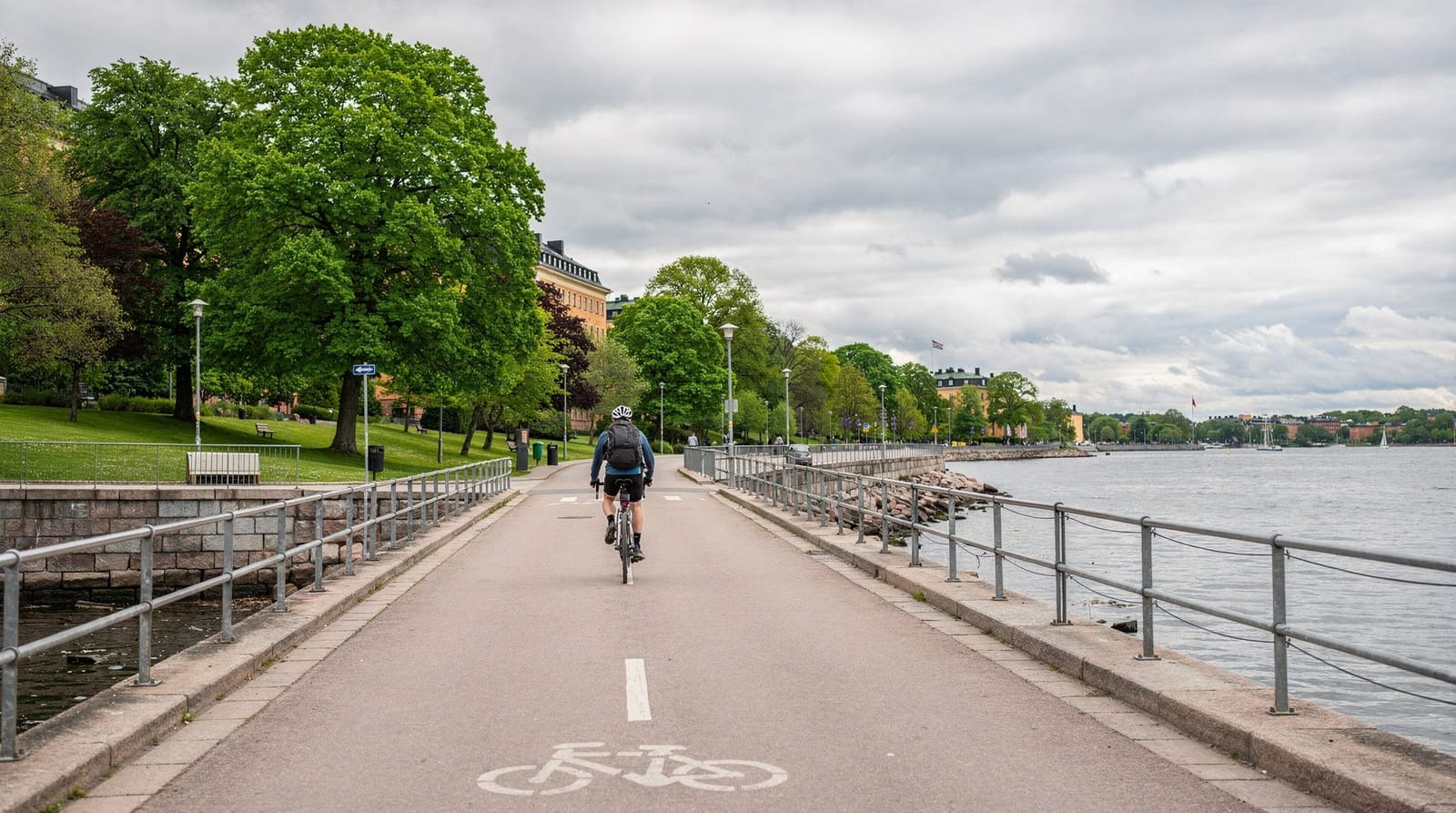
For help deciding when to visit in the first place — which shapes everything on this packing list — see the best time to visit Stockholm guide. Families should also check the Stockholm with kids guide for child-specific gear, and cyclists the cycling in Stockholm guide for weather-appropriate riding gear.
Frequently asked questions about What to pack for Stockholm
Do I need a universal adapter for Sweden?
Yes. Sweden uses Type C and F (Schuko) two-round-pin European plugs, 230V/50Hz. UK, US, Australian and most non-European devices need an adapter. Many modern hotel rooms have USB charging points, but bring an adapter to be certain.Do I need to bring cash SEK to Stockholm?
A small amount is useful as backup (500–1 000 SEK), but not essential. Stockholm is 90%+ cashless — contactless cards and mobile pay work everywhere. See our payments guide for the full picture.Is smart-casual dress appropriate in Stockholm restaurants?
Most Stockholm restaurants welcome smart-casual. Only the very top Michelin-starred restaurants require or expect formal attire. The Swedish dress code is generally relaxed and design-conscious rather than formal — well-fitted clothes in neutral colours fit in everywhere.Do I need waterproof boots in Stockholm?
In winter (November–March) and shoulder seasons (October, April), waterproof boots with good grip are strongly recommended. Snow and slush create slippery conditions. In summer, a pair of comfortable walking shoes with light water resistance is sufficient.What should I pack for an archipelago sauna and polar plunge?
Bring a swimsuit, a warm robe or large towel to wear between sauna and plunge, flip-flops or sauna sandals, and a change of warm clothes for afterwards. The sauna itself provides towels in most cases, but confirm when booking. Wool socks and a hat for the walk between sauna and boat make a big difference in winter.Is layering really necessary in Stockholm summer?
Yes. Even on a 22°C day, evenings cool noticeably and any time on the water (ferries, boat tours) adds wind chill. A light packable layer — fleece or windbreaker — that fits in a day bag is worth carrying even on the warmest-looking mornings.