Royal Palace Stockholm guide: what to see, tickets, and the changing of the guard
Stockholm: Royal Palace museums & Gamla Stan skip-the-line tour
Duration: ~4 hours
Is the Stockholm Royal Palace worth visiting and what is included in the ticket?
The Royal Palace (Kungliga Slottet) is a working royal palace with 600 rooms, and visitors access several sections: the State Apartments, the Treasury (with crown jewels), the Tre Kronor Museum (archaeological remnants of the medieval castle), and the Royal Chapel. One adult ticket costs 220 SEK (240 SEK May–September) and covers the Royal Apartments, the Treasury and the Museum Three Crowns. The Treasury alone justifies the ticket. Allow 2–3 hours minimum.
The Royal Palace in context
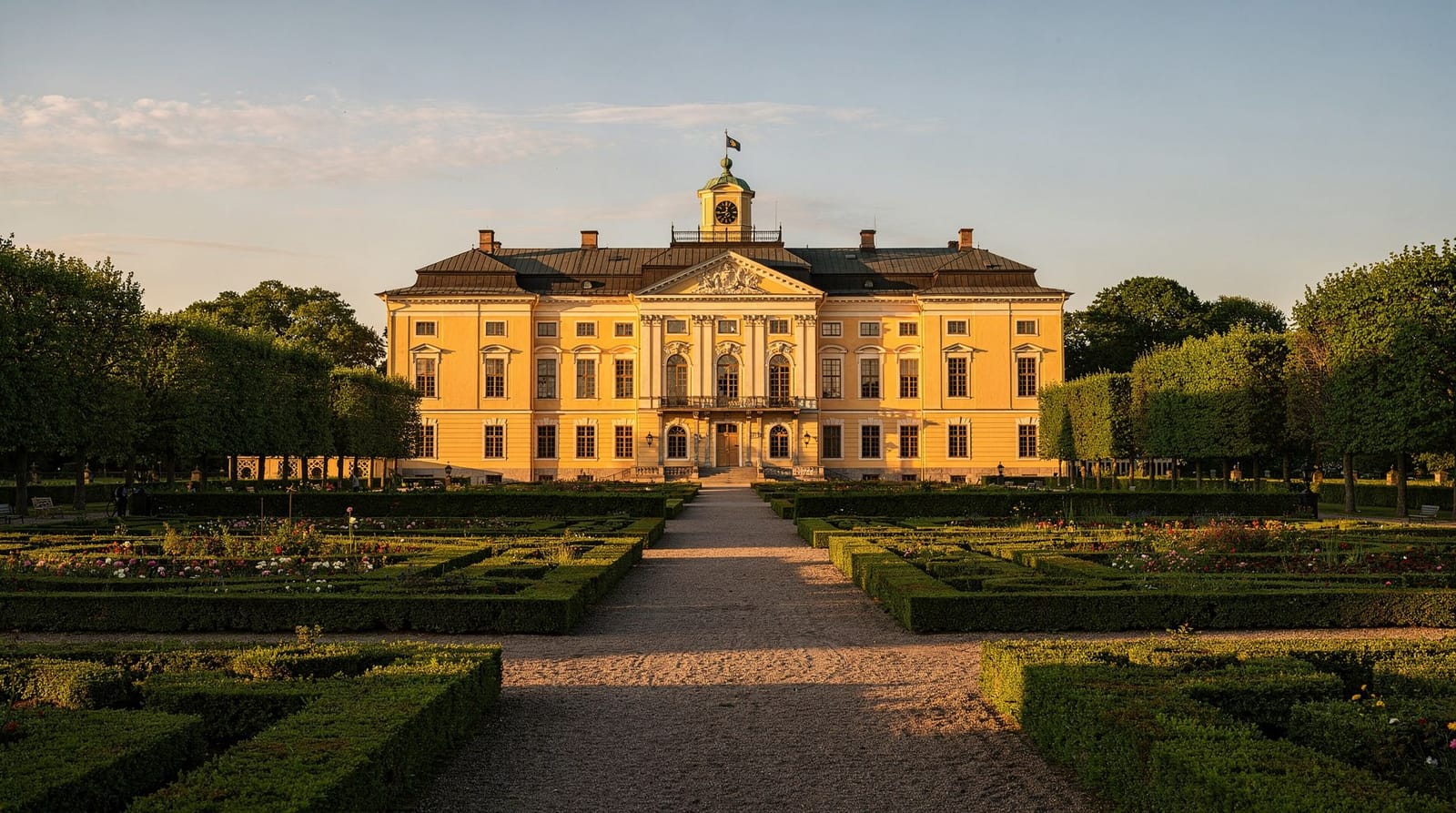
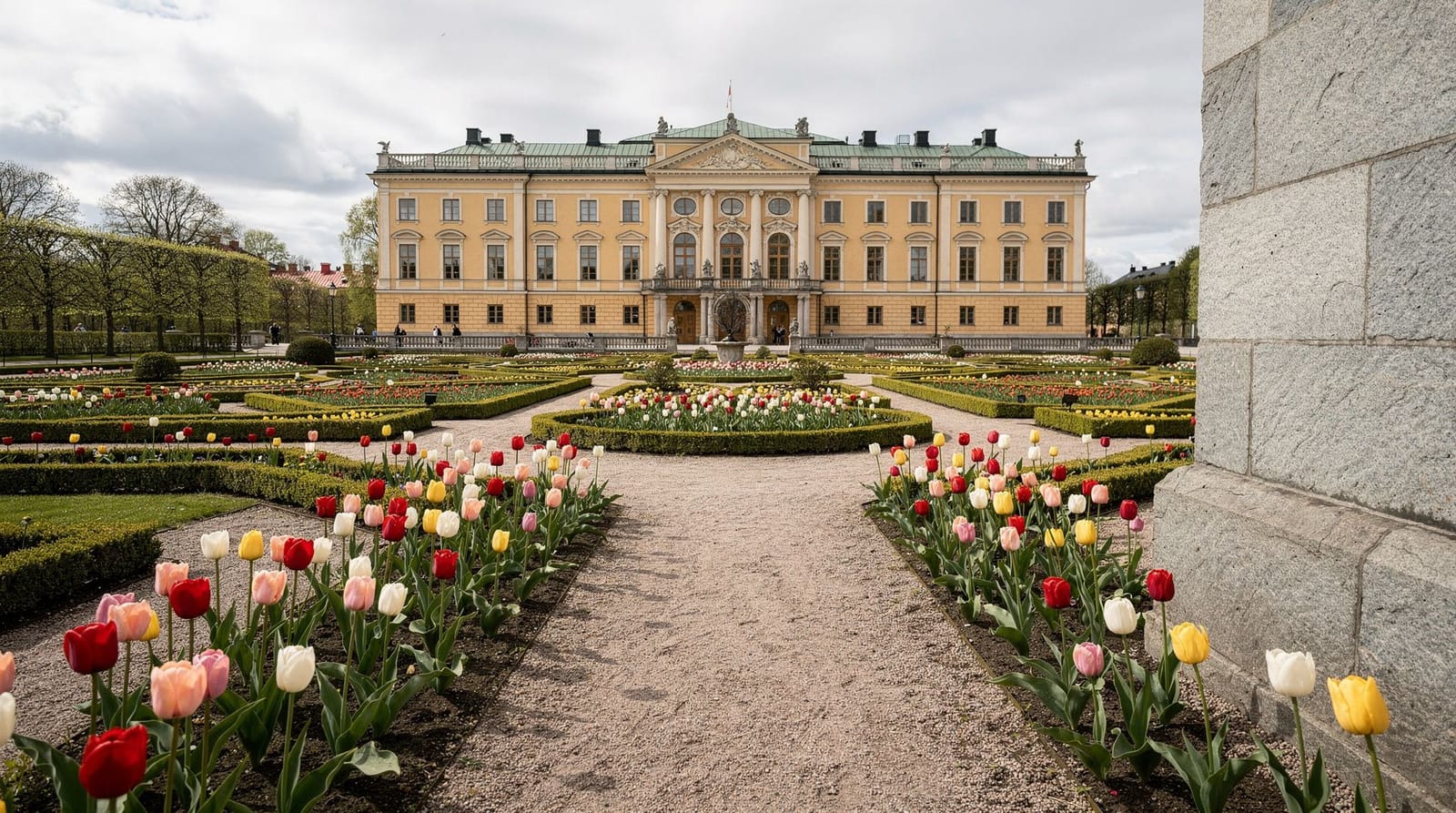
Kungliga Slottet — the Royal Palace — occupies the entire eastern tip of Stadsholmen (the island of Gamla Stan) and dominates the view from across Strömmen. The baroque structure standing today was built between 1697 and 1760, replacing the medieval Tre Kronor castle that burned in 1697 — a fire that conveniently allowed the Nicodemus Tessin the Younger to build something altogether more imposing.
With 600 rooms, the palace is larger than Buckingham Palace (775 rooms — itself one of the largest royal residences in the world) and roughly comparable in scale to Spain’s Royal Palace in Madrid. It remains an actively used royal palace: King Carl XVI Gustaf has his offices here, state ceremonies take place in the Hall of State, and foreign dignitaries are formally received in the State Apartments. This makes it a different category of attraction from a purely museum palace — there are periods when sections are closed for active use.
For visitors to Stockholm, the Royal Palace is the most significant building in Gamla Stan, and the museum sections are among the most content-rich destinations in the city. The Treasury alone — containing the Swedish crown jewels — is worth the trip.
Stockholm: Royal Palace museums and Gamla Stan skip-the-line tourWhat to see inside
The State Apartments (Representationsvåningarna)
The State Apartments are the formal reception rooms used for official functions. The primary rooms open to visitors include:
The Hall of State (Rikssalen): The grandest room in the palace, used for the annual opening of parliament and other state ceremonies. The silver throne — a remarkably heavy piece of 17th-century Swedish silversmithing — is the visual centrepiece. The ceiling paintings, by the French painter Jacques de Meaux, represent Swedish virtues and achievements with the elaborate allegory typical of late 17th-century court decoration.
The White Sea (Vita Havet): The main state reception room, named for its all-white colour scheme that sets it apart from the gilded rooms elsewhere. The room was used for formal receptions; its scale and proportions are impressive without the ornamental density of the other State Apartments.
The Bernadotte Apartments: A suite of rooms furnished in the style of the early 19th century, reflecting the Bernadotte dynasty’s (the current royal family, who came to power in 1818) contribution to the palace’s interior. More intimate in scale than the baroque State Apartments.
The Gallery of Karl XI: A long ceremonial gallery with portraits of Swedish royalty and historical paintings. The series of portraits provides a visual chronology of Swedish royal history from the 17th century forward.
The Treasury (Skattkammaren)
The most visited and most impressive section of the Royal Palace. The Treasury holds the Swedish regalia — the collection of objects that have been used in royal coronations and state ceremonies for centuries.
The crown jewels: Sweden’s crown jewels include King Erik XIV’s crown (1561, the oldest royal crown in Sweden), Queen Kristina’s crown, the royal orb and sceptre, and the key of state. The craftsmanship — particularly Erik XIV’s crown, set with precious stones and enamel work — is extraordinary by any standard of European royal regalia.
The coronation sword: The state sword used in Swedish coronations, with a 16th-century blade and later-added hilt.
The keys of state: The ceremonial keys to the realm, symbolising royal authority over the Swedish state.
The Treasury’s presentation is modern and well-lit, allowing close examination of the objects. Audio guides are available; guided tours of the Treasury add substantial context. Plan 45–60 minutes for the Treasury alone.
The Tre Kronor Museum
The Tre Kronor Museum preserves the archaeological remnants of the medieval Tre Kronor castle that stood on this site before the 1697 fire — specifically the massive round tower and stone foundations visible through glass floors and in the undercroft. The museum also holds objects salvaged from the fire.
The scale of the medieval structure is striking compared to the baroque palace above it. The Tre Kronor tower base — visible in section — shows the castle’s original thickness and height. Objects from the medieval and Renaissance palace include furniture, ceramics, and decorative ironwork.
Allow: 30–45 minutes. Less spectacular than the Treasury but valuable for understanding the site’s history.
The Royal Chapel (Slottskyrkan)
The chapel attached to the palace functions as an active place of worship — royal christenings, confirmations, and church services occur here. Visitors can see the interior when services are not scheduled.
The interior is late baroque — gilded woodwork, painted ceiling vault, royal pews separated from the general congregation space. The altar painting, by the French-Swedish artist Louis Masreliez, is the main artwork.
Note: The Royal Chapel may be inaccessible on certain days due to scheduled services.
Practical essentials
| Detail | Information |
|---|---|
| Address | Slottsbacken, Gamla Stan |
| Opening hours | Daily; 10:00–17:00 May–September, 10:00–16:00 October–April (closed on some dates for state events) |
| Admission | 220 SEK adult (240 SEK May–Sep); ages 7–17: 110 SEK (120 SEK May–Sep); under 7 free |
| Treasury | Included in the single entrance ticket |
| Recommended time | 2–3 hours |
| T-bana | Gamla Stan (red/green line), 5-minute walk |
Buying tickets and avoiding queues
Online booking: The Royal Palace’s online ticket system allows timed entry — particularly valuable for July when walk-in queues can extend to 30+ minutes. The skip-the-line tour combines a guided Gamla Stan walk with palace entry, bypassing the standard queue.
Best timing: Arrive at opening (10:00) to experience the Treasury and State Apartments before the day’s first tour groups arrive. Alternatively, late afternoon (15:00–16:00) sees somewhat reduced crowds as guided tour groups have moved on.
July note: July is the busiest month. Skip-the-line tickets are strongly recommended.
Combining with Gamla Stan
The Royal Palace is the anchor of a Gamla Stan visit. A logical combination:
- Royal Palace opening (10:00): Treasury first, then State Apartments, then Tre Kronor Museum.
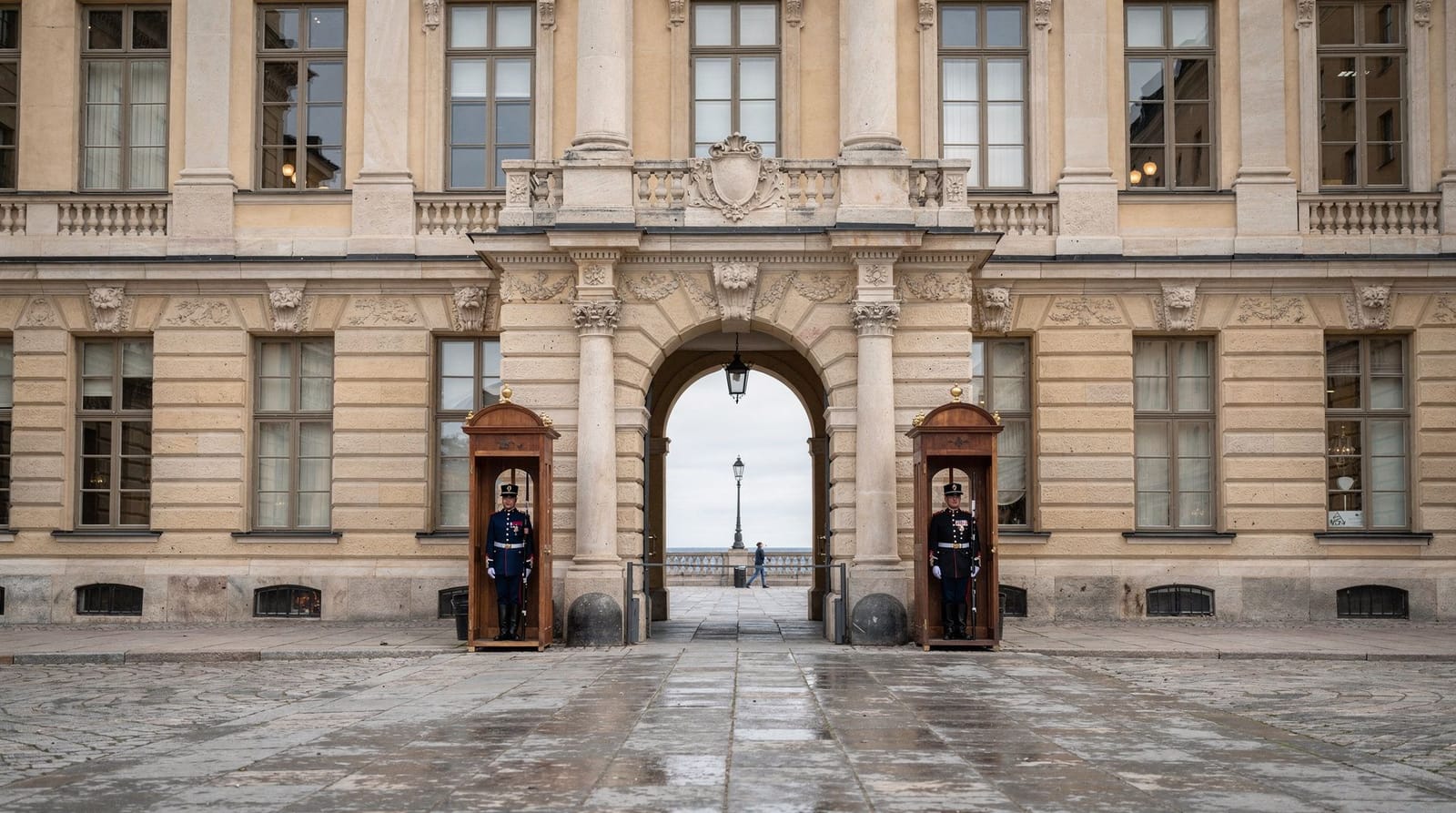
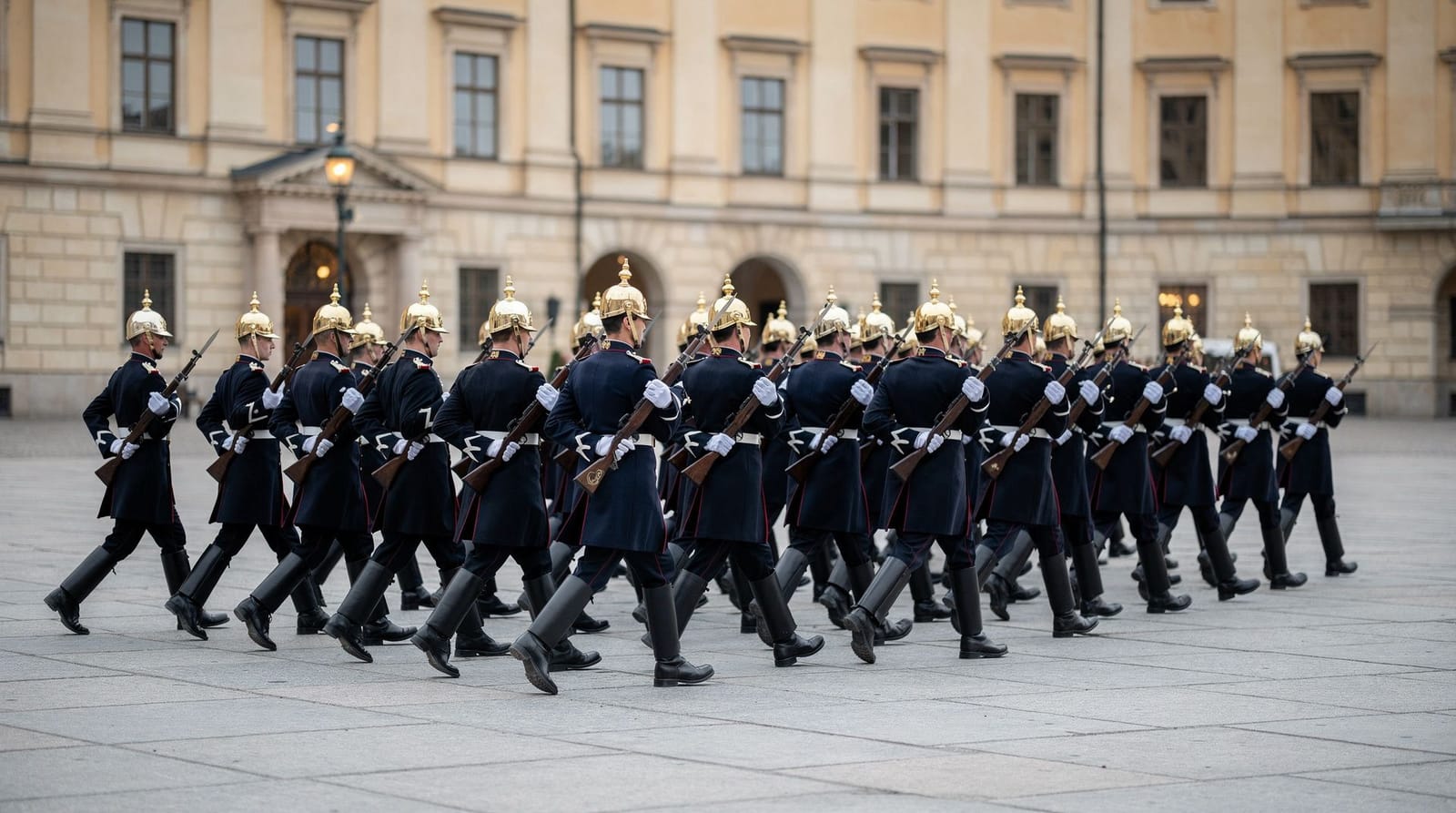
- 12:15 (weekdays) or 13:15 (weekends): Changing of the guard — see the palace forecourt performance from Outer Courtyard. The changing of the guard guide covers viewing positions and the full ceremony sequence in more detail than fits here.
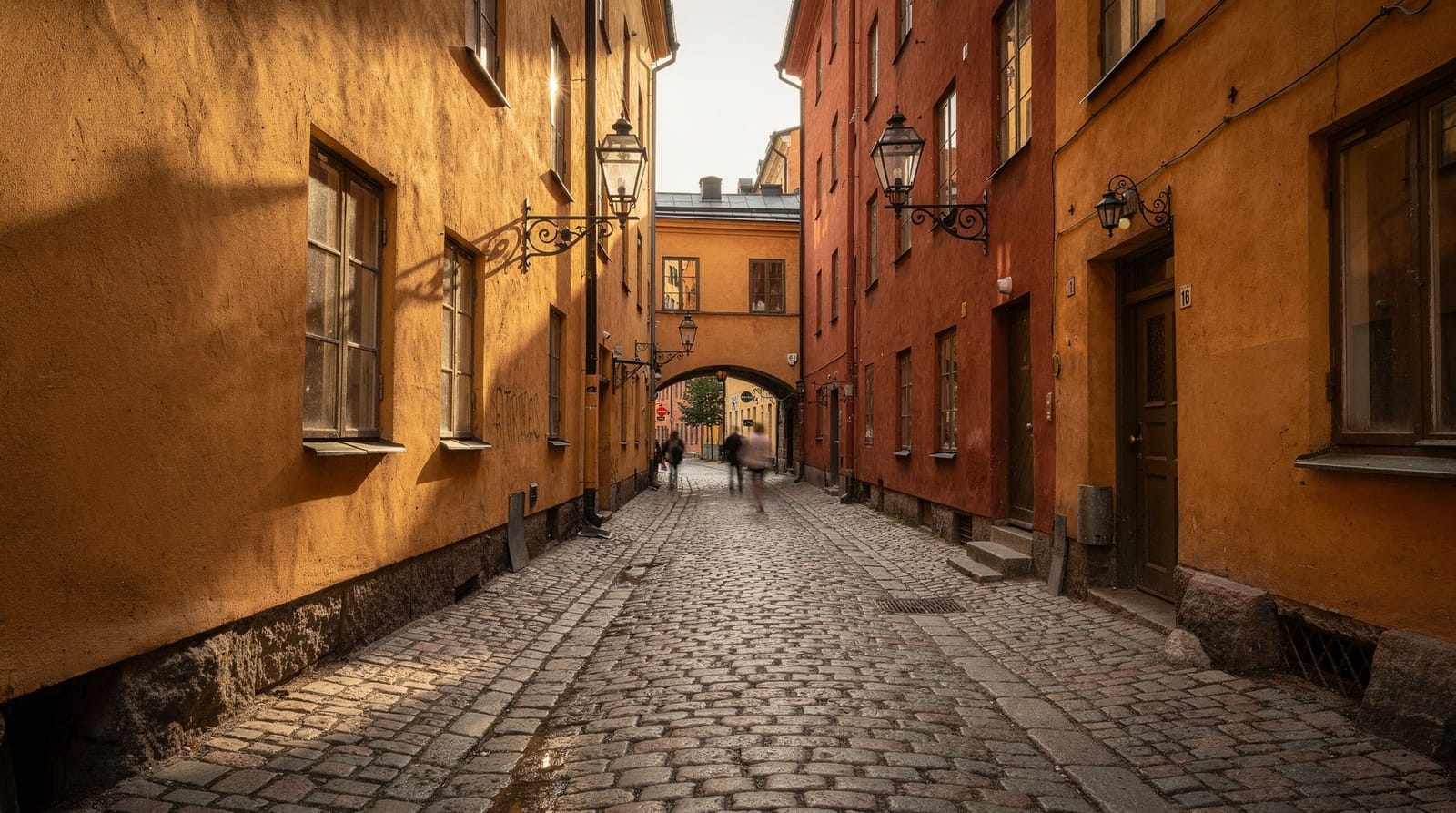
- After the guard: Walk south through Gamla Stan — Stortorget, Köpmangatan, Västerånggatan (avoid the restaurants), and the medieval alleys.
- Late afternoon: Nobel Prize Museum (on Stortorget, around the corner) — excellent for complement to the palace’s historical perspective.
The Gamla Stan walking tour guide covers the neighbourhood comprehensively. For a slower read on the island itself, the Gamla Stan neighbourhood deep dive and the Gamla Stan destination page explain how the alleys, squares and waterfront fit together, and the Nobel Prize Museum guide covers the stop on Stortorget in more detail.
Book the Royal Palace self-guided mystery tourThe palace’s external architecture
Even if you do not buy a ticket, the Royal Palace’s exterior is worth a dedicated circuit. The main approaches:
Outer Courtyard (Yttre Borggården): The forecourt on the north side, where the changing of the guard takes place. The palace’s main facade from this angle is the ceremonial entrance.
Slottsbacken: The sloping street on the eastern side, giving a view of the full baroque facade rising above Gamla Stan’s rooflines. The palace from this angle is most legible as a building.
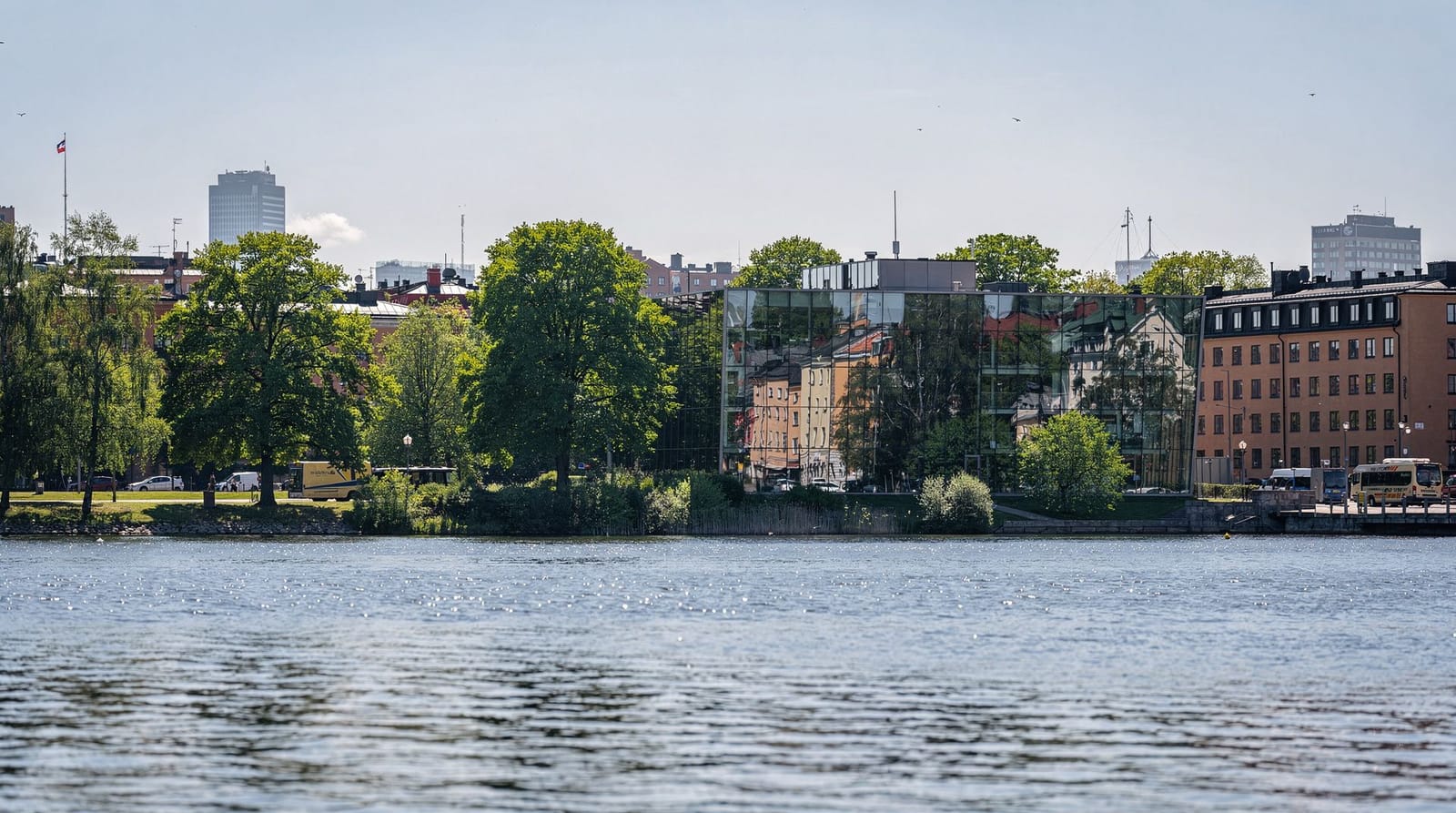
The waterfront view from Skeppsbron: Looking northwest from the quay along Skeppsbron gives the palace’s southern approach — the facade facing Strömmen. This is the view captured in most Stockholm landscape photographs.
The Royal Palace vs the family’s other residences
Visitors sometimes assume the Royal Palace is the only royal building worth seeing near Stockholm, but it is one of three that make sense together for anyone with more than a single day. The table below sets out how the three compare on the practical questions that determine which to prioritise.
| Royal Palace (Gamla Stan) | Drottningholm | Gripsholm (Mariefred) | |
|---|---|---|---|
| Function | Official state palace | Private family residence | Historic museum only |
| Distance | City centre | 10 km west | 65 km west |
| Crown jewels | Yes | No | No |
| Signature feature | Treasury regalia | 18th-century Court Theatre | National Portrait Collection |
| Time needed | 2–3 hours | 3–5 hours | 4–6 hours |
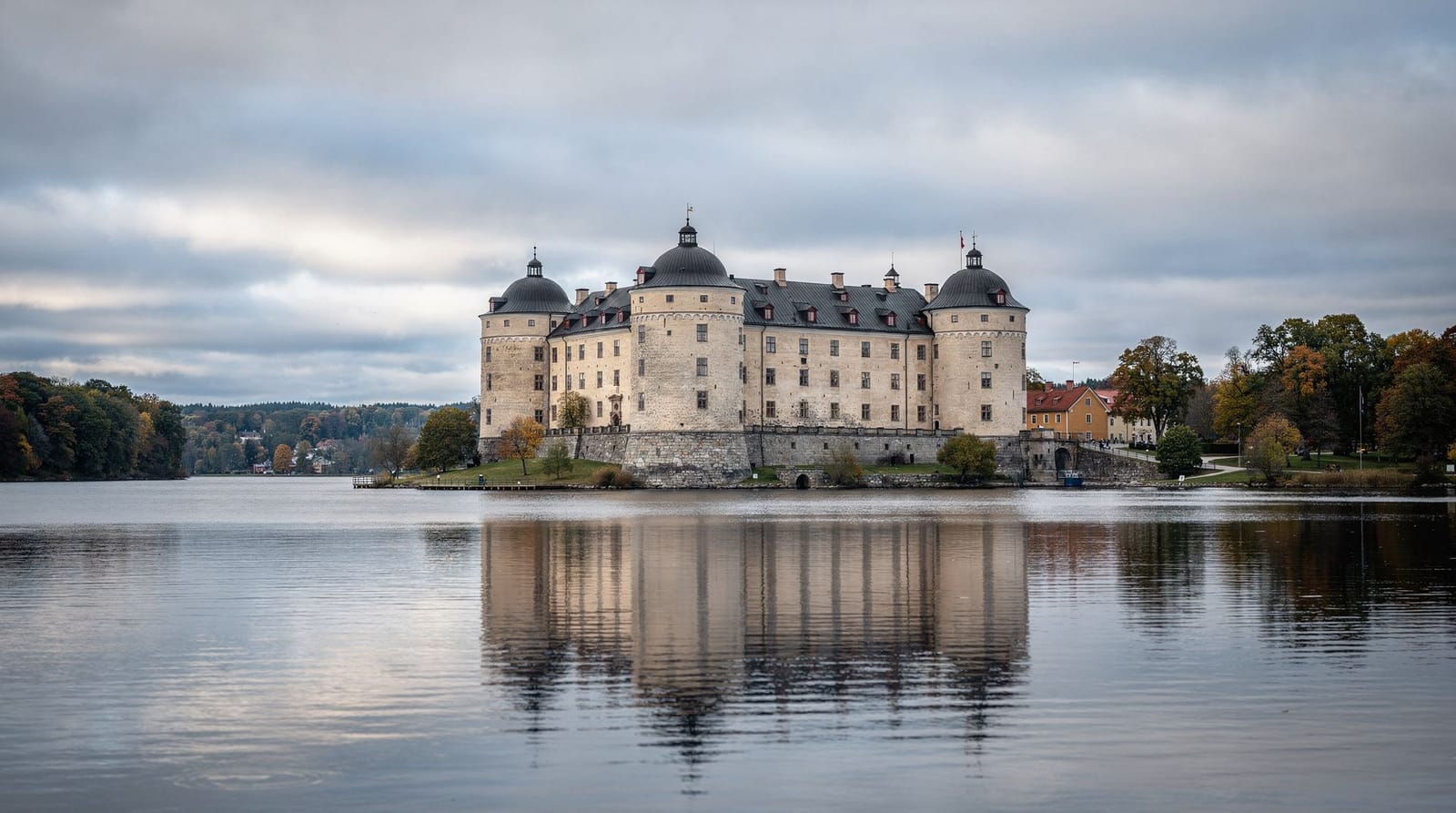
For most first-time visitors, the Royal Palace remains the priority — it is inside the city, requires no extra transport logistics, and delivers the crown jewels in a single stop. Drottningholm Palace, the family’s actual home and a UNESCO World Heritage Site, is the natural second stop for anyone staying more than a day or two. Gripsholm Castle in Mariefred is worth the longer trip specifically for visitors with a genuine interest in Swedish portraiture and Renaissance fortress architecture — it is the least essential of the three for a first Stockholm visit but the most rewarding for history enthusiasts with time to spare. The royal palaces comparison guide goes through all three in full detail, including recommended itineraries by trip length.
The history of the palace and the 1697 fire
The palace that stands today replaced a medieval fortress — the Tre Kronor castle — that burned in 1697 in one of the most destructive fires in Swedish history. The fire started in the north wing and, fuelled by the dry timber of the medieval structure, rapidly consumed the entire building. Thousands of objects — royal treasures, documents, artworks — were lost in the fire. The Crown Jewels were saved; most of the furnishings were not.
The fire was simultaneously a catastrophe and an opportunity. Nicodemus Tessin the Younger, who had already prepared plans for a new palace to replace the ageing medieval structure, was given the commission to build what he had envisioned. The result, constructed between 1697 and 1760 (with work continuing into the next century for some sections), is one of the major baroque palaces in northern Europe.
Tessin designed the palace with deliberate grandeur: the Italian baroque tradition (he had studied in Rome and Paris) combined with specific Swedish requirements for a working royal residence. The result is more restrained than the French baroque model — less gilded than Versailles, more stone and plaster than mirror and gold — but imposing by any measure.
The palace’s construction spanned multiple reigns and was not completed under any single monarch. Karl XII died fighting wars (never actually living in the new palace); Ulrika Eleonora and Fredrik I saw further construction; Adolf Fredrik and Lovisa Ulrika completed the most important interiors in the 18th century.
The Swedish monarchy and the palace’s current role
The Swedish monarchy has one of the most constitutionally circumscribed roles in Europe. The 1974 Instrument of Government reduced the King’s functions to purely ceremonial and representative duties — he opens parliament, receives foreign dignitaries, and represents Sweden at international events, but holds no political power. The Prime Minister governs; the King represents.
Within this framework, the Royal Palace serves specific functions that make it genuinely active rather than merely a museum:
The Annual Opening of Parliament (Riksmötets öppnande): In September or October each year, the King formally opens the Swedish parliament (Riksdag) in a ceremony that takes place partly in the Hall of State at the Royal Palace. The ceremony includes the reading of the Speech from the Throne (Trontal), delivered by the King but written by the government.
State visits: Foreign heads of state are received at the Royal Palace in formal ceremonies. The palace’s state rooms, particularly the White Sea and the Hall of State, are used for dinners and official functions during these visits.
The King’s working offices: Carl XVI Gustaf maintains working offices in the palace. The palace hosts the functions of the Royal Court (Kungliga Hovstaterna), including the King’s Lord Chamberlain, his household staff, and the administrative functions of the Swedish monarchy.
Understanding this dual role — museum and working palace — explains the occasional closures for state events. Checking the palace website before visiting in September (when state visits often occur) is genuinely useful.
This working-palace status is also what most clearly separates the Gamla Stan palace from a purely historical monument. Where many European royal palaces have been fully converted to museum use, the Royal Palace in Stockholm continues to function as the operational seat of a constitutional monarchy — a distinction that shapes both the visitor experience (occasional section closures, security considerations around state events) and the atmosphere (a genuine sense that the building is still doing the job it was built for, rather than performing a version of its former function for tourists).
The Treasury in detail
The Treasury (Skattkammaren) justifies its own visit regardless of interest in the State Apartments or historical content. Sweden’s royal regalia — the physical objects that have been used in coronations and state ceremonies since the 16th century — is concentrated here.
Erik XIV’s crown (1561): The oldest Swedish royal crown and the most significant object in the Treasury. Erik XIV was one of the more complex and troubled Swedish monarchs — brilliant, multilingual, and eventually mentally unstable, he was deposed by his brother Johan III in 1568. His crown survived. Made of gold with settings of rubies, emeralds, and pearls, with enamel portraits of the four cardinal virtues, it is the finest piece of 16th-century Swedish goldsmithing extant. Seeing it under the Treasury’s directed lighting gives an impression of the object’s quality that photographs cannot convey.
Queen Kristina’s crown and regalia: Sweden’s most famous monarch (she abdicated in 1654 to convert to Catholicism) is represented by several objects in the Treasury, including the crown made for her coronation in 1650. Kristina’s story — a woman exercising absolute power in the 17th century, choosing abdication over marriage, converting from the religion that defined Swedish national identity — is among the more remarkable in European royal history.
The state swords: The coronation sword used in Swedish coronation ceremonies from the 16th century through to the last Swedish coronation in 1907. The ceremonial regalia is presented in the context of the specific ceremonies in which each object was used.
Why the Treasury alone justifies a visit for skeptical travellers
Visitors who are unsure whether a palace museum is worth their time often underestimate the Treasury specifically. Unlike the State Apartments, which reward slower browsing and an interest in interior decoration, the Treasury is dense: a relatively compact underground space holding several centuries of the most significant objects in Swedish history, each with a specific and often dramatic backstory.
Erik XIV’s crown alone — surviving a king’s deposition, several centuries of political upheaval, and the 1697 fire that destroyed most of the rest of the medieval collection — carries enough narrative weight to make 30–40 minutes in the Treasury feel substantial even for visitors who typically find palace museums slow. If your time in Gamla Stan is genuinely limited to under an hour, the Treasury on its own, purchased as the standalone ~160 SEK ticket, delivers most of what makes the Royal Palace worth visiting at all.
Accessibility
The Royal Palace has been substantially improved for accessibility in recent years. Ground-floor sections are accessible by wheelchair with ramp access. Some historic staircases without lifts may limit access to upper floors; confirm specific accessibility with the Royal Court when booking.
Fitting the palace into a longer trip
The palace works best as a fixed point around which the rest of a Stockholm stay is arranged. Because it sits on Gamla Stan, it pairs naturally with a first-day orientation: see the regalia in the morning, then let the afternoon drift through the old town. Travellers with limited time can slot it into the Stockholm in 24 hours itinerary, while those with a little more room will find it sits comfortably inside the three-day first-timer itinerary and the wider Stockholm in 3 days overview.
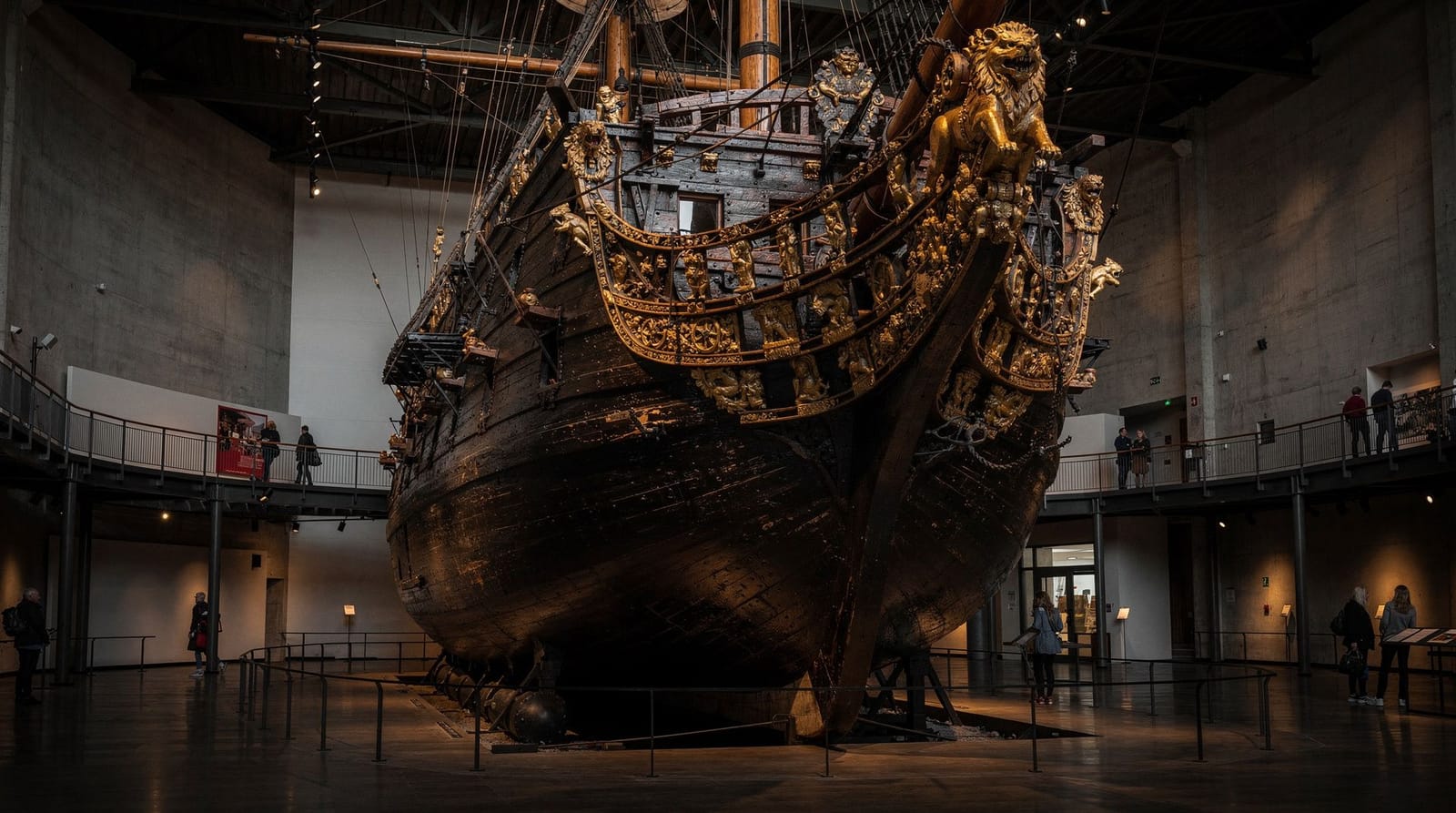
If you want to see the palace from a different angle, the royal canal boat tour guide describes how the waterfront facade looks from the water, which is the view most photographs capture. Visitors who enjoy royal and historical sights will also want to compare it with the Vasa Museum on Djurgården, covered in the Djurgården neighbourhood deep dive, since the two together give a good picture of Sweden’s 17th-century ambitions.
Frequently asked questions about the Royal Palace Stockholm
Is the Royal Family in residence at the Royal Palace?
The King and Queen use the Royal Palace for official duties — state ceremonies, audiences, the annual opening of parliament — but do not live there full-time. Drottningholm Palace (UNESCO World Heritage) is the private royal residence where the family lives day-to-day. When the royal standard (the King’s personal flag) flies from the palace, the King is present.
Can you access the Royal Palace without a ticket?
The outer courtyard is publicly accessible at all times — this is where the changing of the guard takes place. The inner rooms (State Apartments, Treasury, Tre Kronor Museum, Royal Chapel) all require tickets.
Is the Stockholm Royal Palace better than Drottningholm?
They complement rather than compete. The Royal Palace is the ceremonial centrepiece — formal, urban, historically significant as the seat of Swedish state. Drottningholm is the living palace — UNESCO World Heritage, set in landscape, with the extraordinary Court Theatre still running performances with 18th-century stage machinery. For history and regalia: Royal Palace. For architecture, landscape, and theatre: Drottningholm. The royal palaces comparison guide compares all Stockholm-area palaces.
What is the best way to photograph the Royal Palace?
From the canal boat (the water-level approach from Strömmen gives the most complete view of the eastern facade). From Skeppsbron (the quay directly south of the palace, looking north). From the foot of Slottsbacken on the east side (the sloping street that gives the full baroque elevation). The exterior is best in the morning when the eastern facade catches the early light; the Treasury and State Apartments are photographable inside with no flash and the guided tour.
How long does it take to visit the Royal Palace fully?
Allow 2–3 hours for all four sections: Treasury (45–60 min), State Apartments (45–60 min), Tre Kronor Museum (30–45 min), Royal Chapel (15–20 min if accessible). Adding the 12:15 Changing of the Guard on a weekday extends the morning to 3.5–4 hours total.
Is there a café or restaurant at the Royal Palace?
The palace does not have a formal restaurant open to the public. A small café is available on certain days; the guard ceremony area has no food facilities. The nearest options are in Gamla Stan — 5 minutes south of the palace on Storkyrkobrinken or Stortorget.
What is the difference between visiting the Royal Palace and visiting Drottningholm on the same trip?
The Royal Palace provides the crown jewels, the working-palace ceremonial context, and the Tre Kronor medieval archaeology — all within Stockholm city centre. Drottningholm provides the architectural landscape, the Court Theatre, and the UNESCO World Heritage status — a half-day excursion by boat or bus. Both complement each other: the Royal Palace covers what the monarchy does officially; Drottningholm covers where the royal family actually lives and what they built for culture. For visitors with 3+ days, visiting both is the obvious choice. See the royal palaces comparison guide for a structured recommendation.
Can you visit the Royal Palace on a Sunday?
Yes. The palace is open on Sundays but with the later Changing of the Guard ceremony (13:15 all year rather than the 12:15 Monday–Saturday time). Sunday tends to be slightly busier than weekdays in peak season. The Treasury and State Apartments have the same opening hours as weekdays; the Royal Chapel may have services in the morning that restrict access until approximately 11:30.
Top experiences
Bookable activities with verified prices and instant confirmation on GetYourGuide.