Kanelbulle in Stockholm: the definitive cinnamon bun guide
Stockholm: guided fika tour
Where can I find the best kanelbulle in Stockholm?
Café Saturnus in Östermalm is famous for the largest kanelbulle in Stockholm — the size of a side plate, properly spiced. Vete-Katten (Norrmalm, since 1928) does the classic version at its best. Fabrique bakery has several locations for a more contemporary take. Avoid pre-packaged supermarket versions as a first experience.
Sweden’s most important pastry
The kanelbulle is Sweden’s unofficial national pastry. More than a baked good, it is a cultural object: the thing you eat during fika, the thing Swedish parents make on Sundays, the smell that defines thousands of Swedish kitchens. It has its own national day (October 4th), appears in every bakery window in the country, and has been exported globally in a form (the IKEA cinnamon roll) that, while popular, does not quite capture the original.
Understanding the kanelbulle is a small but meaningful part of understanding Sweden.
| Where | Bakeries and cafés citywide; Östermalm and Norrmalm have the classics |
| Cost | Around 35–60 SEK per bun at a genuine bakery |
| Time needed | 20–40 minutes for a proper fika stop |
| Best pick | Café Saturnus (size), Vete-Katten (classic technique) |
| Peak day | October 4th, Kanelbullens dag |
For the wider ritual this pastry sits inside, see the fika culture guide and the Swedish breakfast guide if you’re planning your mornings around it.
What makes a good kanelbulle
The dough
The dough is enriched — butter, milk, egg, and sugar are incorporated alongside the yeast and flour. The critical distinguishing ingredient is cardamom. Most recipes call for 1–2 teaspoons of freshly ground cardamom per kilogram of flour; this gives the dough a warm, slightly floral undertone that distinguishes it from generic sweet dough.
The dough should be soft but not sticky. Overworked dough produces a dense bun. Properly proofed dough, allowed to rise twice, gives the feathery, slightly chewy texture that defines a good kanelbulle.
The filling
Cinnamon, butter, and sugar — simple, with the cinnamon doing the work. The proportions vary by baker, but the Swedish approach tends toward restraint on the sugar compared to American cinnamon rolls. A good kanelbulle should taste primarily of cinnamon and cardamom, with sweetness supporting rather than dominating.
The form
Traditional kanelbulle is twisted or knotted, not rolled into a simple spiral. The twisted format creates layering that affects the bake — some parts more exposed, some more protected — producing a combination of slightly crisper exterior and soft interior that a uniform roll cannot replicate.
Pearl sugar (pärlsocker) is scattered on top before baking. The small white sugar crystals add crunch and a moment of sweetness without dissolving into the glaze.
What goes wrong
The most common failures: too much sugar (masks the spicing), not enough cardamom (makes it generic), insufficient proofing (dense, gummy texture), and overbaking (dry, tough exterior). Pre-packaged commercial versions tend to fail on the first and fourth counts simultaneously — sweet and dry.
How to judge a bun in front of you
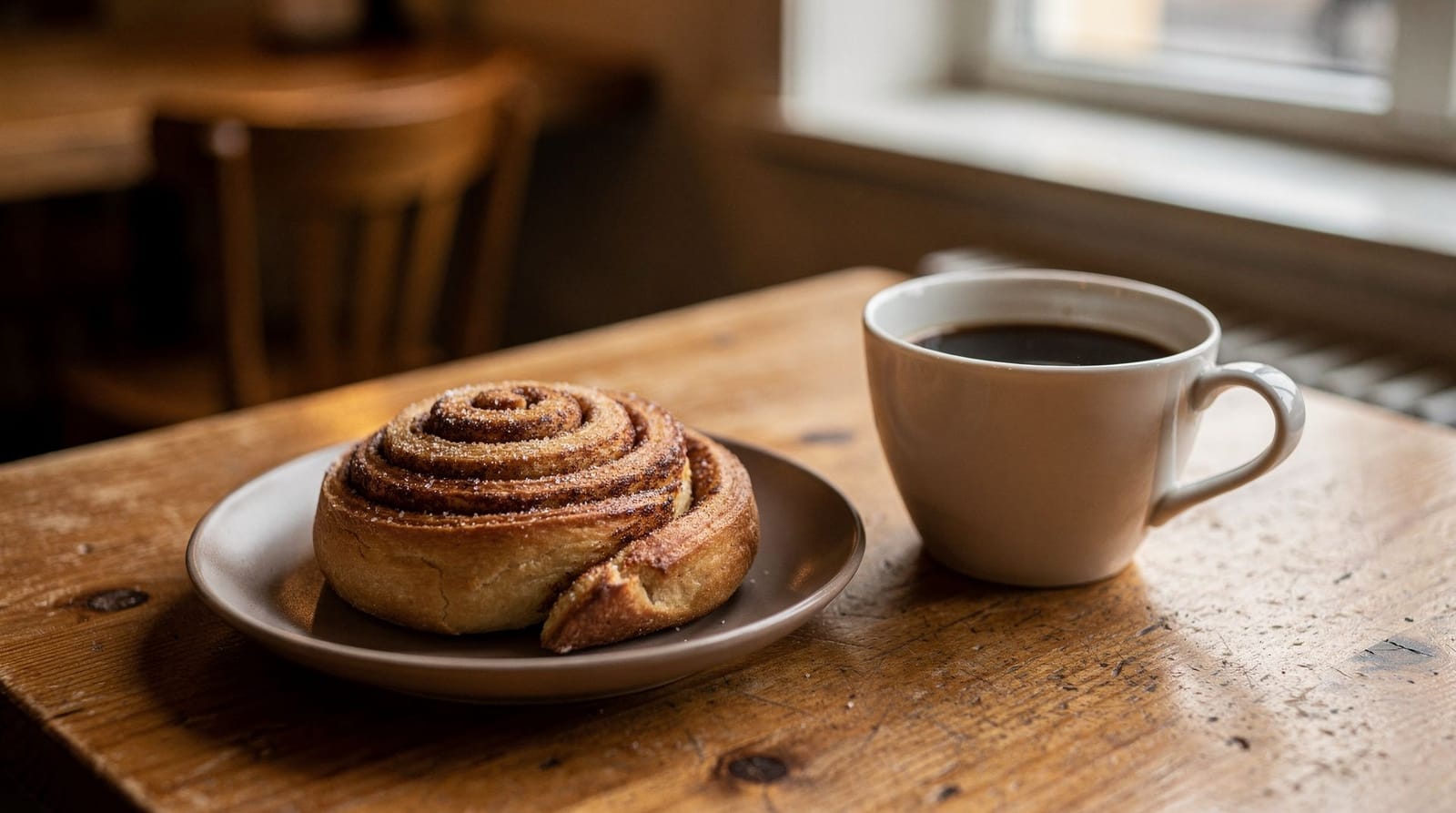
You do not need to bite into a bun to read it. Look at the surface first: a good kanelbulle has an even golden-brown colour, visible pearl sugar, and a slightly glossy finish rather than a dull, dry crust. Pick it up and it should feel light for its size. A heavy, compact bun usually means under-proofed dough. Then smell it. Cardamom reads as a warm, almost citrusy note sitting underneath the cinnamon, and if all you get is sugar, the baker has cut corners.
Once you taste it, pay attention to the interior. The layers should pull apart gently, and the filling should be distributed through the twists rather than pooled in one greasy centre. A bun that is gooey in the middle and dry at the edges has been baked too hot or too long. Swedes tend to be quietly opinionated about this, which is part of the fun: ask the person behind the counter which batch is freshest and you will usually get an honest answer.
Where to eat the best kanelbulle in Stockholm
Café Saturnus — Östermalm
Eriksbergsgatan 6, Östermalm.
The Saturnus kanelbulle is the most photographed in Stockholm. It is deliberately oversized — the size of a generous side plate — and the quality matches the spectacle. Properly spiced dough, generous filling, pearl sugar that actually crunches. The café itself is bright and pleasant with a mix of Swedish and international customers.
The size means it is best shared over a long fika rather than eaten alone in ten minutes. Order it with filter coffee (the espresso is good but the filter suits the traditional bun better).
Best for: The full experience. This is the canonical Stockholm kanelbulle.
Vete-Katten — Norrmalm
Kungsgatan 55, Norrmalm.
Since 1928, Vete-Katten has been making Swedish pastries with an emphasis on tradition. The kanelbulle here is smaller and more classically proportioned than Saturnus’s monument. The technique is excellent — the dough has good cardamom presence, the bake is even, the bun is not sweetened into oblivion.
The surroundings — dark wood, mirrored cases, period fittings — make the experience feel appropriately traditional.
Best for: The best argument for the classic, correctly sized version.
Fabrique — multiple locations
Fabrique is a Stockholm bakery chain with locations in Södermalm, Norrmalm, and other neighbourhoods. The sourdough bread is their primary reputation, but the kanelbulle is reliably good — a contemporary bakery approach that does not compromise the traditional elements. Slightly denser dough than Vete-Katten, more tang from the sour component.
Good for: a kanelbulle while exploring a neighbourhood without making a specific destination of it.
Pascal — Mariatorget and Norrtullsgatan
Pascal has a more modern café aesthetic, and the kanelbulle reflects it: slightly smaller, more precisely executed, with the cardamom content pushed slightly higher than the traditional version. This suits the third-wave coffee context it is served in.
Drop Coffee pairing — Södermalm
Drop Coffee (Wollmar Yxkullsgatan 10) sources pastries from quality bakeries rather than baking in-house. The combination of their single-origin filter coffee with a carefully sourced kanelbulle is one of the best coffee-and-pastry experiences in Stockholm. Less traditional in atmosphere, more precise in execution. For more of Södermalm’s food scene beyond this one café, see the Södermalm food scene guide.
Pairing kanelbulle with Stockholm’s coffee scene
Third-wave coffee has changed how kanelbulle is served in parts of Stockholm without displacing the tradition. Specialty roasters increasingly pair a well-sourced bun with single-origin filter coffee rather than the traditional bottomless drip coffee of an old-school café — the Stockholm third-wave coffee guide covers where this pairing works best. If you’d rather have a knowledgeable guide take you through several bakeries in one outing, a food-focused walking tour covers kanelbulle alongside other Swedish staples.
Book a Stockholm food and culinary walking tourBuilding a kanelbulle route around your sightseeing
The easiest way to eat well is to let your day’s plans choose the bakery for you, rather than crossing the city for one bun. A few pairings that work naturally:
- Old Town mornings. If you are starting in Gamla Stan, take your fika before the crowds build, then follow the Gamla Stan walking tour guide. Be wary of cafés on the busiest tourist street; the Gamla Stan restaurants guide explains where the quality drops off.
- Södermalm afternoons. Södermalm is the neighbourhood for a slower, more contemporary bun, and it pairs well with a wander along the route in the Södermalm walking tour guide. The wider Södermalm neighbourhood deep dive will help you choose a base.
- Östermalm treats. Östermalm is where Café Saturnus sits, and the Östermalm neighbourhood deep dive shows what else is worth a detour nearby.
- Museum breaks. A museum day is much improved by a planned pastry stop. After the Vasa Museum or the Nordiska museet, a sit-down fika on Djurgården or back in the centre resets tired legs. The Djurgården walking route is a pleasant way to link them.
If you are working out how much of your day to leave for sweet stops, the Stockholm in 3 days overview shows how to fit food breaks around the major sights, and the Stockholm budget per day guide helps you decide whether to treat the bun as a daily habit or a single splurge.
Ordering and etiquette at a Swedish café
Most bakeries work on a simple system: you queue at the counter, order, pay by card, and either take a tray to a table or have your order brought over. Cash is rarely needed, and the payments guide for tourists explains what to expect when you pay in Sweden. Nobody will rush you, and nobody expects a large tip for counter service.
A few small habits make the visit smoother. Say hello when you reach the counter, point at the bun you want, and ask for filter coffee if you want the traditional pairing. Many cafés refill filter coffee, so check before ordering a second cup. Take your time: a fika is meant to be a pause, and lingering over a bun with a notebook, a map or a friend is entirely normal. If you are sharing an oversized bun, ask for an extra plate and a knife.
When the weather decides for you
Kanelbulle is one of the best answers to a grey day. If the forecast turns, a café stop is a much better plan than pressing on with an outdoor schedule, and the rainy day museum guide pairs well with it. In the colder months, a warm bun and a hot drink fit naturally into the Stockholm winter guide, especially if you are visiting the Christmas markets, where seasonal pastries sit alongside the usual favourites. In summer, the same bun travels well in a bag for a picnic on the water or a ferry ride to the archipelago, though it is best eaten the same day.
The kardemummabulle alternative
The kardemummabulle (cardamom bun) deserves mention as a distinct alternative. Same twisted dough, but the filling is ground cardamom and butter rather than cinnamon. The result is more fragrant, less sweet, and increasingly popular in Stockholm’s newer cafés.
If you find cinnamon buns too sweet or want to try something slightly different, the kardemummabulle gives you the full Swedish dough experience in a different flavour register.
October 4th: National Cinnamon Bun Day
Kanelbullens dag was established in 1999 by a Swedish bakery industry association, but it has become a genuine cultural event. On October 4th:
- Cafés and bakeries produce their best batches of the year
- Many offer special formats (oversized, decorative, seasonal variations)
- Swedish workplaces sometimes make their own in the office kitchen
- Demand is intense — major bakeries can sell out of day-fresh buns by 10:00
If you are in Stockholm on October 4th, plan your bakery visit for 09:00–09:30.
Baking and tasting at home
If you fall for the bun, the good news is that the technique is learnable. The key lessons from the bakeries above carry over to a home kitchen: grind cardamom fresh, give the dough two proper rises, go easy on the sugar, and finish with pearl sugar for crunch. Even if your first attempt is imperfect, you will understand much better what the professionals are balancing. Many visitors pick up pearl sugar and cardamom to take back as small edible souvenirs; for other ideas that avoid the usual traps, see the souvenir shops guide and the Stockholm tourist traps guide.
A kanelbulle also sits comfortably alongside other Swedish classics. If you are building a tasting list, the Swedish meatballs guide and the smörgåsbord guide cover the savoury side, and the blog’s fika spots roundup offers a more personal take on how many buns is too many.
Guided fika tours
For the full fika and kanelbulle experience with cultural context, fika tours visit three or four cafés in a neighbourhood with a guide explaining the traditions.
Book a guided fika tour with kanelbulle stops Discover hidden fika cafés in StockholmHow kanelbulle fits into Swedish food culture
The kanelbulle is the physical anchor of the fika ritual. When Swedes say “shall we have a fika?” the assumed default is coffee plus a kanelbulle or similar pastry. The bun is not incidental — it gives the break its shape, its duration (you do not eat a kanelbulle in two minutes), and its social gravity.
For the full picture of fika and Swedish café culture, see the fika culture guide. If kanelbulle is just one stop on a broader culinary exploration, the Stockholm food tour guide covers how to structure a full day around the city’s food scene.
Frequently asked questions about kanelbulle in Stockholm
What makes Swedish kanelbulle different from other cinnamon buns?
Three key differences: the dough has cardamom giving a more complex flavour; the filling is less sweet than American cinnamon rolls; and the bun is twisted or tied rather than rolled into a spiral. Pearl sugar on top is standard.
When is National Cinnamon Bun Day in Sweden?
October 4th is Kanelbullens dag. Plan your bakery visit for before 10:00 as popular bakeries sell out by mid-morning.
Is a kanelbulle the same as a kardemummabulle?
No. A kanelbulle has cinnamon filling. A kardemummabulle has cardamom filling — more aromatic, less sweet, increasingly fashionable in Stockholm’s specialty coffee scene.
How much should a kanelbulle cost in Stockholm?
At a genuine bakery or café: 35–60 SEK. Pre-packaged supermarket versions are noticeably inferior in texture and flavour.
Can I buy kanelbulle to take home from Stockholm?
The buns keep about 24 hours at room temperature. Reheat gently in the oven at 150°C for 5 minutes to revive them if they have cooled.
Top experiences
Bookable activities with verified prices and instant confirmation on GetYourGuide.