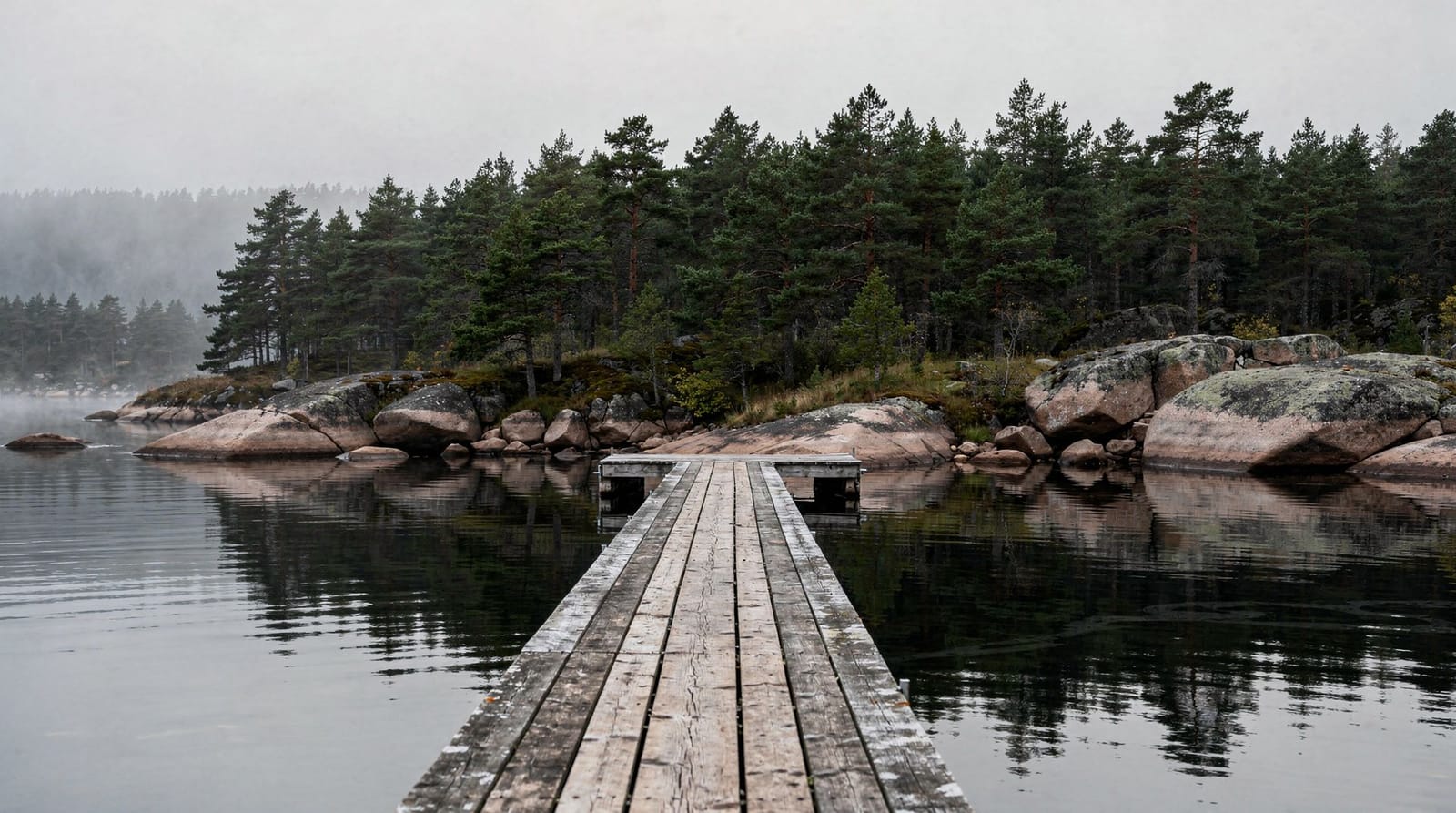
Renting a summer cottage in the Stockholm archipelago: the complete guide
Vaxholm: Stockholm archipelago self-guided canoe & camping trip
Can tourists rent a summer cottage in the Stockholm archipelago?
Yes. Cottages (stugor) are available to rent on most accessible archipelago islands through Swedish platforms like Blocket, SVIF, and specialist archipelago agencies. July is booked out months in advance; May, June, August, and September have more availability. Prices range from 3,000 to 15,000+ SEK per week depending on island, size, and facilities.
The Swedish summer cottage tradition
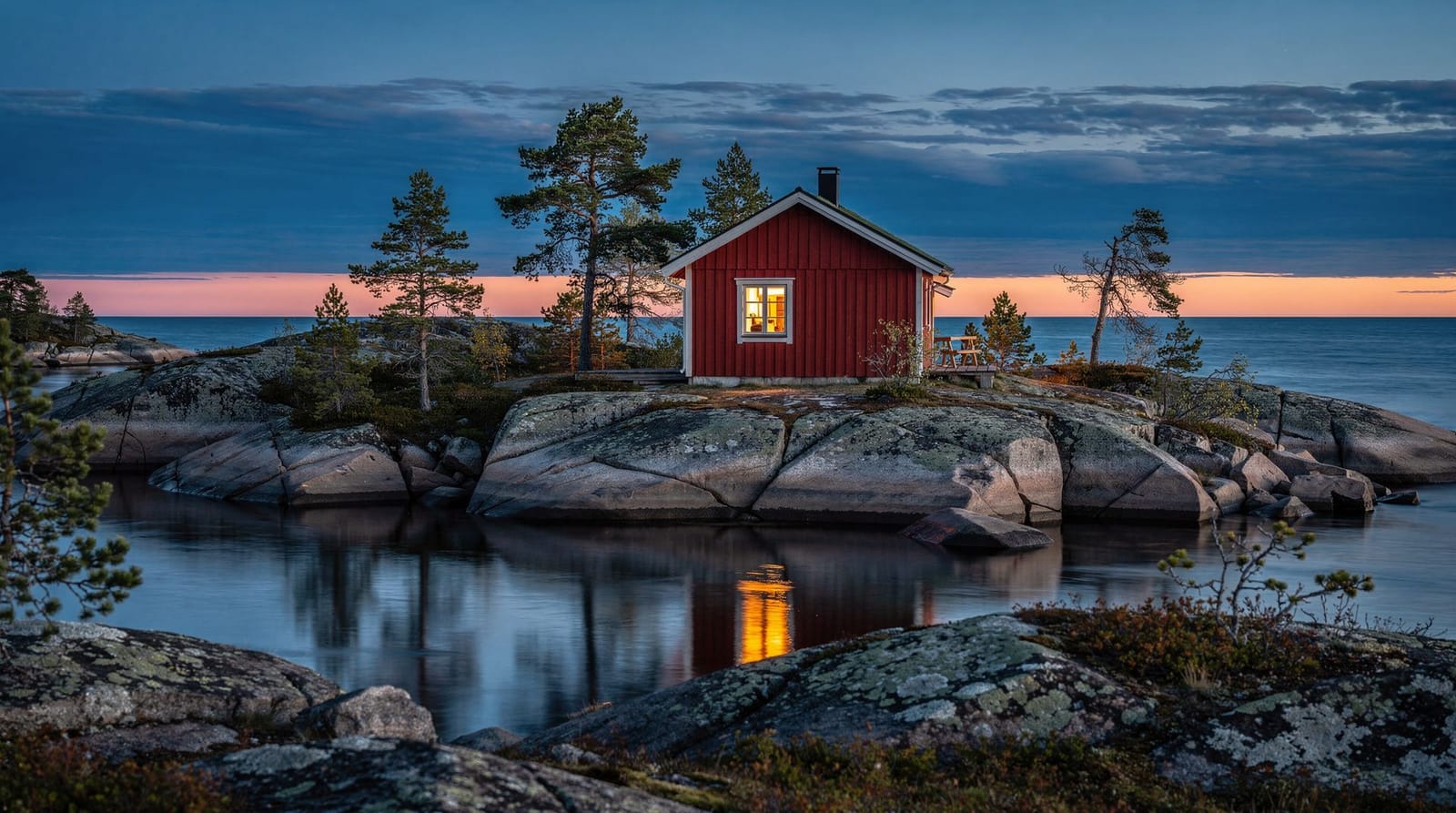
The stuga — the small wooden summer cottage — is one of Sweden’s most powerful cultural symbols. For most Swedes, the ideal summer is one spent in a red-painted Falun cottage on an archipelago island, surrounded by water, with a small jetty and a rowing boat. This ideal is so deeply embedded in Swedish culture that the desire for it shapes career decisions, investment choices, and intergenerational family dynamics.
For visitors, renting an archipelago cottage gives access to something quite different from hotel tourism. You shop for provisions in Stockholm or at a small island kiosk, you cook your own meals, you spend the days swimming and rowing and exploring on foot. You are not a tourist in this context — you are temporarily living the Swedish summer life, which is a fundamentally different experience.
The red Falun paint tradition
The iconic red-brown colour of Swedish wooden buildings comes from Falun copper mine waste (kopparfärg), which has been used as a wood preservative and paint since the 17th century. It became associated with modest rural buildings — the nobility painted their houses yellow or white; red was the colour of farmhouses and cottages.
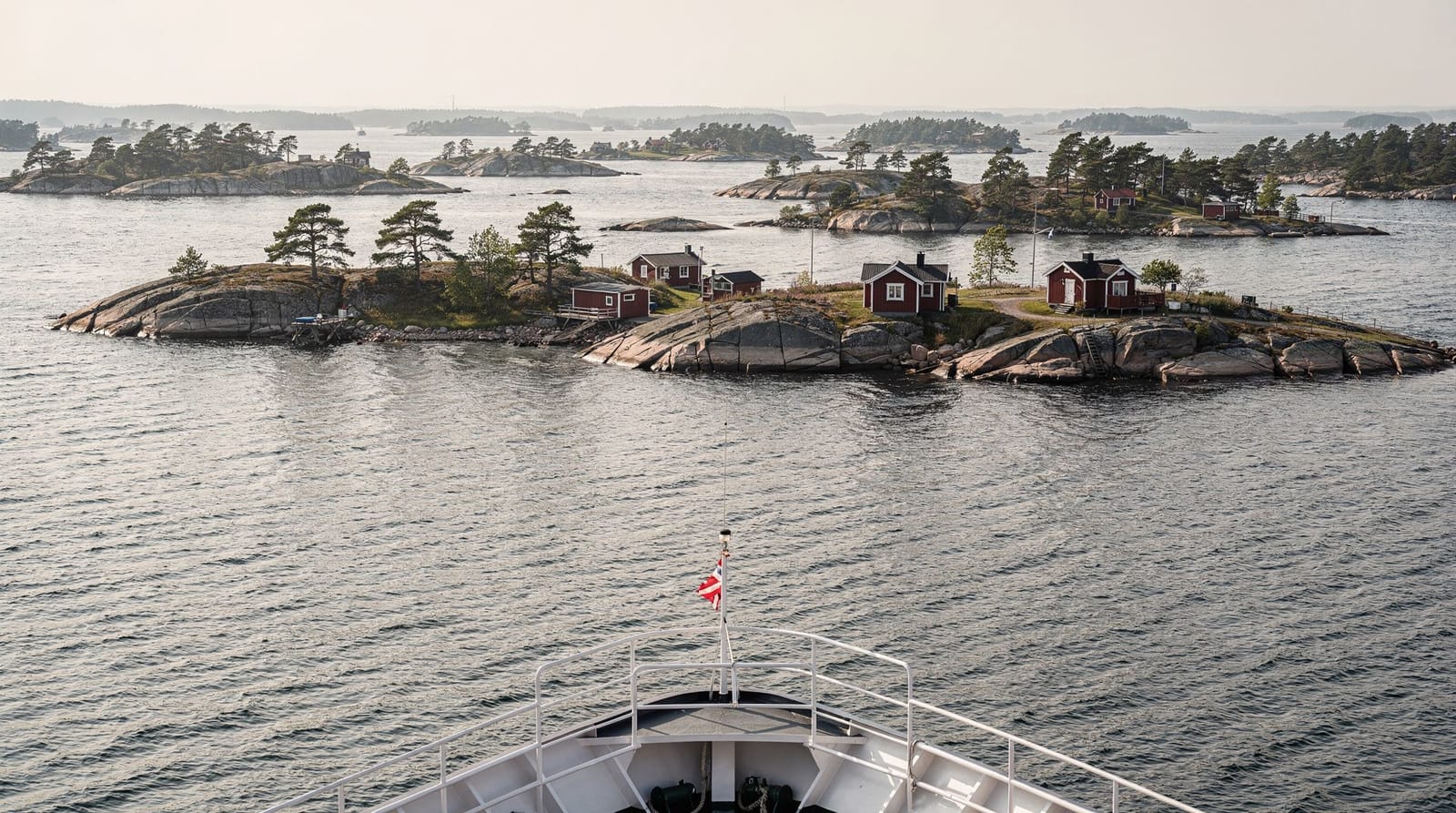
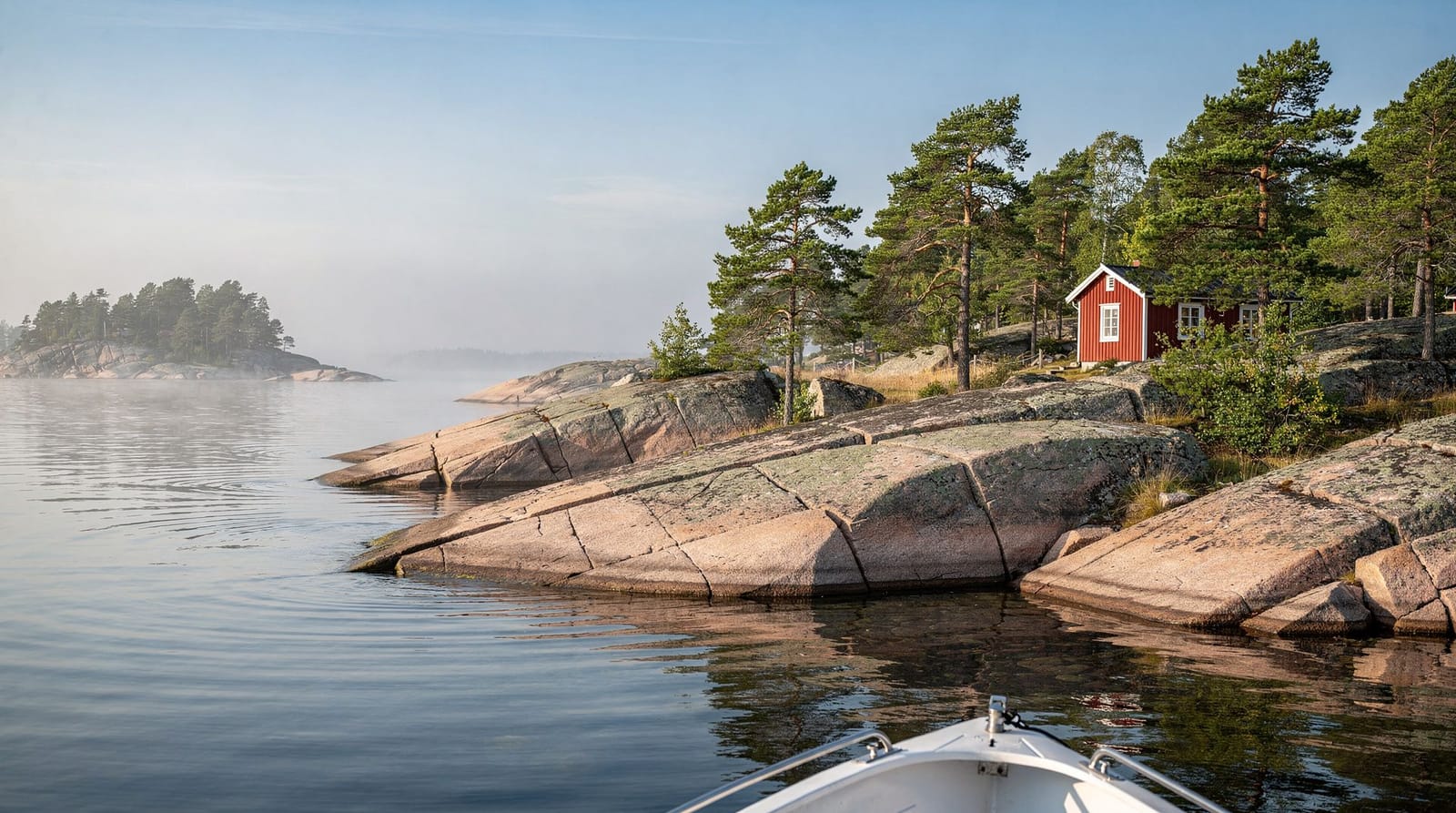
In the archipelago, the red cottage is ubiquitous: small square houses with white trim around windows and doors, set among pine trees, facing the water. The colour is a genuine historical tradition, not a tourist affectation — these buildings have been painted this way for 300+ years.
What to expect from an archipelago cottage
The basic setup
Most archipelago cottages are simple by the standards of modern holiday accommodation:
Typical features: 1–3 bedrooms, a kitchen with basic equipment, a living area, outdoor terrace or jetty. Running water usually, though some very remote cottages use collected rainwater.
Sauna: Many archipelago cottages have their own wood-fired sauna — a bastu — which is considered the essential archipelago amenity. The ritual is: heat the sauna (takes 1.5–2 hours), sit in the heat, exit and jump into the Baltic, return. Repeat at sunset.
Rowing boat: Often included. The small archipelago rowing boat (eka) is the classic transport between cottage and the surrounding small islands.
Jetty: Most waterfront cottages have a small jetty for swimming and mooring the boat.
No WiFi or TV: Commonly absent. This is considered a feature by those who know it, and a problem by those who don’t. Settle in advance which camp you are in.
Insects: July mosquitoes in forested inner archipelago areas. Pack repellent.
What is usually not included
Bed linen (bring your own or rent from the agency), dishwasher, dryer, reliable mobile signal (varies by island and position), air conditioning (never), reliable heating in spring and autumn (wood stoves and electric heat are standard; it can be cold at night in May and September).
The booking platforms
Swedish-specific platforms
Blocket.se: Sweden’s large classified-ad platform has a significant cottage rental section. In Swedish, but functional with basic translation tools. Often the best source for smaller, privately owned cottages.
Stuguthyrning.se and similar Swedish agencies: Specialist platforms aggregating archipelago and Swedish countryside cottage rentals. Better search functionality than Blocket.
SVIF (Swedish Tourist Association hostels): The STF operates several archipelago island hostels in traditional settings. Not cottages but excellent value; see stfturist.se.
Direct from owners: Many archipelago cottage owners advertise directly, particularly through Facebook groups and local archipelago association websites.
International platforms
Airbnb has increasing archipelago coverage but is less complete than Swedish-specific sources. Booking.com has little archipelago cottage inventory.
Best islands for cottage rental
Inner archipelago
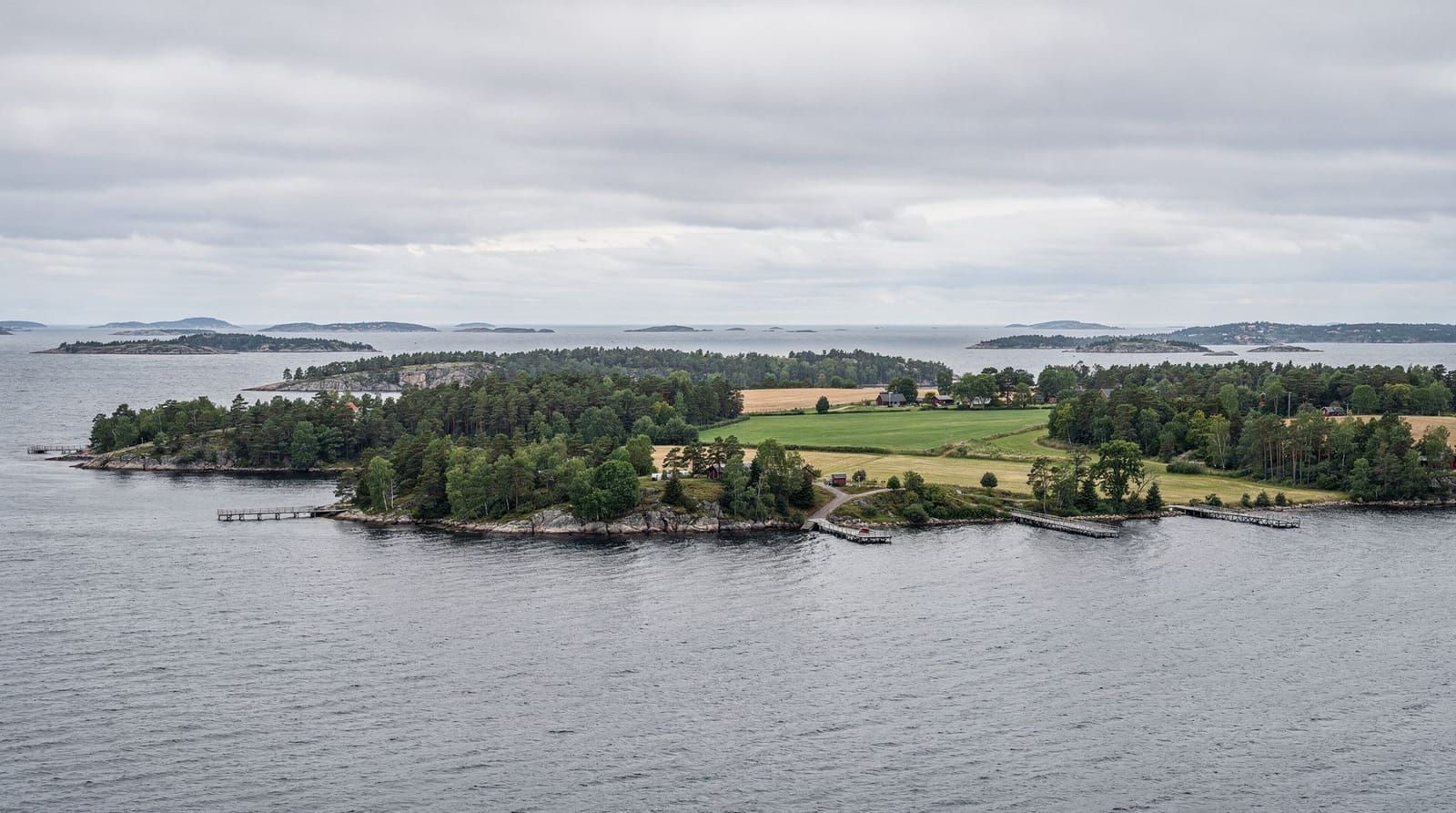
Värmdö municipality: The largest municipality in the archipelago, encompassing many accessible islands with good cottage stock. Some connected by bridge (and therefore accessible by car); others by ferry only.
Ljusterö: A larger inner archipelago island with a mix of summer cottages and year-round residents. Road connections make it accessible without relying entirely on ferries.
Middle archipelago
Möja: One of the middle archipelago’s most populated and charming islands. Summer community atmosphere, good ferry connections, range of cottage types.
Ornö: A large, less-visited middle-archipelago island with quieter ambiance. Good for those wanting isolation without the outer archipelago’s distance.
Blidö: A forested island with an island hopping connection to smaller surrounding islands.
Outer archipelago (for committed visitors)
Utö: The historic mining island with a distinctive character. Good base for exploring the outer archipelago further south.
Islands around Sandhamn: Several very small islands adjacent to Sandhamn have summer cottages, accessible by small boat from Sandhamn’s ferry connection.
For visitors who would rather test an island before committing to a week’s rental, the Grinda day guide and Vaxholm day guide both cover the inner-archipelago islands with the widest cottage stock, and the inner vs outer archipelago guide explains the character differences between zones before you commit to a booking.
Choosing an island is as much about the journey as the cottage. The ferries that serve most of these islands are run by Waxholmsbolaget, and the Waxholmsbolaget ferries explained guide shows how the network works, while Strömma vs Waxholmsbolaget clarifies which operator does what. For a wider look at the region before you narrow down, the complete Stockholm archipelago guide and the Stockholm archipelago destination page are good starting points.
How to choose between islands
Ask three questions before you start scrolling listings. How many hours are you willing to spend travelling on arrival day? How much do you want other people around — a lively summer community or genuine solitude? And will your group want to move around by boat, on foot, or not at all once you arrive? Inner islands suit short transfers and families with small children; middle islands suit those who want a real sense of distance without a long journey; outer islands reward patience and self-sufficiency. None of these is the “right” answer; the best choice is the one that matches how your group actually likes to spend a holiday.
Read listing descriptions carefully for how you reach the door. A cottage described as “close to the ferry” can still mean a walk along a path with your luggage, and one described as “by the water” may not have its own swimming spot. Message the owner with specific questions about the walk from the pier, where drinking water comes from, how the sauna is heated, and whether a boat is included. Owners of island cottages are used to these questions and usually answer them generously.
Pricing guide (2026)
Prices vary substantially by island, season, cottage size, and facilities:
| Type | Low season (May, Sept) | Peak (July) |
|---|---|---|
| Basic cottage (2–4 people) | Set by each owner | Set by each owner |
| Mid-range with sauna (4–6 people) | Set by each owner | Set by each owner |
| Waterfront with private jetty (4–8 people) | Set by each owner | Set by each owner |
Prices are typically for the whole cottage; divide by your group size for a per-person cost.
When to book
July (peak): Book 3–6 months in advance. July is when virtually all Swedish summer holiday travel occurs. The best cottages sell out within hours of being listed in January–February each year.
August: Book 2–3 months ahead. Slightly easier than July; similar atmosphere.
June: Book 1–2 months ahead. Excellent conditions — long days, lower prices than July. Midsummer weekend (third weekend) is always booked out.
May and September: Often bookable 2–4 weeks in advance. The shoulder-season archipelago is underrated and genuinely beautiful.
Logistics: getting to and from the cottage
This is the part that requires most planning. Cottages on ferry-only islands require:
- Getting yourself and provisions to Strömkajen (or the relevant ferry pier)
- Transporting luggage and food on the ferry
- Loading into a boat or carrying to the cottage
Provisions: Buy everything in Stockholm. Island shops are small, expensive, and not present on many islands. A supermarket run and a large cooler bag are standard pre-cottage preparation.
Luggage: Pack light. Rolling suitcases are impractical on ferry gangways and uneven island paths. Backpacks or duffel bags work much better.
Return: Build in time for the last ferry. Missing it means an unplanned extra night.
For car-accessible islands, driving from Stockholm with a loaded car is the practical alternative.
Settling in and living the rhythm
Once you arrive, resist the urge to schedule the days. The appeal of a cottage week is the slow structure it gives you: a morning swim off the jetty, a long breakfast, a row to a neighbouring islet, an afternoon with a book, and the evening sauna. If you want a fika routine of your own, the fika culture guide explains the tradition, and a flask of coffee and something sweet on the rowing boat fits the setting perfectly. Cooking on a simple stove becomes part of the pleasure rather than a chore, especially when the meal is eaten outside as the light stays long.
Respect the island as a shared place. Cottages are often close together, sound carries easily over water, and the neighbours may have been coming to the same spot for generations. Take your rubbish back with you if there is no collection point, treat the sauna and any fires with care, and leave the cottage as you found it. A short note of thanks to the owner at the end of the stay is a small gesture that is much appreciated.
Mixing a cottage week with time in the city
Many visitors pair a cottage stay with a few days in Stockholm. The Stockholm summer white nights guide describes what the city feels like in the same season, and the five-day summer itinerary with the archipelago shows how islands and city sights can share a trip. If you arrive in the city first, a stop at a supermarket before heading to the pier saves a great deal of trouble on the island, and the luggage storage guide helps if your check-in and ferry times do not line up.
Wild camping as an alternative
Under Allemansrätten, you can camp on any publicly accessible land in the archipelago — including rocks, forest clearings, and uninhabited islands — for one or two nights without permission. This is the cheapest cottage equivalent: a tent, sleeping bag, and portable cooking equipment.
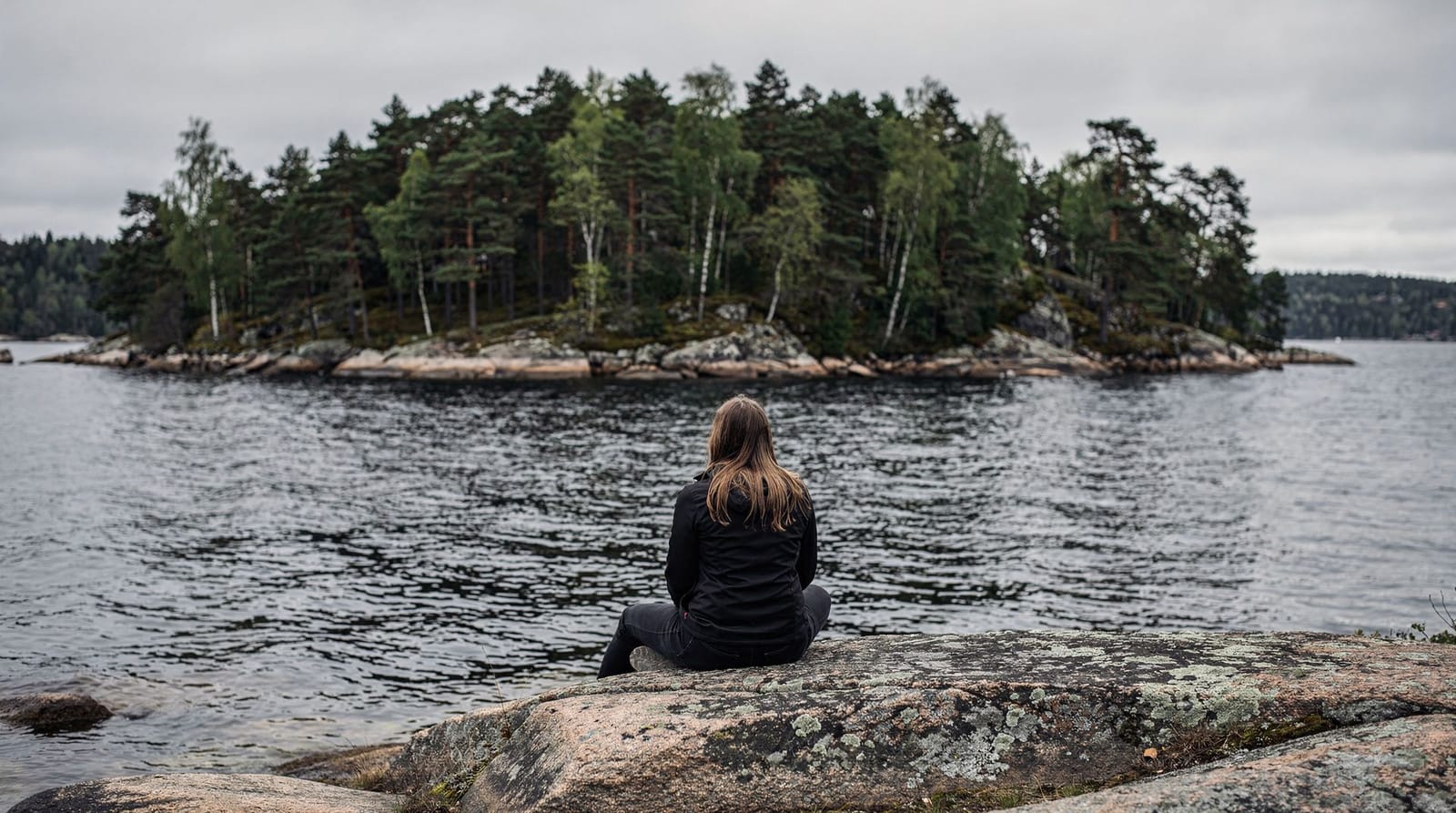
Wild camping in the outer archipelago on a flat granite rock, with no other humans in sight, is an unforgettable experience. See the Allemansrätten guide for the full rules.
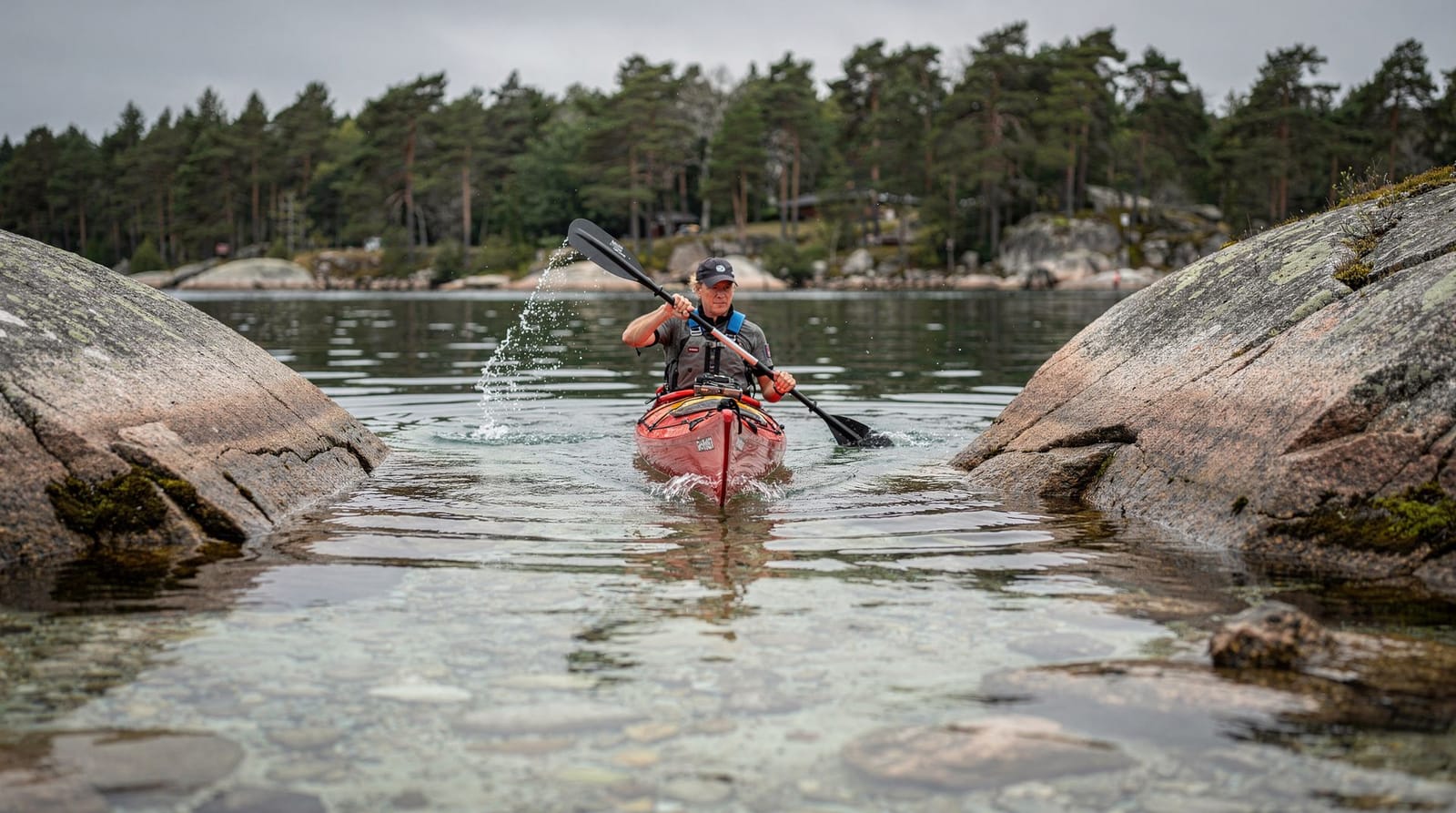
Book a self-guided canoe and camping trip in the archipelagoFor guided kayak camping with equipment provided, several operators run 2–3 day tours that handle all logistics. The kayaking in the Stockholm archipelago guide goes deeper on routes and what to expect on the water, and the archipelago swimming and boating options are worth a look if you prefer a sail to a paddle.
Book an island hopping by kayak and wild camping archipelago escapeCottage rental vs a hotel-based overnight stay
A rented cottage is not the only way to spend more than a day in the archipelago. Island hotels and hostels — covered in the archipelago overnight guide — offer a lower-commitment alternative: no provisioning trip, no self-catering, and typically a one- or two-night booking rather than a full week. A cottage makes more sense for groups of four or more staying several nights, where the per-person cost drops below hotel rates and the self-catering, self-paced rhythm becomes part of the appeal rather than a chore. For a shorter stay or a solo/couple trip, a hotel room on Grinda or Vaxholm is usually simpler and comparably priced. Season also matters: cottage life in winter is a different proposition entirely — see the archipelago winter vs summer guide for what stays open outside the summer months.
Frequently asked questions about archipelago cottage rental
Can foreigners (non-Swedes) rent an archipelago cottage?
Yes. Swedish rental agencies and platforms serve international visitors, and most communication can be handled in English. The practical complications are logistics-related (provisions, ferry timetables) rather than legal or language-related.
Is July or August better for a cottage rental?
June-to-early-July has the longest days (light until 23:00). August has warmer water for swimming and the start of the archipelago’s beautiful early-autumn light. Both are excellent. July is more expensive and more booked; August offers similar conditions at slightly lower cost.
Do I need to know Swedish to rent a cottage?
Not necessarily. Swedish platforms are in Swedish but function with translation tools. Booking through an international-facing agency (some exist) removes the language barrier entirely.
What are the rules for guests on an archipelago island?
The same as Stockholm: respect others, keep noise down after 22:00, follow fire safety rules (fires only in designated spots or when conditions permit), and observe Allemansrätten restrictions (no camping adjacent to private homes).
Can I bring a dog to an archipelago cottage?
Most privately rented cottages allow dogs with advance notice. Check the listing. Ferry companies allow dogs (Waxholmsbolaget). Be aware that ground-nesting birds are sensitive in June–July; keep dogs on leads during this period.
Top experiences
Bookable activities with verified prices and instant confirmation on GetYourGuide.