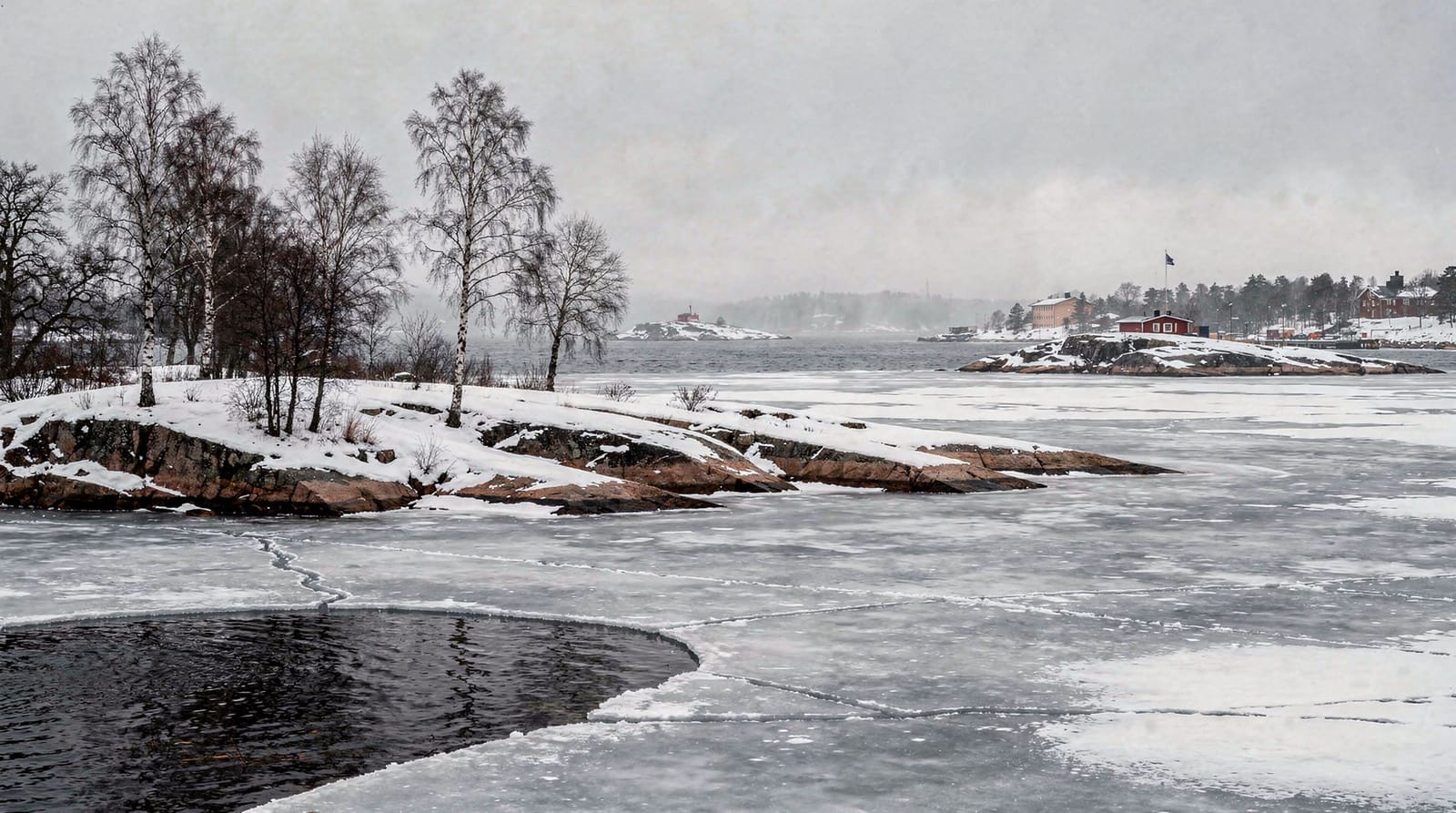
Allemansrätten in the archipelago: Sweden's right to roam explained
Stockholm: archipelago kayak tour and island picnic
Duration: 4–8 hours
What is Allemansrätten and how does it apply in the Stockholm archipelago?
Allemansrätten is Sweden's constitutional right of public access to nature. In the archipelago, it means you can walk, swim, and camp on any land or island not immediately adjacent to a private home, without asking permission. You can land your kayak on any accessible rock and pitch a tent in any forest clearing. You must not damage vegetation, disturb private homes, or light fires in dry conditions.
A right that shapes Swedish culture
Sweden’s Allemansrätten (“every man’s right”) is not a concession granted by landowners or the state — it is enshrined in the Swedish constitution (Regeringsformen) as a fundamental public right. It grants every person the right to access Swedish nature regardless of who owns the land.
In the Stockholm archipelago, where thousands of islands are owned by private individuals, this right is the legal foundation that makes the archipelago publicly accessible. Without it, the archipelago would be a private landscape for the wealthy. Because of it, anyone can paddle to any island, swim from any shore, and camp on any rock.
Understanding Allemansrätten transforms how you use the archipelago. It is not a grey area or a legal loophole — it is a clear, ancient right backed by the highest law in the land.
| What it is | A constitutional right of public access to Swedish nature |
| Where it applies | Any land not immediately adjacent to a private dwelling |
| You can | Walk, swim, forage, and camp 1–2 nights without asking permission |
| You cannot | Enter enclosed areas, damage vegetation, or invade the “home peace zone” |
| Cost | Free — it is a legal right, not a permit or pass |
| Best exercised by | Kayak, or on foot from any Waxholmsbolaget ferry landing |
What you are permitted to do
Walking and access
You can walk across any land in Sweden — including private property — provided you:
- Do not enter enclosed areas (fenced fields with livestock, private gardens immediately adjacent to buildings)
- Do not damage crops, vegetation, or property
- Do not come so close to a private dwelling that it invades the residents’ privacy (the principle of “hemfridszonen” — the home peace zone, typically defined as the area directly visible from and immediately surrounding the house)
In the archipelago this means: you can land on any island accessible by water, walk its shoreline, and cross its land as long as you observe the above restrictions. The owner of a summer island cannot legally prevent you from walking across it (away from their house and garden).
Swimming
You can swim from any accessible shoreline in Sweden. There is no right of exclusive access to waterfront. This means every island beach, every granite rock with water access, and every harbour inlet is legally available for swimming.
This right applies equally to the waterfront of private properties. You can approach by boat, swim from the rock adjacent to someone’s cottage, and depart — as long as you do not land on their garden or disturb them. In practice, you would not swim directly below someone’s window; common sense and courtesy shape how Allemansrätten is exercised.
Camping
You can camp on any accessible land for one or two nights in any single location, without asking the landowner’s permission. The restrictions are:
- Not within sight of a private dwelling (the home peace zone)
- Not in the same spot for more than 1–2 nights (you must move on)
- Not in areas where camping is specifically prohibited (nature reserves with specific restrictions)
- Not in a way that damages vegetation
In practice: paddling to an uninhabited outer archipelago rock, pitching a tent on a flat section of granite, spending the night, and departing the next morning is entirely legal and celebrated as a Swedish tradition. See the archipelago overnight guide for accommodation alternatives if wild camping is not for you.
Book an island hopping by kayak and wild camping archipelago escapeBerry and mushroom picking
You can pick berries (lingonberries, blueberries, cloudberries) and mushrooms anywhere in Sweden for personal consumption. This is one of the most practically used aspects of Allemansrätten — foraging is a mainstream Swedish autumn activity.
Other water activities
Kayaking, sailing, and motorboating in open water are all covered by Allemansrätten’s principles. You can navigate any waterway that is not specifically restricted. You can land on any accessible shore. The access extends to the water surface and adjacent banks.
Book an archipelago kayak tour and island picnicWhat you are not permitted to do
Allemansrätten comes with clear responsibilities. The right exists only in balance with the obligation not to damage or disturb:
You may not:
- Enter enclosed areas (fences, gates protecting livestock or gardens)
- Come close enough to a private dwelling to invade privacy (the home peace zone)
- Light a campfire in dry conditions or where there is fire risk
- Leave litter — “take nothing but photographs, leave nothing but footprints” is the expected standard
- Damage vegetation by cutting branches, picking flowers in protected areas, or disturbing root systems
- Disturb or take eggs or nesting birds (especially important June–July)
- Pick endangered or specially protected plant species
- Drive a motor vehicle off-road
- Camp in the same spot for more than 1–2 nights
Special consideration: nesting season
In the archipelago, June and July are prime ground-nesting bird season. Eider duck, tern, oystercatcher, and several other species nest directly on rocks and in low vegetation — the same rocks that look ideal for landing and camping.
The law does not explicitly prohibit landing on nesting islands, but the principle of not disturbing wildlife means that approaching a rock covered in nesting birds and camping there would be a violation of the spirit if not the letter of Allemansrätten. Practically: if you see nesting activity, land elsewhere. Many outer archipelago islands have nature reserve designations (naturreservat) with additional restrictions posted at the landing point.
Fire rules in the archipelago
Campfires in the archipelago follow Swedish fire law:
Permitted: Small campfires in designated fire spots (eldplats), when ground conditions are wet and no fire ban is in effect. Always on granite or sand, never on dry vegetation.
Prohibited: During fire bans (eldningsförbud), which are issued by county administrative boards during dry periods. These bans apply throughout Sweden and are serious — violating them carries criminal penalty.
Portable stoves: Gas camping stoves and spirit burners are not considered open fires and are generally permitted except in the most sensitive areas.
Check the forecast: Before any archipelago camping trip involving fire, check the current fire risk level (brandrisk) on the Swedish Civil Contingencies Agency (MSB) website or via local fire authority.
Practical application for archipelago visitors
By kayak
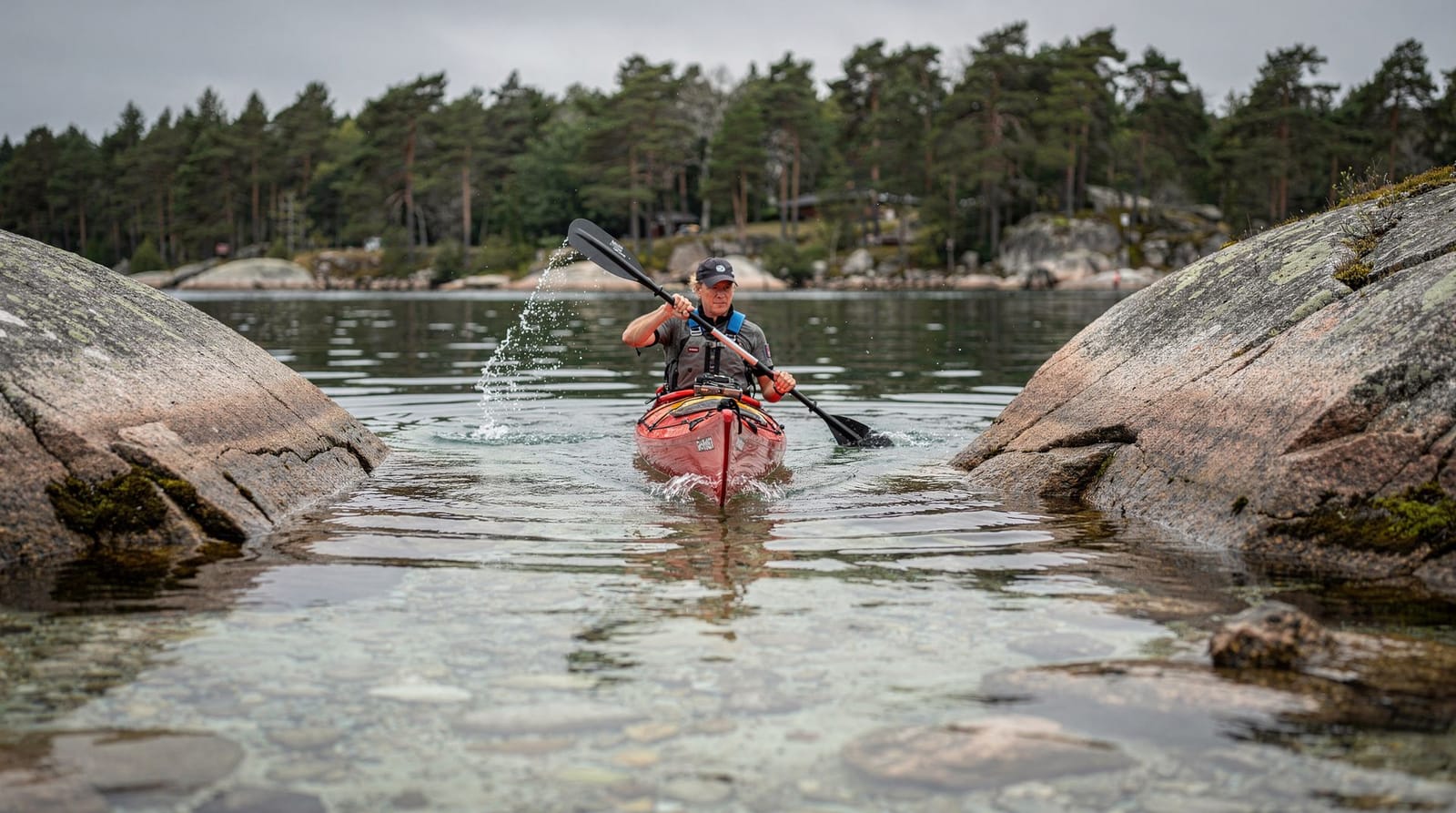
The kayak is the ideal Allemansrätten vessel. You can paddle to any island, land on any accessible rock, explore inland, swim, eat lunch, and depart. Pack out all your waste.
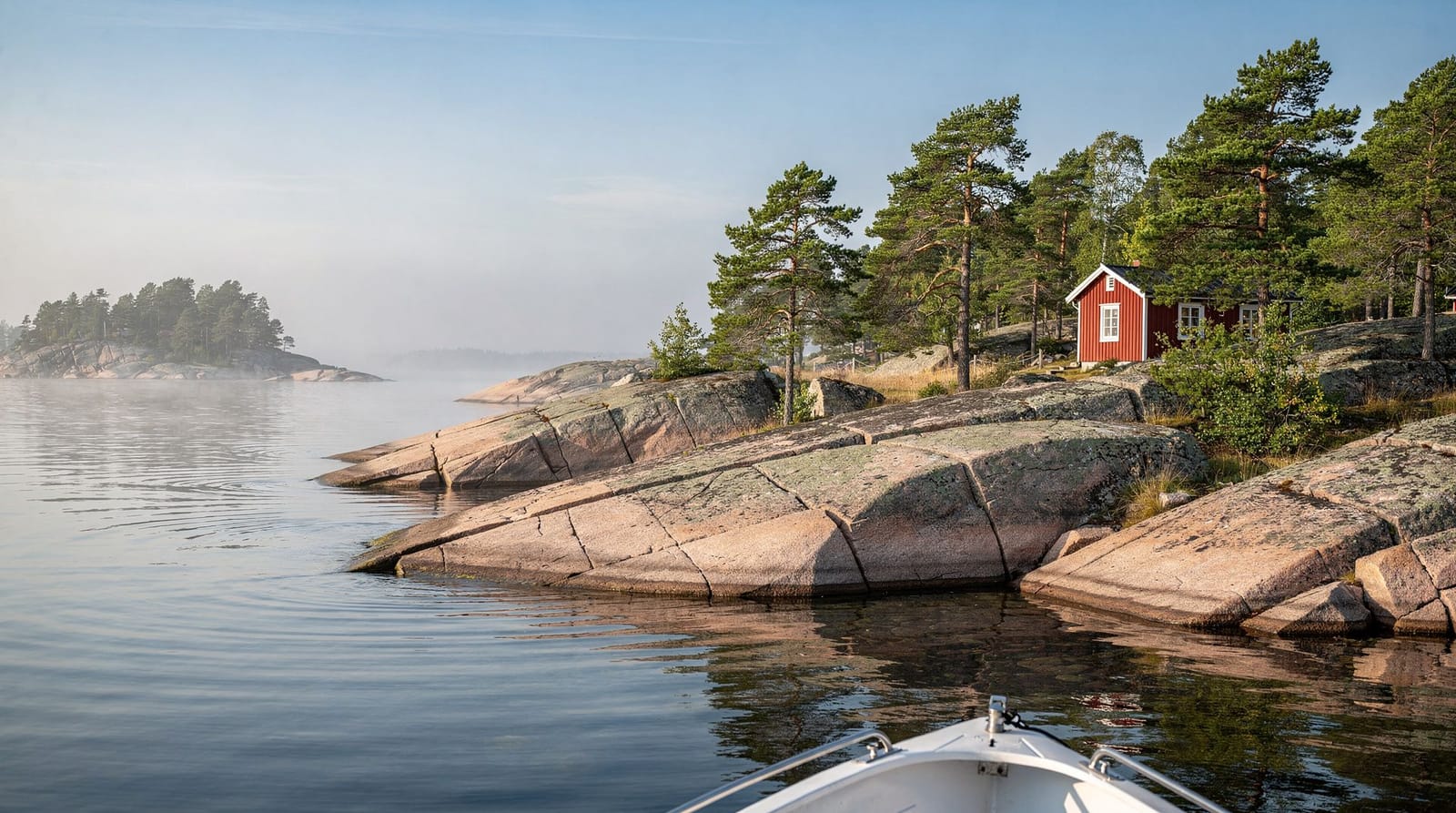
For overnight camping, identify a flat rock or forest clearing at least 150 metres from any private building, pitch tent, and move on after 1–2 nights. The outer archipelago has hundreds of suitable camping spots on uninhabited islands.
Book a self-guided canoe and camping trip in the archipelagoBy foot from a ferry landing
You do not need a kayak to exercise Allemansrätten. Arriving by public ferry and walking inland from the ferry pier is equally covered. On any Waxholmsbolaget ferry stop, you can disembark, walk the interior of the island (respecting private gardens and buildings), find a swimming spot, eat a picnic, and return to the pier. No permission required. The Waxholmsbolaget ferries guide covers routes and timetables, and the archipelago in one day guide has ready-made ferry-and-walk itineraries.
What not to do in practice
The most common violations of Allemansrätten in the archipelago:
- Camping within sight of a summer cottage whose owners are present
- Lighting fires on dry days without checking the fire risk level
- Leaving litter (increasingly treated by Swedish authorities as a serious offence)
- Disturbing nesting birds during June–July
- Anchoring a boat to a private jetty without permission (a jetty is private property even if Allemansrätten covers the water)
Allemansrätten and nature reserves
Many outer archipelago islands have nature reserve (naturreservat) designations. Within nature reserves, additional rules may apply — specific zones where landing is prohibited during nesting season, fire restrictions more stringent than usual, requirements to stay on marked paths. These restrictions are posted at landing points and on the County Administrative Board website.
Allemansrätten does not override nature reserve restrictions — the reserve rules take precedence. Always check for reserve status before landing on outer islands.
Choosing where to exercise Allemansrätten
Not every part of the archipelago is equally suited to independent, rights-based exploration. The inner vs outer archipelago guide breaks down which zones offer the most uninhabited landing spots versus which are dominated by private cottages. Grinda, covered in the Grinda day guide, is a particularly good introduction — much of the island is nature reserve with marked trails and obvious legal camping areas away from the small hotel complex. If you would rather rent a base than camp, the summer cottage rental guide covers the paid alternative, and Allemansrätten still applies to the land around any rented cottage beyond its immediate garden.
Planning a first trip around the right
If this is your first time using the right, start small. A day on a single island teaches you most of what matters: how to read a shoreline, where the private gardens begin, and how to leave a spot looking untouched. The Vaxholm day guide and the Fjäderholmarna ferry guide both describe easy islands where you can practise walking and swimming before you commit to a night outdoors. The stockholm archipelago complete guide gives the wider picture of how the islands fit together.
Getting there matters as much as what you do on arrival. The Strömma vs Waxholmsbolaget comparison helps you choose the boat that suits an independent, unscheduled day, and the Sandhamn day guide shows what a longer outer-island outing looks like when you build it around the public ferry.
If paddling is the part that appeals, the kayaking in the Stockholm archipelago guide covers the practical side of the vessel that suits Allemansrätten best, and the Tyresta National Park hike is a good example of walking in protected nature where the rules of the park sit on top of the general right.
If you would rather have a guide handle logistics while you still sleep outside, a two-day kayak and camping trip with the route planned for you lets you experience the right without having to judge every landing spot yourself.
Allemansrätten in winter
The right applies year-round, and a growing number of visitors use it for winter camping and long-distance ice skating stops on frozen bays. The practical considerations are different — shorter daylight, frozen or waterlogged ground, and the need for genuinely warm gear — but the legal framework does not change. See the archipelago winter vs summer guide for what changes season to season, including which islands stay realistically reachable outside the summer ferry timetable.
The philosophy behind the law
Allemansrätten exists because of a particular Swedish understanding of nature as a common good that cannot be privately enclosed. The right predates modern property law and reflects a medieval Scandinavian tradition of shared access to hunting and gathering land.
It is maintained today in part because Swedes genuinely believe that access to nature is fundamental to human wellbeing — not a luxury but a necessity. The practical result is one of the world’s most accessible wilderness landscapes, where a person of any income can sleep on an outer archipelago rock with the Baltic in front of them, at no cost and with complete legality.
For visitors, the key is to exercise the right responsibly — leave no trace, respect private homes, observe fire rules — so that it remains what it has been for hundreds of years.
Frequently asked questions about Allemansrätten
Can I land on any island in the archipelago?
On any island not entirely occupied by private property (i.e., any island that is not someone’s private garden from shore to shore). Most islands are large enough that you can land away from any private buildings. Some very small islands are entirely occupied by a single cottage — you would not land on these.
Do I need to ask permission to camp on an island?
No, except when camping within the home peace zone of a private building. Away from private dwellings, no permission is needed for 1–2 nights’ camping.
Can I light a campfire in the archipelago?
Only when fire conditions are safe (ground is wet, no fire ban in effect) and in a safe location (on granite, sand, or in a designated fire spot). Always check the current fire risk before any campfire. During dry summers, bans are common throughout the archipelago.
Does Allemansrätten apply to national parks and nature reserves?
Allemansrätten applies in nature reserves, but specific reserve regulations may impose additional restrictions (no landing in nesting zones, no campfires, no foraging). Nature reserve rules take precedence. Check reserve-specific rules before visiting.
What happens if a landowner tells me to leave?
If you are exercising Allemansrätten correctly (not within the home peace zone, not damaging anything), you are legally within your rights. However, most encounters with landowners are resolved through polite communication rather than legal standoffs. If you are genuinely unsure whether you are in the home peace zone, err on the side of courtesy and move on.
Is Allemansrätten the same in winter as summer?
Yes — the right applies year-round. Winter camping under Allemansrätten is possible and has its own tradition (Nordic outdoor culture). The practical considerations differ (cold, short daylight, frozen ground) but the legal framework is identical.
Can I bring a dog while exercising Allemansrätten?
Yes, but dogs must be kept on leads near livestock and during the ground-nesting bird season (March to August in most areas). A dog running freely on a rock covered with nesting eider ducks is both a violation of spirit and potentially of specific reserve rules.
Top experiences
Bookable activities with verified prices and instant confirmation on GetYourGuide.