Stockholm with toddlers — what actually worked
The two-year-old’s opinion of the Vasa Museum was expressed primarily through a desire to run at full speed toward the ship and being prevented from doing so. The five-year-old wanted to know why the boat sank and who died. These two data points capture the general experience of Stockholm with small children: sometimes excellent, sometimes requiring management, occasionally requiring retreat.
This is a practical report from four January days in Stockholm with a toddler and a child old enough to form and express strong opinions about queue lengths.
| Best base | Djurgården or Norrmalm, close to family attractions |
| Top toddler win | Skansen’s domestic animals |
| Trickiest attraction | Vasa Museum (better for 5+) |
| Kids travel free | Under 7 with a paying adult on SL, around SEK varies by age — verify current limits |
| Season | Year-round; summer adds archipelago options |
What actually worked
Skansen, for longer than we expected
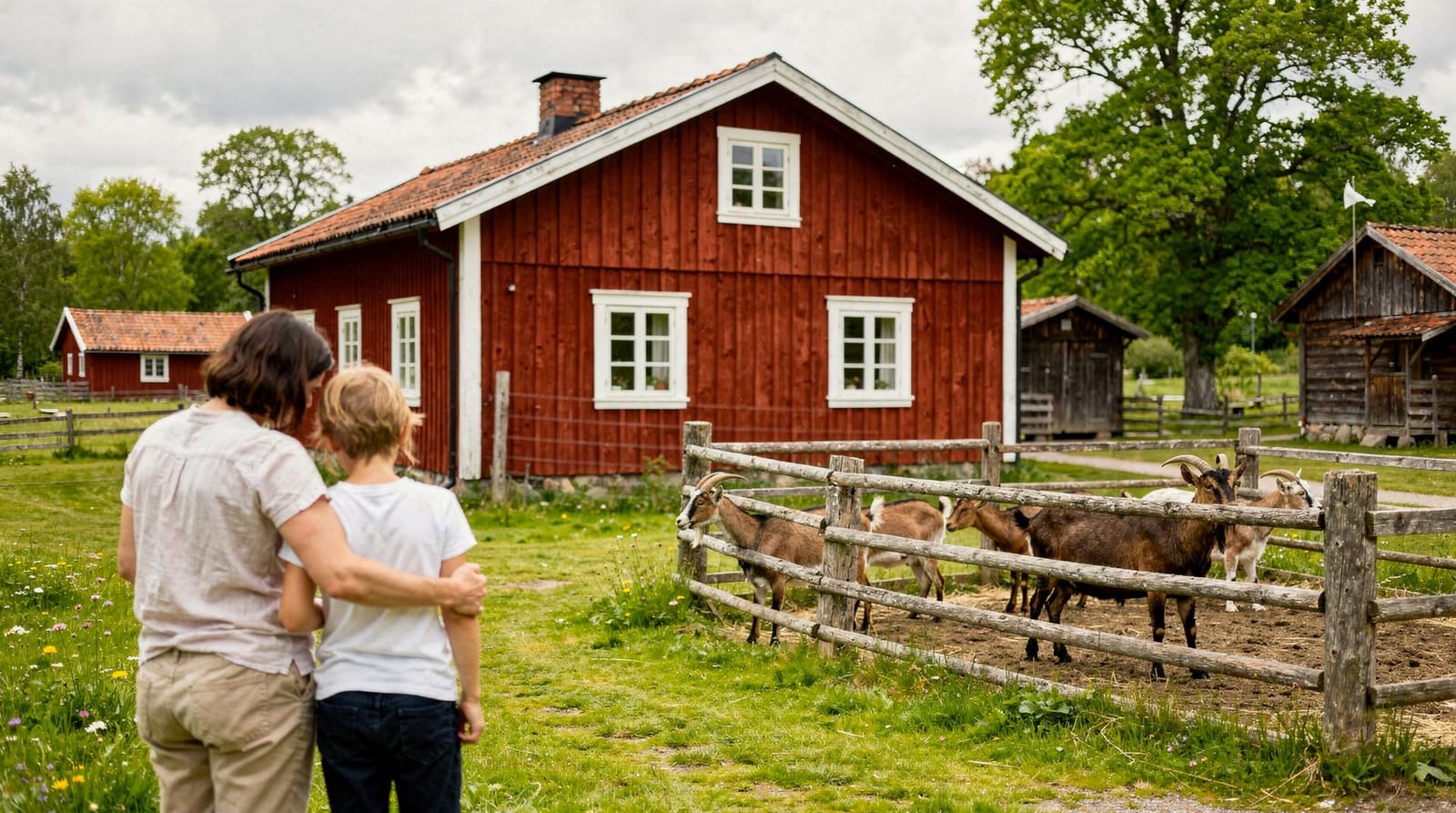
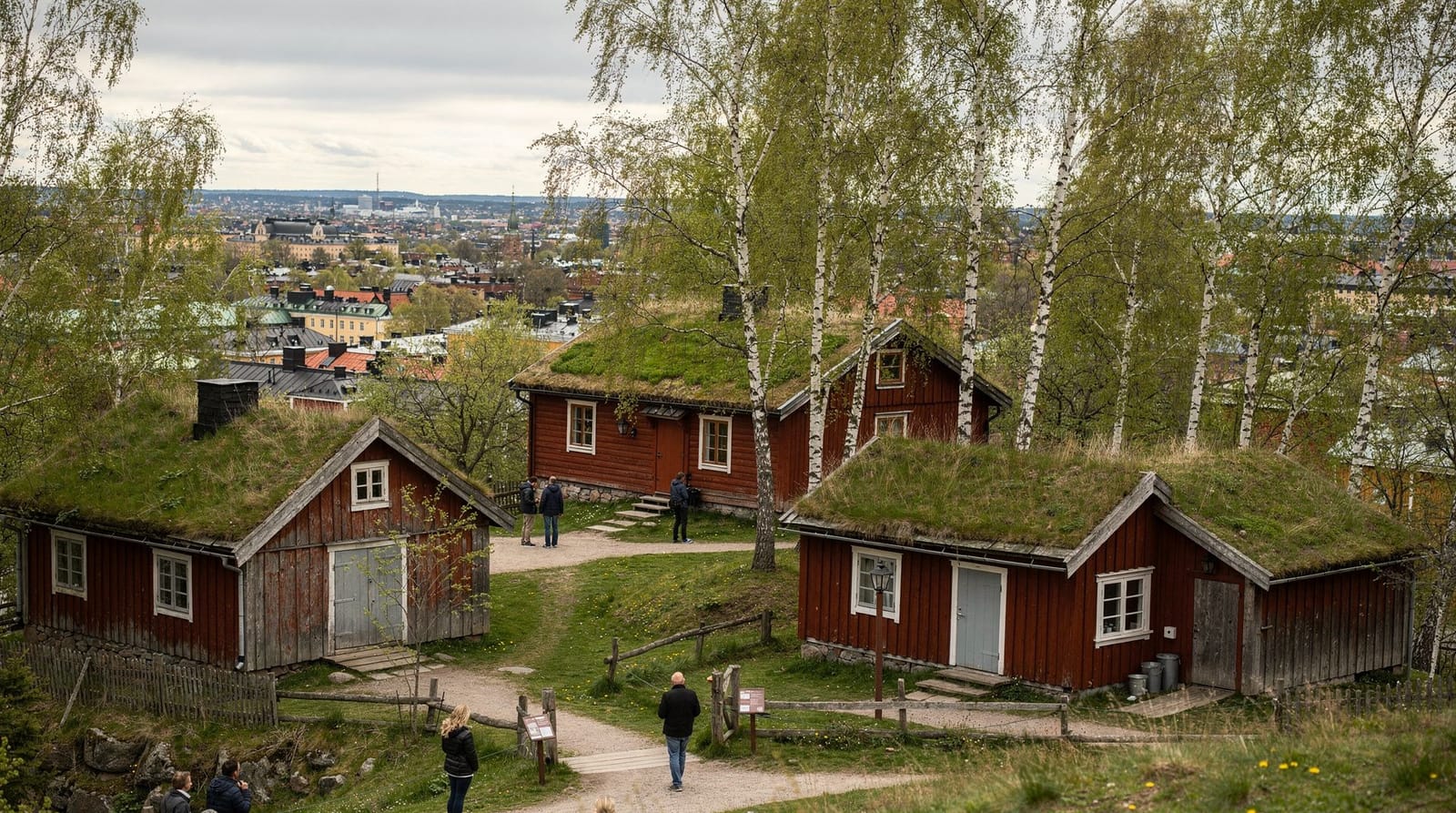
We went to Skansen on day two expecting two hours. We stayed four. The combination of domestic animals (goats, reindeer, a bear in its winter state of pre-hibernatory torpor), historical buildings that can be explored rather than just observed, and the scale of the grounds that allowed the five-year-old to run without hitting anything fragile — this worked.
The domestic animal section is the specific winner for toddlers. The two-year-old was more interested in the Skansen goats than she has been interested in anything else on any trip we have taken. The goats also seemed to find her interesting. This was thirty minutes of perfect mutual appreciation that justified the entrance fee by itself.
Practical: Rent a pushchair/stroller at the entrance if needed. The grounds are large and hilly; a good carrier or pushchair is worth it. Our Skansen open-air guide has the full layout and feeding-time schedule for the animal enclosures.
The T-bana as entertainment
The Stockholm metro is an art museum that children find exciting for reasons unrelated to art. Stations with blue cave-ceiling installations (Kungsträdgården, Rådhuset) produce genuine wonder. The trains arrive with a rush of warm air that the two-year-old treated as a significant event each time. The five-year-old wanted to ride the entire blue line.
We rode the entire blue line. It took about forty minutes. It was free on our SL pass. Both children were entirely occupied.
Djurgårdslinjen tram
The vintage tram that runs from Djurgårdsbroen to Skansen (and extends toward Waldemarsudde in summer) is short, warm, and treats children as people. The carriages are old enough to feel genuinely different from modern transit. The five-year-old described it as “like a train that goes slow on purpose.”
Fjäderholmarna in winter
The ferry to Fjäderholmarna runs year-round. In January, the island was nearly empty. The craft workshops were closed, but the café was open and warm and sold excellent cinnamon buns. We walked the full island loop in forty-five minutes with a pushchair, which is achievable — the paths are mostly flat. The ferry ride itself (25 minutes each way) was the highlight for the two-year-old.
If a boat trip appeals to your children, the Fjäderholmarna ferry guide explains how the crossing works, and the Fjäderholmarna destination page describes what the island offers once you land. It is a gentle introduction to the archipelago for small children, without the commitment of a longer journey.
What didn’t work
The Vasa Museum with a two-year-old
The Vasa Museum is not unsuitable for small children. It is, however, unsuitable for running. The combination of an extraordinary object at child-visible height and rules about not touching anything is a specific challenge for a two-year-old who doesn’t yet distinguish between admiration and contact. We managed about 45 minutes before extracting ourselves.
The lesson: The Vasa works better as a five-year-old and above experience. Or visit in two separate groups while one parent handles the toddler in the café.
If you do go with an older child, an entrance ticket to the Vasa Museum bought in advance saves you standing in a queue with an impatient small person. Our Vasa Museum guide covers what to look at first, and the Vasa versus Skansen comparison helps if you only have energy for one of them.
Long restaurant waits
Stockholm’s better restaurants operate on bookings and can require 45-60 minute waits for walk-ins in the evening. With a two-year-old who operates on an inflexible meal schedule, this is a structural problem. We solved it by eating our main meal at lunch (shorter waits, lower prices) and having light suppers from a supermarket deli counter in the evening.
The ABBA Museum
Not designed for under-fives. The interactive elements are pitched at adults and older children. We walked in and walked out twenty minutes later. The five-year-old’s opinion of ABBA remained unformed. If you are curious how it compares with the other big museum on Djurgården, see Vasa versus ABBA and the ABBA Museum guide; both are easier to judge before you arrive with children in tow.
A rainy day plan that doesn’t involve museums
When the weather turns, the answer is not always a museum. Our rainy day with kids guide collects indoor options that suit a range of ages, and Junibacken, Skansen and Gröna Lund is worth a read for children who like to be entertained rather than instructed.
The logistics that helped
The SL family day card: An SL card covers children under 7 free when travelling with a paying adult. Verify current age limits on the SL website before visiting, but at the time of our trip, the two-year-old travelled free. The five-year-old required a child ticket.
Systembolaget opening hours: Irrelevant to most parents of toddlers by 9 PM, but we note it for completeness.
The Djurgården tourist bus: Runs between T-Centralen and Djurgården (Skansen/Vasa Museum) and accepts SL passes. Much easier than the long walk with a pushchair. Our Djurgården neighbourhood deep dive maps the island’s family attractions in one place.
Grocery shopping: ICA and Hemköp in Norrmalm stock everything including formula, nappies and appropriate children’s food. Swedish children’s food products are actually good; the fruit pouches and dairy options are solid.
Stockholm Skansen open-air museum entrance ticketFor the transport side, Stockholm public transport explained and the SL pass guide cover tickets and zones, and the accessibility guide is useful if lifts and step-free routes matter with a pushchair. A dedicated toddlers guide goes deeper on the youngest age group.
Our family travel guide covers age-specific recommendations and the full logistics. The 3-day family itinerary maps this into a workable plan.
The things no one mentions in family travel guides
Prams in Stockholm: The city is reasonably pram-friendly, but not uniformly so. The T-bana (metro) has lifts at most central stations (T-Centralen, Östermalmstorg, Slussen) but not all. Gamla Stan’s cobblestones are challenging with a heavy pram; a carrier works better here. Djurgården is largely flat and well-surfaced. Södermalm has hills.
Swedish toilets: Public toilets are available and generally clean, but they’re often Toapoint facilities — you pay 10-15 SEK for access. Always have a few coins. Large museums and department stores have free toilets but you need to navigate to find them.
Nappies and formula: Swedish supermarkets stock standard European brands. Pampers, Huggies, Libero (Swedish brand, very common). Formula: several options available. The Apoteket (pharmacy) stocks more specialised formula including hypoallergenic options.
Food fussiness: Swedish children’s restaurant culture has a high tolerance for adaptation. Most restaurants with any family clientele will modify dishes, provide plain pasta or bread alongside the main, or accommodate the specific requests of a small person who has decided that sauce is not acceptable today. Ask.
The stroller fold question: Stockholm buses board via the rear door; the front is not always accessible with a large pram. Folding the pram to board is the safe approach. The tram lines are easier.
Where to base yourselves
Norrmalm and Djurgården are the two easiest bases with young children. Norrmalm keeps you near T-Centralen (the main transit hub, useful when a stroller makes transfers slower) and central supermarkets. Djurgården itself, if you can find family-friendly accommodation there, cuts out the daily transit to Skansen and the Vasa Museum entirely, which matters more than it sounds with a nap schedule to protect. Gamla Stan is charming but its cobblestones and stairs make it the hardest base logistically — fine for a visit, harder as a place to sleep with a pram. See our Gamla Stan neighbourhood deep dive for what the old town actually involves underfoot.
A realistic day structure with toddlers
Stockholm with toddlers works best on a structure that accounts for the mid-day nap (if yours still requires it) and the 5 PM wall.
7 AM: Breakfast from supermarket items in apartment/hotel (faster than a café with two children) 9 AM: Morning activity when the child is at peak energy — Skansen, Djurgården walk, metro art stations 12-2 PM: Lunch (lunch menu at a restaurant or supermarket deli), nap or quiet time 3-5 PM: Lower-energy activity — fika stop, walk along the water, tram ride 5-6 PM: Back to base before the 5 PM wall Evening: Supermarket dinner in, or early restaurant at 5:30 PM before the crowds
This structure won’t satisfy adult ambitions for maximising sightseeing time. It will survive a three-day Stockholm trip without significant meltdowns.
What actually delights small children in Stockholm
Across multiple family visits to the city, the moments that produced the most genuine delight in children aged 2-7 were consistent and almost none of them were the official tourist highlights:
- The seagulls at Strömkajen, which are large, bold, and interested in sandwiches
- The guard change at the Royal Palace, which involves horses
- The pigeons at Stortorget
- The T-bana arriving with a rush of warm air
- The goats at Skansen
- The city’s water everywhere — children of any age are fascinated by cities built on water
The Vasa Museum appeared on exactly zero of these lists. This is not a criticism of the museum; it’s information about what children aged 2-7 find specifically exciting.
Frequently asked questions about Stockholm with families
What age is too young for Stockholm?
No age is too young if you adjust expectations appropriately. Infants are logistically manageable — the city is clean, the healthcare is excellent if needed, the food culture has options. Toddlers (1-3) work well for short intense experiences (Skansen animals, metro stations) and poorly for sustained indoor attention. Ages 5+ open up the museums more effectively.
Are Stockholm restaurants child-friendly?
Most are, within Swedish norms. You won’t find the specific children’s menu sections that exist in Italian or British family restaurants, but you will find tolerance, flexibility, and often a play area or colouring sheets at the more family-oriented establishments. Ask when booking.
Is the Stockholm archipelago accessible with young children?
Yes, with planning. The ferry to Fjäderholmarna (25 minutes, year-round) is very manageable. Vaxholm (60 minutes) requires a child who can handle a boat journey. The outer islands are not recommended with toddlers unless you’re camping-experienced and logistics-confident.
How many days do you actually need with toddlers?
Three focused days cover the family highlights without exhausting anyone; four gives useful slack for a rained-out morning or a nap that runs long. Our 3-day family itinerary is built around exactly that pace rather than an adult sightseeing schedule.