Stockholm archipelago — which island is right for you?
The Stockholm archipelago has 30,000 islands. You are going to visit one or two. The question is which ones, and the answer depends on what you’re there for, how much time you have, and how much ferry time you’re prepared to accept.
We’ve visited eight islands across multiple trips. Here’s the honest comparison for the four that most visitors should consider.
| Time-poor pick | Fjäderholmarna — 25 minutes each way, half-day trip |
| Best first visit | Vaxholm — 1 hour, SL-covered, real town |
| Best for quiet nature | Grinda — 1.5–2 hours, full day |
| Best for a full outer-archipelago feel | Sandhamn — 3 hours, overnight recommended |
| Right of access | Allemansrätten applies across almost all shores and forest |
Fjäderholmarna — for time-poor visitors
Ferry time from Strömkajen: 25 minutes Day trip time needed: 3-4 hours Crowd level (July): High
Fjäderholmarna (literally “the feather islands”) is a group of four small islands 6 km from Stockholm, the closest inhabited islands in the archipelago. They were closed to civilians during the Cold War — a military exclusion zone — and didn’t open to the public until 1980.
What’s there: a small craft village with workshops (glass, textiles, blacksmithing), two restaurants and several café options, a network of walking paths that cover all the islands via bridges, and the kind of flat granite shoreline and clear water that defines the inner archipelago.
Who it’s for: People with a half-day to spare, families with children who can’t sustain a four-hour ferry journey, visitors who want to see the archipelago’s character without committing to a full day. The boat from Strömkajen runs every 30 minutes in summer.
What it lacks: Scale. There isn’t much land. The restaurants are good but crowded. The craft village is charming but you cover it in 45 minutes.
Vaxholm — for the best balance of access and character
Ferry time from Strömkajen: 1 hour (Waxholmsbolaget) Day trip time needed: 5-7 hours Crowd level (July): Moderate-high
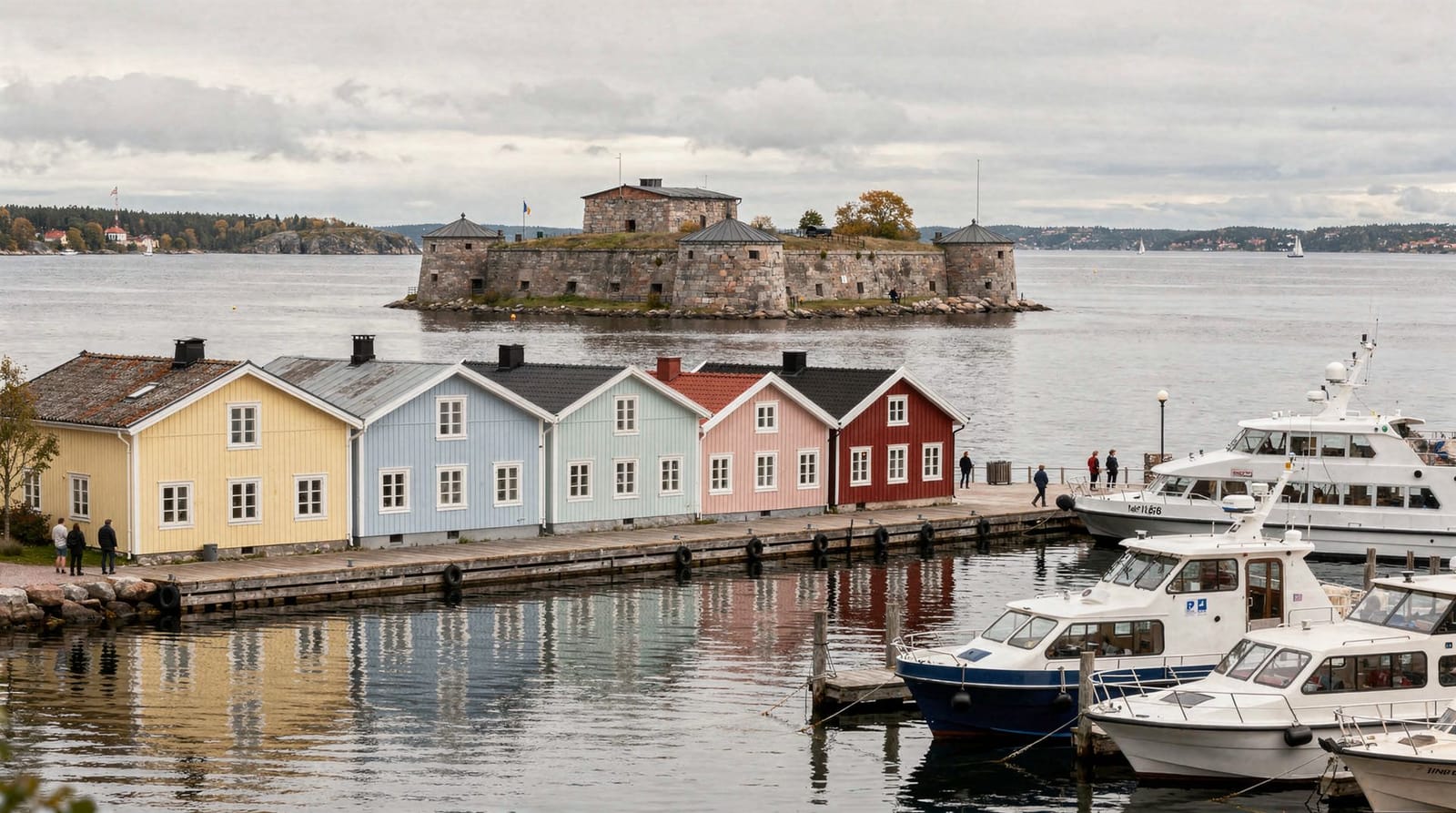
Vaxholm is the unofficial capital of the archipelago — the gateway through which boats pass into the outer islands, a proper town rather than just a cluster of summer houses. It has a bakery, a grocery store, a fortress (the Vaxholm Fortress, accessible by small boat from the town quay), restaurants and cafés, and the densest collection of traditional wooden architecture in the immediate archipelago.
Who it’s for: First-time archipelago visitors. People who want a mix of town and nature. Visitors on a one-night itinerary (there are small hotels and guesthouses).
The SL advantage: Waxholmsbolaget ferries to Vaxholm are covered by SL passes within the SL zone. This makes Vaxholm effectively free transit to reach if you have an SL card.
What it lacks: The outer archipelago’s silence. Vaxholm is a working town; it has cars, a bridge to the mainland, and a different feel from the car-free outer islands.
Vaxholm archipelago guided excursion and day trip from StockholmGrinda — for the proper island experience without the full journey
Ferry time from Strömkajen: 1.5-2 hours (Waxholmsbolaget or Strömma) Day trip time needed: Full day (7+ hours on island) Crowd level (July): Moderate
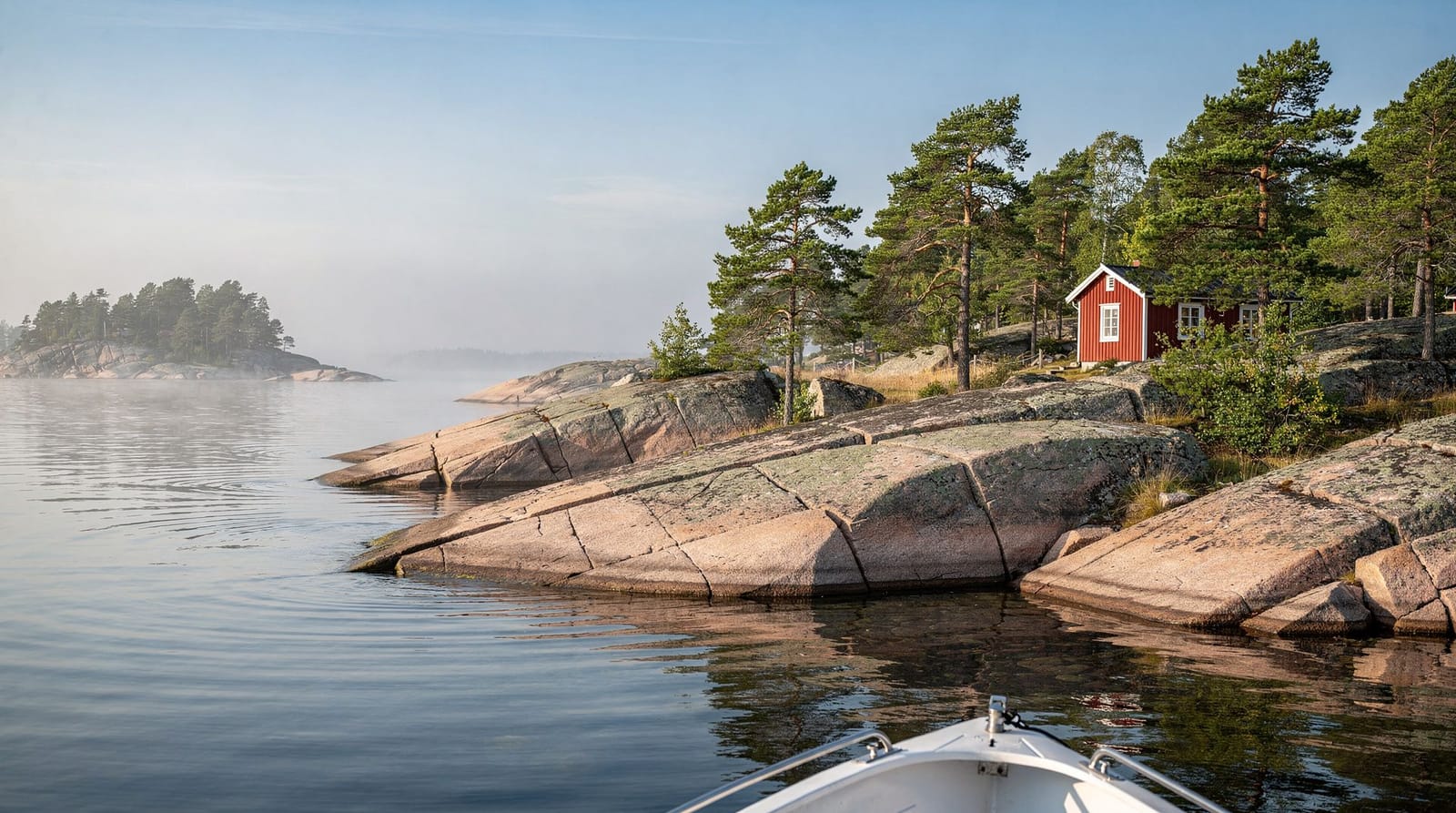
Grinda is where the archipelago starts to feel genuinely remote: no permanent road connections, limited mobile coverage in spots, forests of pine and birch giving way to the polished granite shores that define the outer islands. The island has a guesthouse with a restaurant (Grinda Strandhotell), a camping area, and a network of walking paths.
Who it’s for: People who want the “proper” archipelago and can commit a full day. Couples, solo travellers, small groups who want to sit on rocks with a book.
The honest logistics: Grinda ferries from Strömkajen are not all SL-covered. Strömma’s tourist boats require separate booking. Check which service you’re on before buying an SL pass and assuming it covers you.
Sandhamn — for those who want the outer archipelago’s full character
Ferry time from Strömkajen: 3 hours (Strömma, typically, or via Waxholmsbolaget combinations) Day trip time needed: Full day minimum; overnight strongly recommended Crowd level (July): High around the harbour village, low on the island’s outer shores
Sandhamn is a sailing destination — it sits at the edge of the archipelago where the Baltic begins, and in summer the harbour fills with boats from Sweden and across the Baltic region. It’s famous enough that a series of Swedish TV crime dramas (the “Morden i Sandhamn” series) were filmed here.
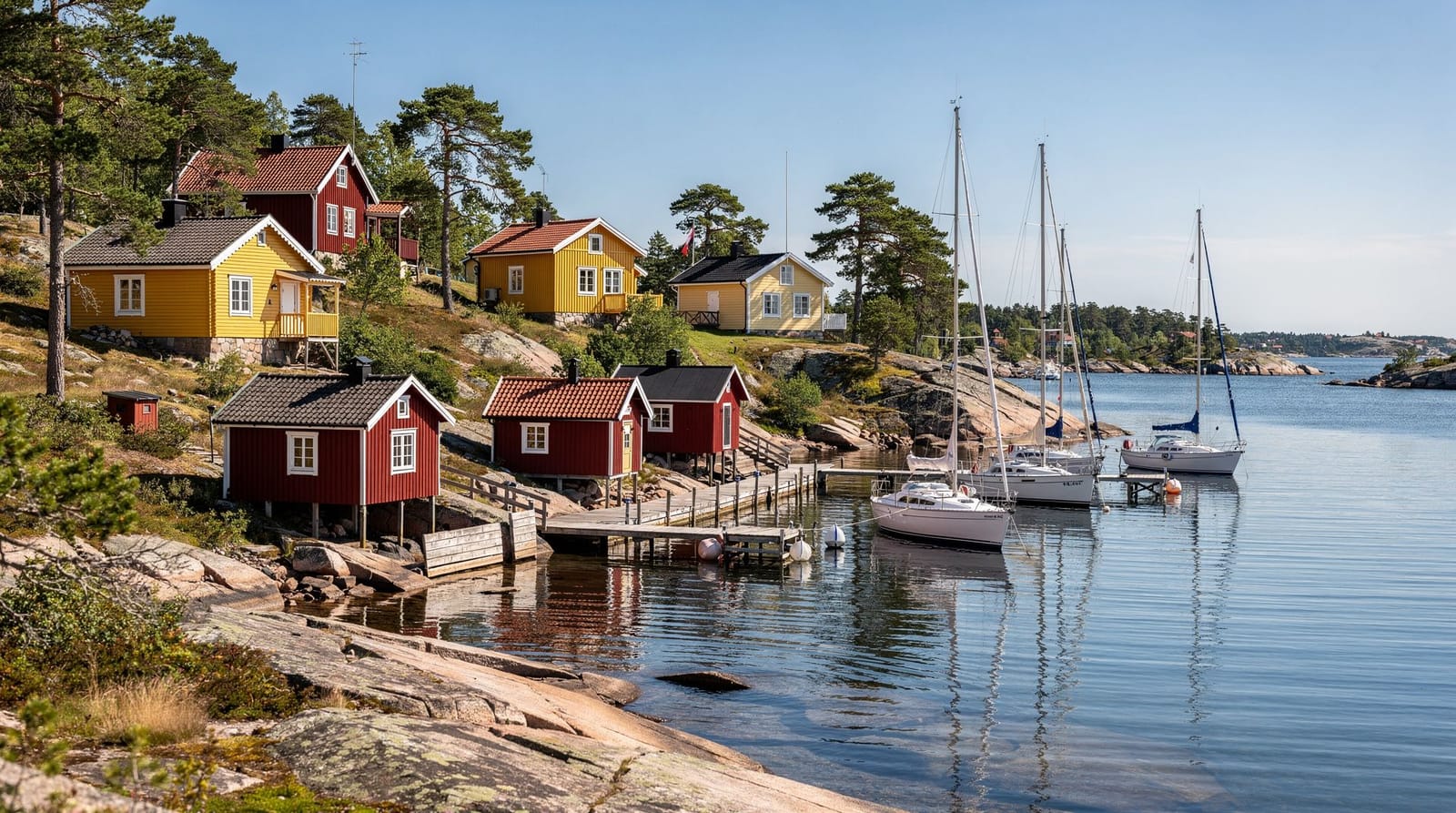
The village itself is small and pretty: wooden houses, a hotel and restaurant, an old pilots’ building. The outer parts of the island are wilder, with trails to the sea’s edge and beaches on the eastern shore.
Who it’s for: People with time to overnight, serious archipelago enthusiasts, or those who specifically want the island-sailing-culture atmosphere.
What justifies the journey: The east-facing shore in late afternoon. The harbour filled with sailing boats. The feeling of genuine distance from the city.
What it isn’t: A convenient day trip. Three hours each way means a seven-hour ferry day with two or three hours on the island. Stay the night.
Stockholm archipelago guided boat tourQuick reference table
| Island | Ferry (min) | Time needed | SL covered | Best for |
|---|---|---|---|---|
| Fjäderholmarna | 25 | Half-day | Yes (summer) | Time-poor visitors |
| Vaxholm | 60 | Full day | Yes | First-timers, balance |
| Grinda | 90-120 | Full day | Partial | Nature, quiet |
| Sandhamn | 180 | Overnight | No (outer) | Committed enthusiasts |
Our Stockholm archipelago guide has detailed ferry schedules and seasonal notes. The archipelago destination hub covers all 30,000 islands in as much detail as one web page can reasonably manage.
The Allemansrätten dimension
Any archipelago discussion should mention Allemansrätten — the Swedish right of public access. In practice, it means you can set foot on essentially any shore, walk through any forest, and pick berries and mushrooms regardless of land ownership. The exceptions are private residences and cultivated land.
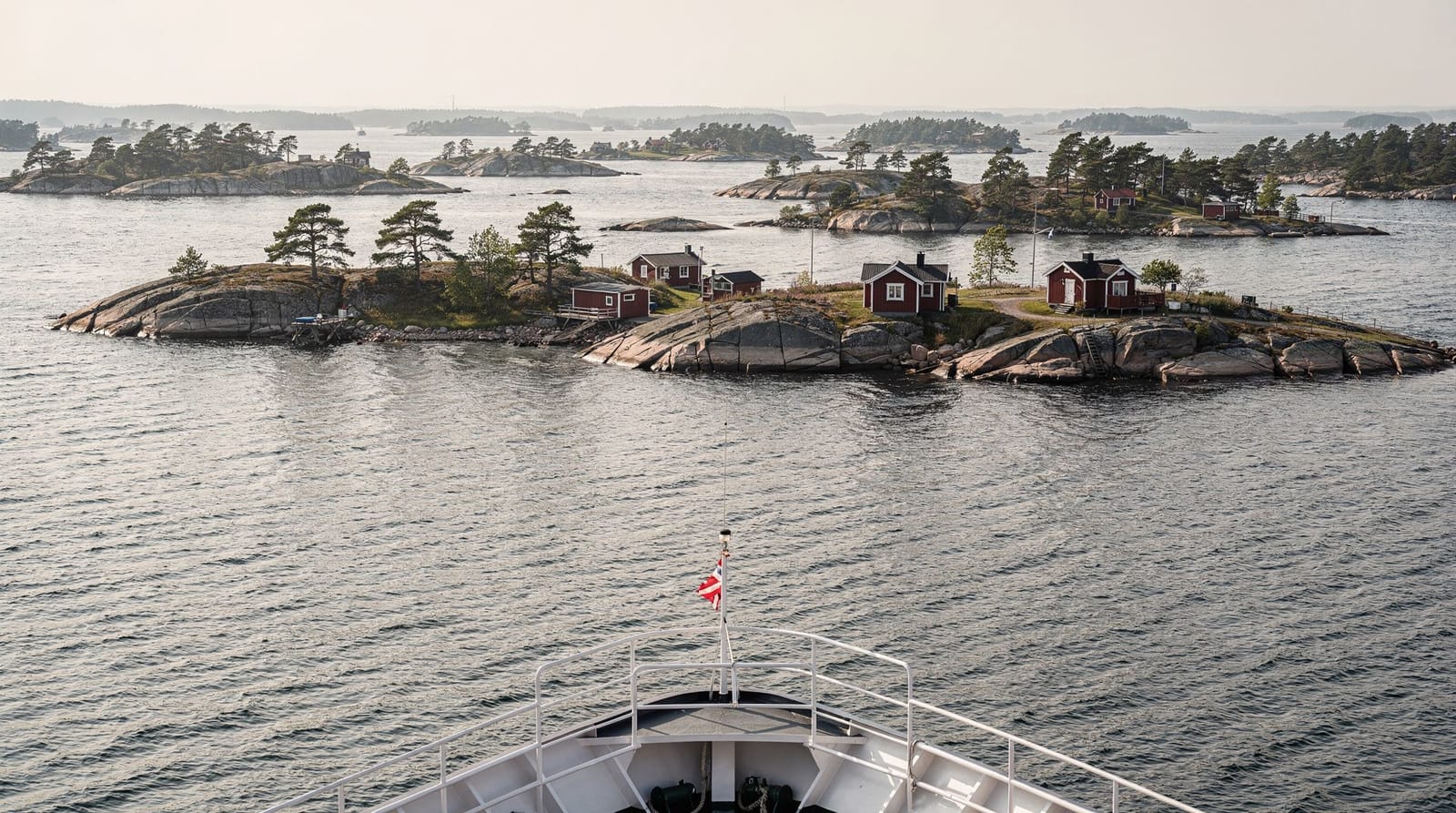
This is not a theoretical right. Swedes use it actively. On Grinda, on the outer shores of Vaxholm, on the anonymous granite islands you pass on the ferry: all are accessible. You don’t need to find a public beach, because all shores are accessible.
The counterpart right is the responsibility not to disturb: leave no trace, don’t start fires in dry conditions, respect that there may be a house behind the trees. Allemansrätten is a mutual social contract, not just a rule.
For the archipelago visitor, it means the best spots aren’t the ones on the map. The best spots are the ones you find by walking past the signposted paths.
The ferry logistics decoded
Strömkajen is the main departure quay for archipelago ferries, running along Strömgatan just south of the Grand Hôtel and east of the National Museum. This is where both Waxholmsbolaget and Strömma depart from.
Waxholmsbolaget is the public ferry company. Operates year-round. No booking required for most routes in normal conditions (except for overnight routes). SL passes cover the inner zone. The timetable is available on the SL and Waxholmsbolaget websites.
Strömma is a private tour and ferry operator. Better boats on some routes, commentary included, reservation recommended in summer. Not SL-covered. Their Fjäderholmarna and Grinda routes are popular and fill up on July weekends.
A practical tip: if the Waxholmsbolaget ferry is full (rare but possible on July weekends), the Strömma equivalent often has space, and vice versa.
The season question
The archipelago in summer (June-August): busy, warm, accessible, the experience everyone imagines. Also: the most expensive accommodation, the most crowded ferries on weekends, and the highest demand for restaurants.
The archipelago in May and September: the choice we’d make. The water is accessible, the ferries run good schedules, the island infrastructure is open, and the crowd levels drop to something manageable. The light in September is extraordinary — the low sun on granite and birch, the first turning of the leaves, the Baltic taking on its autumn grey-green.
The archipelago in October-April: romantic if you’re prepared for it. Some ferries run. Fjäderholmarna and Vaxholm remain accessible. The outer islands become very quiet. Bring provisions; don’t rely on island cafés.
Grinda versus Sandhamn — the head-to-head
These two get compared most often because they both promise “real” archipelago, but they suit different travellers. Grinda is closer (90-120 minutes), doable as a committed day trip, and quieter in its interior forest paths. Sandhamn is further (3 hours), demands an overnight to be worthwhile, and delivers a genuine sailing-village atmosphere Grinda doesn’t have. If you’re torn between them, our dedicated Grinda versus Sandhamn comparison walks through the ferry logistics and island character in more depth than a table can. For a first outer-archipelago trip without an overnight, Grinda is the safer choice; for a genuine two-night immersion, Sandhamn wins.
For readers who want a personal account rather than a comparison, our Sandhamn weekend story covers what an actual overnight there looks like, and why the archipelago saved our trip makes the case for prioritising an island day over another day in the city centre.
Other ways to see the archipelago
Ferries aren’t the only way in. Sea kayaking is a genuinely different way to experience the inner islands — see our archipelago kayaking guide for routes and operators, since paddling gets you into channels and coves the ferries never reach. If you’d rather have someone else navigate, a private charter boat or a guided sailing trip removes the ferry-timetable constraint entirely and lets you island-hop on your own schedule. For a broader comparison of day-trip formats before picking one, our archipelago day trip comparison and inner versus outer archipelago guide go deeper into which zone matches your travel style.
Stockholm archipelago morning kayak tourMulti-island itineraries
If one island isn’t enough, several of our full itineraries build in archipelago time without sacrificing the city. The 4-day Stockholm with archipelago itinerary pairs a Vaxholm or Fjäderholmarna day with three days in the city, while the 5-day summer archipelago itinerary goes further, building in a Grinda or Sandhamn overnight for travellers with more time. Both are worth checking against the ferry times above before you commit island time to a fixed schedule.
Frequently asked questions about the Stockholm archipelago
Which island should I choose for a first visit?
Vaxholm. It has the best balance of accessibility (1 hour, SL-covered), authentic character (a real town, not just a tourist destination), and introductory archipelago atmosphere. From Vaxholm you can decide whether you want to go further.
Can you wild camp in the archipelago?
Yes, under Allemansrätten rules. One or two nights in a given location, no fire in dry conditions, remove all waste when you leave. The outer archipelago islands beyond the tourist zones are popular for wild camping. Bring a reliable tent; the Baltic weather in the archipelago can be more challenging than the city weather.
Is the archipelago safe for children?
Generally yes. The Waxholmsbolaget ferries are family-friendly and covered by SL. The islands accessible as day trips have safe shorelines. The open-water swimming spots on the inner islands are calm. Take sensible precautions near the water as with any shoreline.
Should I choose Grinda or Sandhamn?
Grinda if you only have a day and want genuine quiet without an overnight commitment; Sandhamn if you can stay a night and want the full sailing-village atmosphere. See our Grinda versus Sandhamn comparison for the detailed logistics behind that choice.
Can I combine two islands in one trip?
Yes, though it takes planning around ferry schedules — Fjäderholmarna pairs easily with a half-day in the city, while Vaxholm and Grinda can sometimes be combined on a long summer day if you check both timetables carefully. Our 4-day itinerary with archipelago shows one workable combination.