Sandhamn weekend — getting lost and loving it
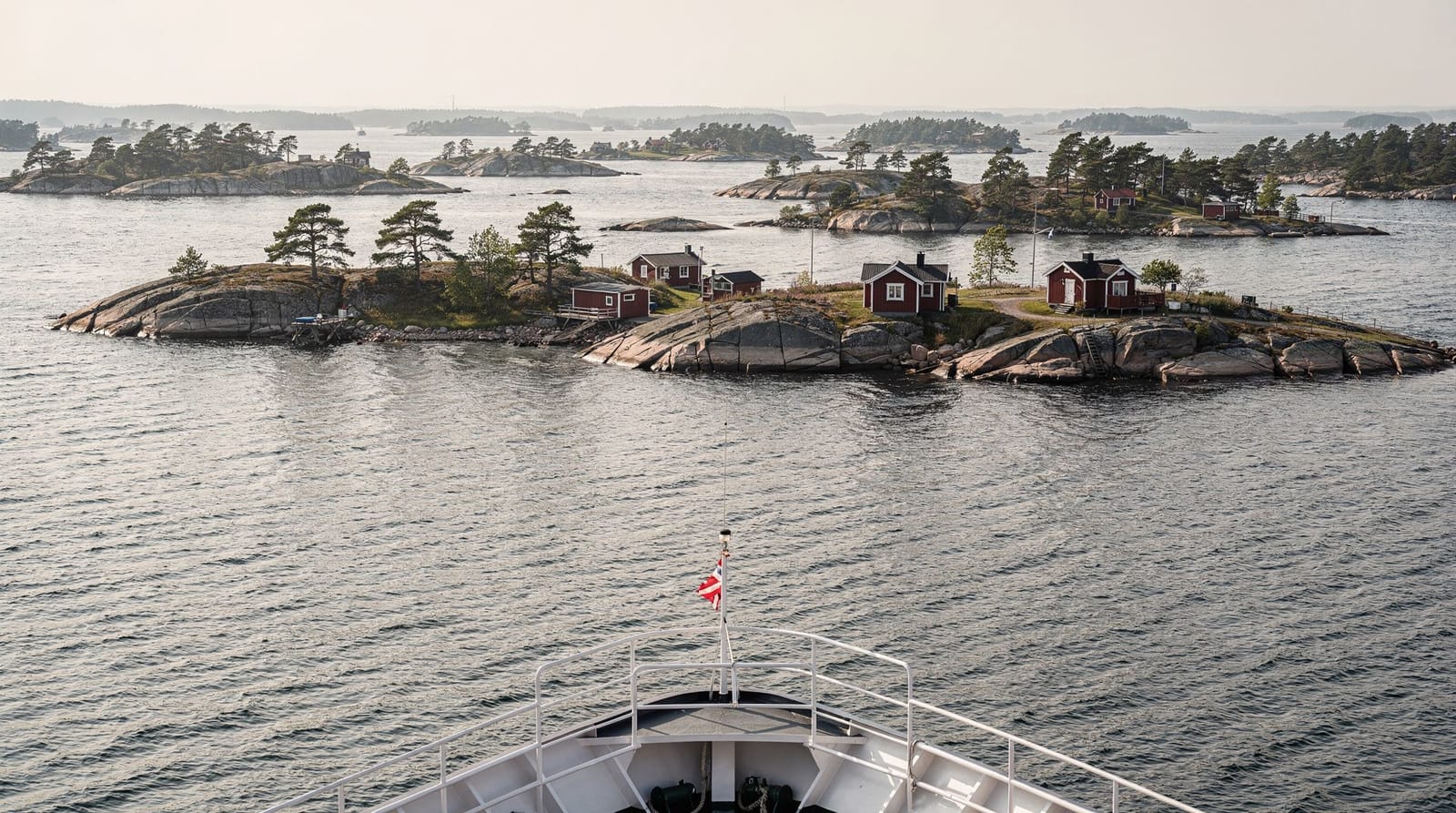
The Cinderella ferry left Strandvägen at 9:30 AM on a Friday in September and the first hour was Stockholm dissolving. The apartment blocks of Lidingö giving way to summer cottage clusters. The cottages giving way to red boathouses on small islands. The boathouses giving way to rock and pine and water, the islands getting lower and flatter as the lake opened into something wider.
By the time we passed Vaxholm — the fortress island, the orange and white walls of Vaxholms Kastell reflected in the sound — we were already somewhere else.
Sandhamn takes three hours from the city. Not three hours that you regret.
| Where | Outer archipelago, eastern edge, facing the open Baltic |
| Getting there | Cinderella ferry from Strandvägen or Waxholmsbolaget from Stavsnäs, around 2.5–3hrs |
| Cost | Strömma Cinderella ferry from 265 SEK one way; hotel and room prices set by each property |
| Time needed | Overnight minimum, two nights is better |
| Best time | Late June to September for the village to be fully open; September for quiet and light |
What the harbour looks like in September
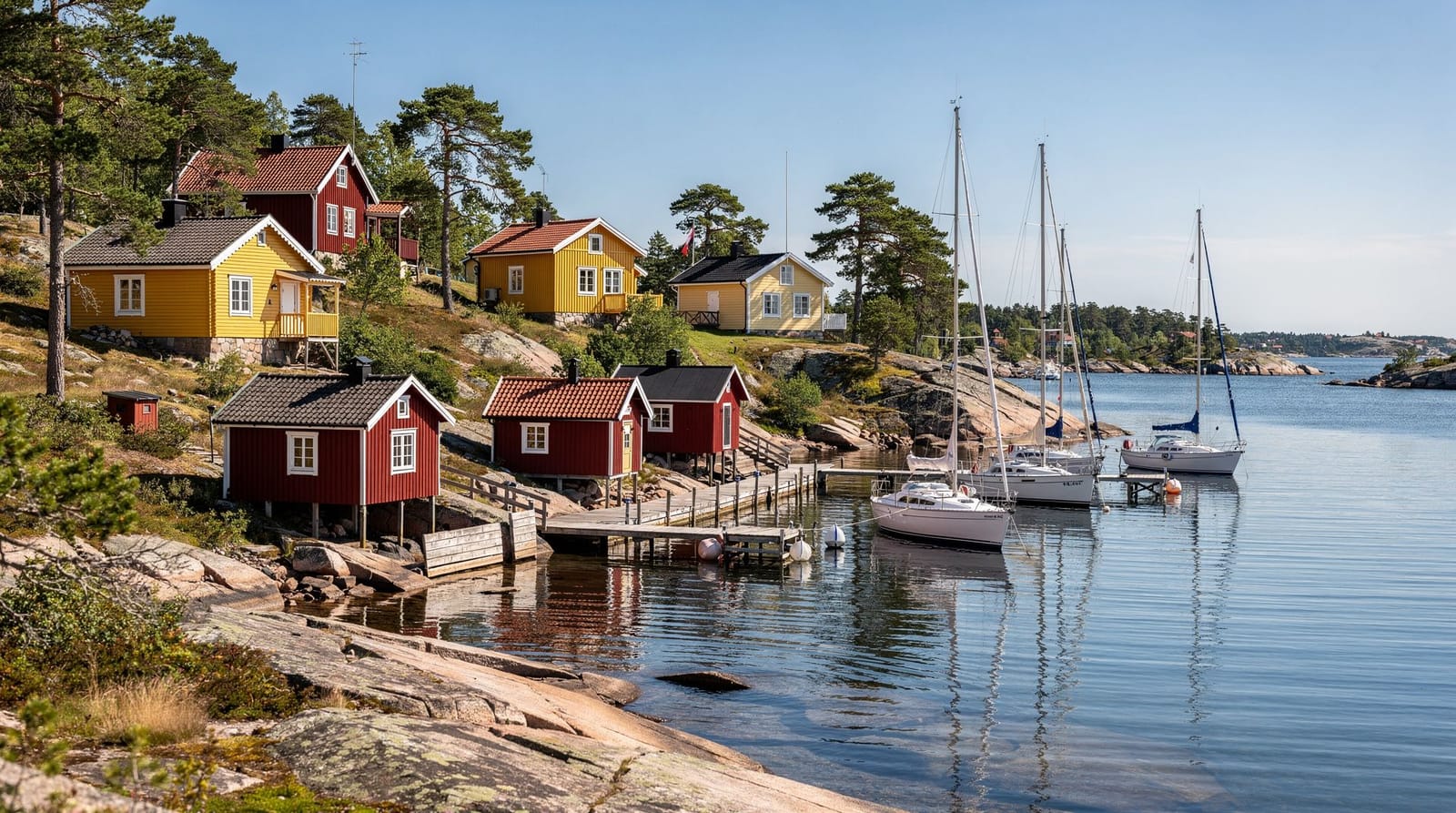
The main dock at Sandhamn village is a long wooden quay where, in July, the harbour is so thick with masts that it looks like a forest of aluminium and wood. In September, it’s different: enough boats to understand why this place matters to sailors, but enough space to see the water between them. The wooden houses on the rise behind the harbour — painted in the Swedish summer palette of Falun red and cream and yellow — were being slowly closed for the season. Window shutters going on. Garden furniture covered.
We checked in at Sandhamns Värdshus, the main hotel, which occupies a collection of buildings near the harbour that have been providing accommodation in various forms since 1672. Our room had a view of the sound and a bathroom with old fittings and a window that stuck. We didn’t care about the window.
Getting lost (the recommended version)
There are no cars on Sandhamn. This is not a statement about regulations; there are simply no roads that go anywhere useful. The island has two main settlements — Sandhamn village and Trouville, a smaller cluster on the island’s southern side — connected by a footpath through the forest that takes about thirty minutes.
We took every wrong turn on the first morning, which is how we found the east coast.
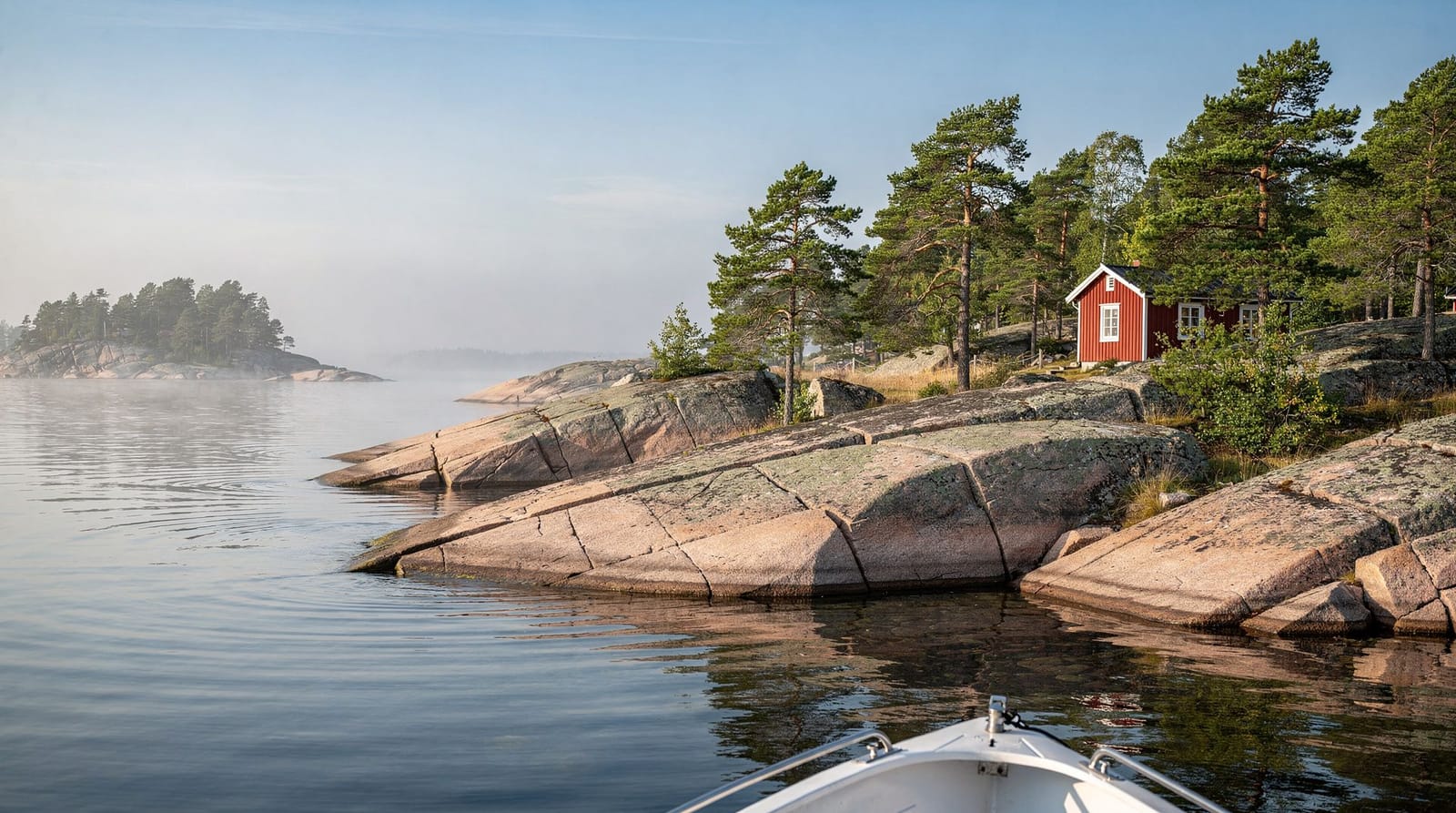
The eastern shore of Sandhamn faces the open Baltic rather than the inner archipelago. The rocks here are larger, the weather when it comes comes from nowhere blocked. On a September morning with high cloud and a northeast wind, it was genuinely wild in a way that nothing on the harbour side had suggested. We sat on a flat shelf of granite above a pool of Baltic water and ate the sandwiches we’d bought from the harbour café and didn’t say much.
This is what Sandhamn is actually for.
The village
The village is small enough to understand in an afternoon. A bakery that closes at 2 PM (we learned this the hard way). A supermarket that stocks the essentials and is expensive in the way of all island shops. A couple of restaurants — the Värdshus dining room, which is good and requires booking; a more casual harbour restaurant that was already on reduced autumn hours.
The KSSS (Royal Swedish Yacht Club) has its base here, which explains the quality of sailing infrastructure relative to the village size. In summer, the population of the island multiplies ten times over; in September, it’s a quarter of that at most.
The Trouville walk
The path from Sandhamn to Trouville goes through forest that smells of pine resin and something marine — you’re never far from the water, never more than five metres above sea level. Trouville is a cluster of old villas and newer summer houses on a rocky point, with a small beach and a jetty where a few boats were still moored on our second day.
We sat at the end of the jetty for an hour watching the light change over the Baltic. At 59° north in late September, the sun stays low and the light is golden all afternoon and into the evening. The shadow on the water runs long. Swallows were still there, catching the last insects of their Swedish summer before departing for Africa.
We both agreed, walking back through the forest, that the three-hour ferry was not the obstacle to visiting Sandhamn. It was the reason.
Practical notes
Getting there: Strömma Cinderella ferry from Strandvägen, year-round but with different summer and winter schedules. In summer, multiple daily crossings. In September, two per day on weekdays. Book in advance for the return if you’re coming back on a Sunday — the boats fill.
Staying: Sandhamns Värdshus is the main option. Some private rentals available. Book months ahead for July.
What to bring: Food and snacks beyond what you expect to need. The island shop is limited and closes early in September.
What not to bring: A rigid itinerary. The point of Sandhamn is time that doesn’t go anywhere particular.
Stockholm full-day archipelago sailing tourFor context on the archipelago ferry system and which islands to prioritise, see our archipelago guide. The Sandhamn destination page has logistics, accommodation and seasonal details.
The sailing culture context
Sandhamn’s relationship with sailing is not incidental. The KSSS (Kungliga Svenska Sällskapet, the Royal Swedish Yacht Club) has maintained its base here since 1899. The Gotland Runt race — one of the oldest offshore races in the world — ends in Sandhamn. In summer, the harbour fills with vessels whose crews have been at sea for days and who arrive with the specific combination of exhaustion and relief that offshore racing produces.
This sailing culture shapes the character of the island even for visitors who aren’t racing. The practical understanding of weather, of wind and water, is present in how people talk about the archipelago. The ferry crews know the tides and the passages. The pilots who guided ships through these channels since the 17th century are commemorated in the pilot building on the harbour front.
Understanding Sandhamn as a place that has always been defined by its relationship to the water makes the experience of sitting on the east coast rocks in September more than just sitting on rocks. You’re at the edge of what was for centuries the threshold between the Baltic and the sheltered archipelago — the place where ships paused before the final passage into Stockholm.
What to do for a full weekend
If you’re staying two nights, here’s what actually fills the time:
Friday afternoon: Arrive on the late-afternoon ferry. Check in, walk the village, sit at the harbour café for a beer watching the Saturday arrivals begin. Dinner at Sandhamns Värdshus.
Saturday: The east coast in the morning (the walk takes 45 minutes from the village and is the reason to stay). Lunch at the harbour. The afternoon walking the island’s interior forest paths, which are modest in scale but pleasant in the birch-and-pine way of the inner archipelago. An evening at the bar where the sailing crews end up.
Sunday: Breakfast at the bakery before it closes at 2 PM. The Trouville walk. The ferry home at whatever time suits. The three-hour return is when you do the reading you didn’t do on the way out.
The honest assessment of the ferry time
Three hours from Stockholm to Sandhamn is genuinely long. In September, the ferry is warm and the archipelago scenery through the windows is consistently good. In July, the boat is crowded and can be loud. In January (if it runs), the lake can be rough.
The formula that works: go out on the Thursday or Friday afternoon ferry and stay until Sunday. The ferry time becomes less significant when it’s part of a longer stay rather than a day-trip calculation.
How Sandhamn compares to the inner islands
If you’ve already spent time on the calmer, more sheltered islands closer to the city — Fjäderholmarna or Vaxholm — Sandhamn feels like a different archipelago entirely. Fjäderholmarna is a half-hour hop, crowded with day-trippers, and back in the city by dinner. Vaxholm sits about an hour out, has cars, a proper little town and a fortress you can visit, and works well as a half-day. Sandhamn is neither of those things. It’s genuinely outer archipelago, facing the open Baltic rather than the sheltered inner channels, and it demands the three-hour commitment precisely because it doesn’t compromise on that remoteness. Our archipelago island comparison breaks down how the different islands differ if Sandhamn ends up being more than you want on this trip.
For visitors trying to decide between a rushed day trip and an overnight, the maths is fairly blunt: a day trip gives you roughly three hours on the island after six hours of ferry travel. An overnight roughly doubles your ferry time investment but gives you the whole of a full day plus two evenings, which is where Sandhamn actually starts to pay off. If your schedule only allows a single day, Vaxholm or Grinda — both closer in — will use your time better than a rushed Sandhamn dash.
Getting there without the Cinderella ferry
The Strömma Cinderella ferry from Strandvägen is the well-known route, but it isn’t the only one. The public Waxholmsbolaget network also serves Sandhamn, usually via a bus-and-boat combination from Stavsnäs pier northeast of the city, and it runs on an SL-linked ticketing system that can work out cheaper if you already hold an SL travel pass for the rest of your trip. It takes roughly the same amount of time as the Cinderella route once you count the bus connection, and it runs year-round with a more reliable winter schedule than the tourist boats. We used the Cinderella ferry both ways on this trip mostly for the direct city-centre departure, but on a return visit we’d weigh the Stavsnäs option for its flexibility.
Stockholm archipelago sightseeing cruiseEating on the island
Sandhamn’s food options are limited by design — this is not a place with a restaurant scene — but what exists is decent. The Värdshus dining room leans into Swedish coastal cooking: herring, fish stews, and a wine list that assumes you’re staying for the evening. The harbour café handles breakfast and lunch, sandwiches and coffee, and closes early enough in shoulder season that you should plan around it rather than assume it’ll be open. The island’s one small supermarket stocks basics at the markup you’d expect anywhere boats have to bring in every delivery — bring snacks and any specific food requirements with you, especially outside July and August when hours shrink further.
Seasonal comparison
| Season | Ferry frequency | Village feel | Worth the trip? |
|---|---|---|---|
| July–August | Multiple daily crossings | Crowded harbour, full shops and restaurants, lively bar scene | Yes, if you don’t mind crowds |
| September | Two crossings on weekdays | Quiet, golden light, shops on reduced hours | Yes — arguably the best month |
| Winter | Weekend-only, reduced schedule | Very quiet, most amenities closed | Only for a genuinely remote-island experience |
Frequently asked questions about Sandhamn
Is Sandhamn worth visiting in September?
Yes, possibly more than in July. September brings excellent light, cooler temperatures, and fewer crowds. The island’s summer infrastructure (café, restaurant, hotel) is still operating. The sailing culture winds down after the main summer races, leaving the island in a quieter, more reflective mood.
Where do you stay in Sandhamn?
Sandhamns Värdshus is the main hotel, with a restaurant and rooms ranging from simple to comfortable. Some private holiday rentals are available; these book out months in advance for summer.
Can you get to Sandhamn year-round?
The Waxholmsbolaget public ferry runs to Sandhamn year-round, with reduced frequency in winter. Strömma tourist boats run seasonally (April-October roughly). In winter, Sandhamn receives mostly weekend visitors and is extremely quiet.
Is Sandhamn worth it as a day trip?
It’s possible but not ideal — with three hours of ferry each way, a day trip leaves only a few hours on the island, barely enough for the harbour and one walk. If your schedule genuinely only allows a single day, an island closer to the city such as Vaxholm or Grinda will make better use of your time.
Do you need to book a hotel in advance?
Yes, especially for July and August, when Sandhamns Värdshus and the limited private rentals book out months ahead. Shoulder-season weekends (like our September stay) still benefit from booking a few weeks out, though it’s less critical than in peak summer.