Why Stockholm's archipelago saved our trip
We had three days. We’d read the guides, noted the museums, booked a flat in Norrmalm that smelled faintly of old carpet. And by the middle of day two, standing on Drottninggatan watching a tide of selfie sticks wash past the H&M flagship store, we were genuinely wondering if we’d made a mistake.
Stockholm, on that Tuesday afternoon in August, felt like any European capital wearing a Scandinavian costume. Busy, expensive, and slightly bored with its own visitors.
Then someone mentioned ferries.
| Where | Strömkajen quay, near the Grand Hôtel |
| Ferry to Vaxholm | About 1 hour, Waxholmsbolaget |
| Cost | Covered by SL day/multi-day pass |
| Time needed | Half a day minimum, full day better |
| Best season | May-September for swimming and full services |
The ferry that changed everything
Our host — a retired librarian named Gunilla who’d sublet her apartment for the week — had left a folded SL map on the kitchen counter with a handwritten note: If you have one free day, Strömkajen, 10:00, Waxholmsbolaget. Just go.
We almost didn’t. It was already 9:15. We grabbed our bags and ran.
Strömkajen is the long quay running along the south side of Blasieholmen, just east of the Grand Hôtel. On a summer morning it looks like an old photograph of itself: wooden ferry hulls painted white and green, passengers queuing without urgency, the smell of diesel and brine. We bought day passes — covered by our SL cards, which surprised us — and stepped onto the Waxholmsbolaget ferry to Vaxholm with four minutes to spare.
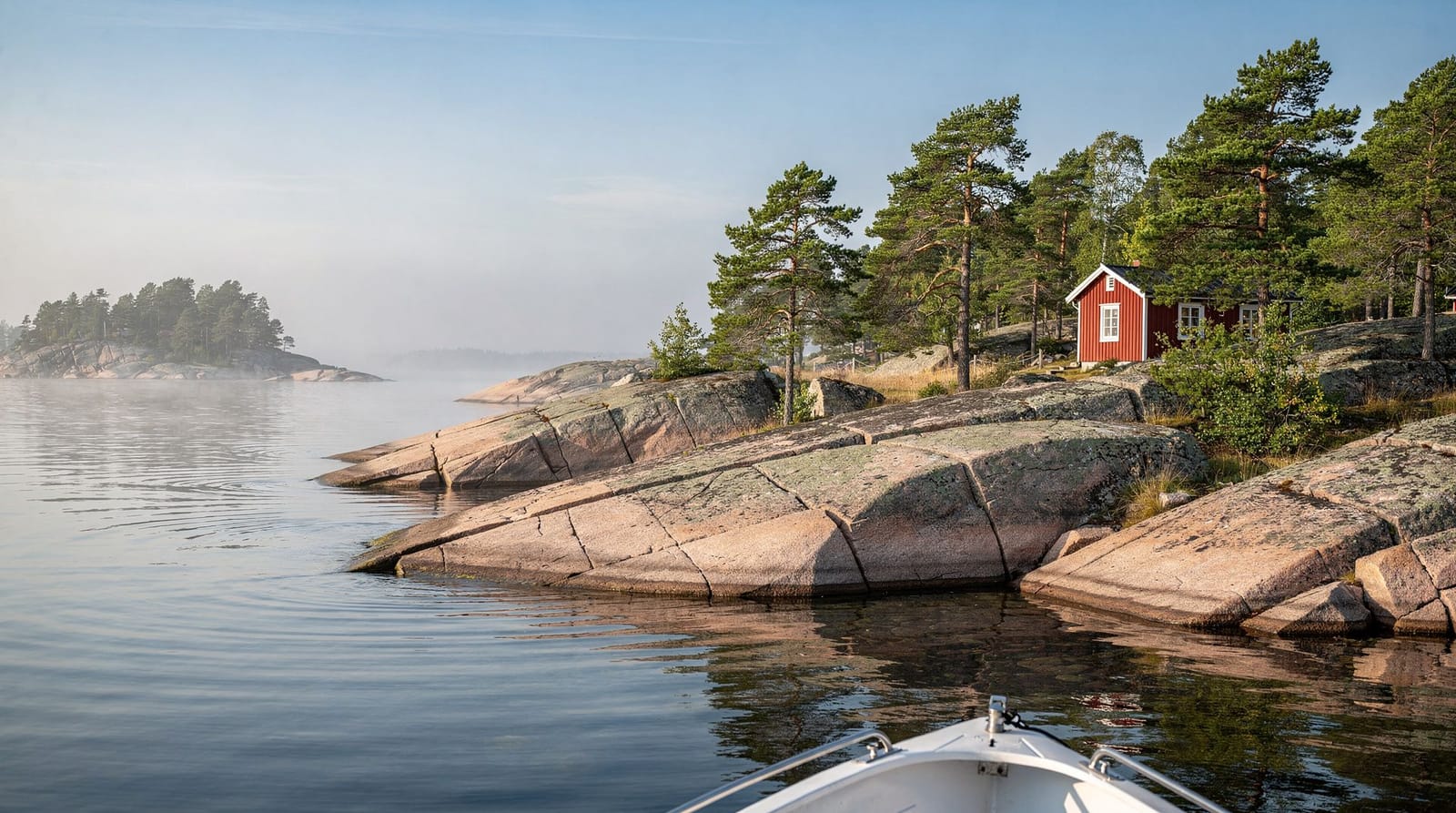
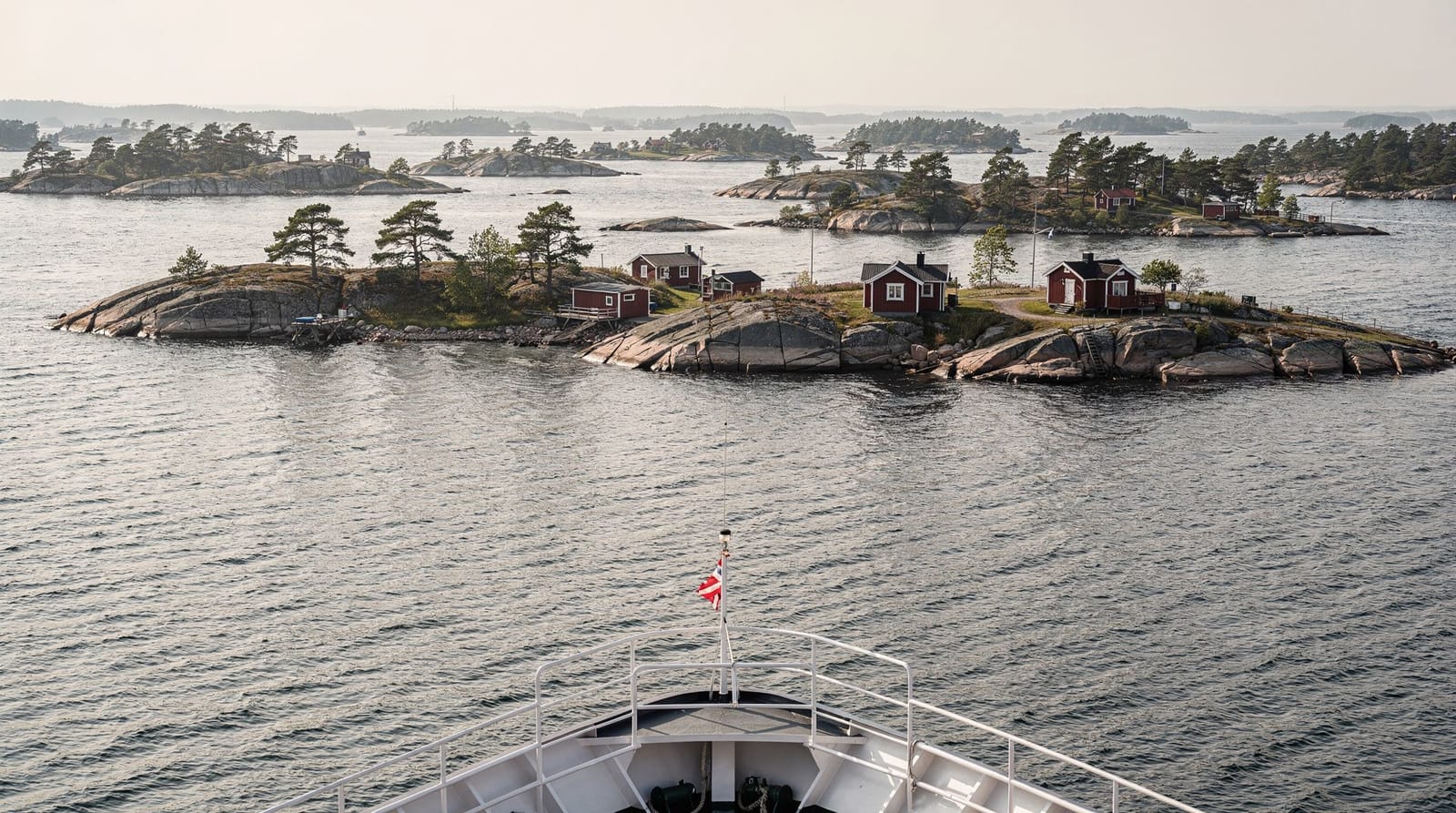
The boat threading through the inner islands is worth the trip on its own. Stockholm doesn’t end; it dissolves. Apartment blocks thin into summer cottages, then into red wooden boathouses, then into flat granite islands where only a single pine tree grows at an angle that suggests permanent wind. The water changes colour from grey-green to something clearer. The air changes too.
What we found at Vaxholm
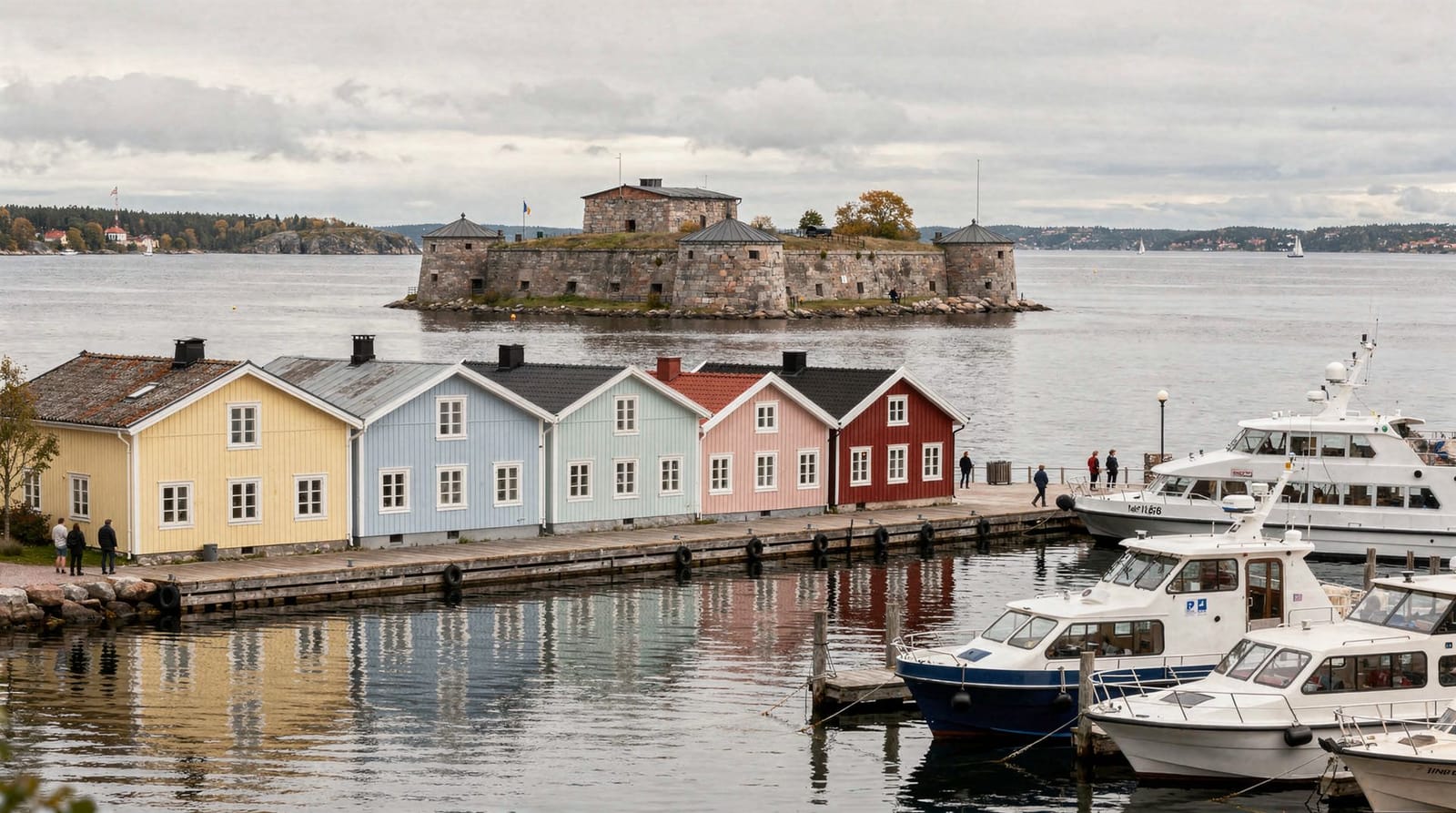
Vaxholm takes about an hour from the city. It’s the gateway to the outer archipelago — a small town on a small island connected to the mainland by a narrow bridge, with a 16th-century fortress squatting on a rock in the sound. The fortress is where the boats slow down, every time, as if paying respects.
The town itself is walkable in twenty minutes. There’s a main street with a bakery producing cardamom buns that made my travel companion stop mid-sentence, a small harbour where fishing boats and pleasure craft negotiate space, and residential streets of painted wooden houses in the colours that only Sweden seems to produce naturally — Falun red, cream, pale yellow, dusty green.
We didn’t do much. That turned out to be the point.
We ate lunch outside at a café overlooking the water. We walked around the headland to a rocky shore where a family was swimming — in August, in the Baltic, without apparent suffering — and sat on the warm granite for an hour reading nothing in particular. We learned what Allemansrätten means in practice: you can sit on that rock, you can walk through that forest, you can pick those berries, because the land belongs to everyone and no one. Our Allemansrätten in the archipelago guide explains the right to roam properly if you want the fuller picture before you go.
Something about that loosens you.
If you want a proper plan for the same outing, our Vaxholm day guide walks through the town at a relaxed pace. And if the cardamom bun in the bakery sets you off on a hunt for more, the cinnamon bun guide and our notes on fika culture in Stockholm explain why a coffee break here is treated as a small institution rather than a snack.
Why we didn’t go further that first time
We stopped at Vaxholm and didn’t push on to the outer islands, and in hindsight that was the right call for a first visit. Sandhamn and Grinda are further out, require more planning around ferry timetables, and reward travellers who already know what they’re looking for. Our Sandhamn weekend story covers what happens when you do push further, on a later trip when we had more time to spare. For a first archipelago day, Vaxholm’s combination of short travel time and genuine island atmosphere is hard to beat — it’s the reason we now recommend it as the default answer to “which island should I pick.”
If you are torn between the two, the Vaxholm versus Sandhamn comparison lays out the trade-offs honestly. For a wider sense of how the nearer islands differ from the farther ones, read about the inner versus outer archipelago, and if Grinda is on your list, the Grinda day guide is the one to open first.
What made the city work after
We came back on the 17:30 ferry, and Stockholm looked different from the water. The City Hall rising on its promontory, the old town clustered on its island, the bridges connecting everything in a geometry that only makes sense when you see it from outside. The city is built on fourteen islands, which you keep forgetting when you’re walking its streets, and which you suddenly understand completely from the deck of a returning ferry.
After Vaxholm, the city felt navigable. We went to the Vasa Museum the next morning — tickets bought online the night before, no queue — and spent two hours in the cool dark with a 17th-century warship that sank on its maiden voyage and was hauled up intact three centuries later. We ate herring at a place in Gamla Stan that Gunilla had marked on a different piece of paper. We walked along the water at Södermalm at eleven at night, in a light that was never quite dark.
It was good. But the archipelago had made it good.
If you are building the rest of your days around a ferry trip like this one, our Vasa Museum guide and the Gamla Stan neighbourhood deep dive are the two city stops we would pair with it. For the overall shape of a short stay, the three-day Stockholm overview and the 4 days with archipelago itinerary show how to slot a water day in without wrecking the schedule. Travelling in high summer, when the evenings stay light, makes the late return ferry even better; see our summer white nights guide.
Practical notes for your first visit
A few things we wished we’d known before:
Take the ferry before you take a tour. Every Stockholm tour starts from the centre outward. The archipelago asks you to start from the water inward. The perspective is different enough to matter.
The SL card covers Waxholmsbolaget ferries within the SL zone. Vaxholm is within that zone. You don’t need a separate ticket. Check the SL website before you go, because zones occasionally shift, but as of our visit the 72-hour pass worked.
Strömkajen vs Strömma. There are two operators. Waxholmsbolaget is the public ferry company — no-frills, reliable, SL-compatible, no reservation needed in summer for Vaxholm. Strömma runs tourist cruises — nicer boats, commentary, no SL. For Sandhamn and outer islands, Strömma often makes more sense. For Vaxholm, Waxholmsbolaget is the choice. Our Waxholmsbolaget ferries explained guide breaks down routes, timetables and which pass covers what.
If you are still weighing the two operators, the Strömma versus Waxholmsbolaget comparison goes through who suits which kind of day, and the SL pass guide explains how the pass fits into a wider trip. Pack layers and something to sit on; the what to pack guide covers the rest.
Bring food if you’re going further. The outer islands have limited provisions. Vaxholm has a proper grocery store. Beyond that, plan accordingly.
The granite gets hot. This sounds obvious. It is, until you’re sitting on it for an hour in August sun without a hat and realise you’ve been very slowly cooking.
If we were to plan a first Stockholm trip now, we’d restructure it: one day in the archipelago early, then the city for the remaining days. The ferry ride sets your eyes correctly. Everything else falls into place after.
Vaxholm archipelago tour with ferry & fika Stockholm archipelago sightseeing cruiseFor ferry timetables, departure points, and island comparisons, see our Stockholm archipelago guide. If you’re choosing between islands for a day trip, the Vaxholm destination page covers the practical details in depth.
Frequently asked questions about a first archipelago visit
Do I need to book the Vaxholm ferry in advance?
No, not typically. Waxholmsbolaget runs frequent departures to Vaxholm and doesn’t require reservations in summer for that route. Outer islands served less frequently can be a different story, so check timetables if you’re going further than Vaxholm.
Is one day in the archipelago enough for a first visit?
Yes, for Vaxholm specifically. A half-day covers the fortress, the main street and a walk to the shore; a full day gives you time to properly sit still, which is arguably the point. If you have more time, our archipelago complete guide covers multi-day and further-out options.
Should the archipelago come before or after the city sights?
Based on this trip, we’d argue early. Seeing the city from the water first — the islands, the bridges, the geometry of it — makes the rest of Stockholm easier to navigate mentally for the remaining days.