Swedish fine dining in Stockholm: what to expect and how to book
Stockholm: Swedish food tasting tour in Old Town restaurants
Duration: 2.5–5 hours
What is the fine dining scene like in Stockholm?
Stockholm has one of Europe's strongest fine dining scenes: in the 2026 Michelin guide Frantzén holds 3 stars, AIRA holds 2, and ten restaurants hold 1 star. The Nordic cuisine movement — seasonal, foraged, fermented, technically rigorous — defines the top tier. Book directly with each restaurant, well ahead for the best-known names. Menu prices vary, so check each restaurant's website.
Stockholm’s position in European fine dining
Stockholm has punched above its weight in European fine dining for two decades. The city that produced the New Nordic movement’s Swedish branch — with its emphasis on foraged, seasonal, fermented, and preserved ingredients — developed a restaurant culture of technical rigour and genuine culinary philosophy rather than simply applying French classical technique to local ingredients.
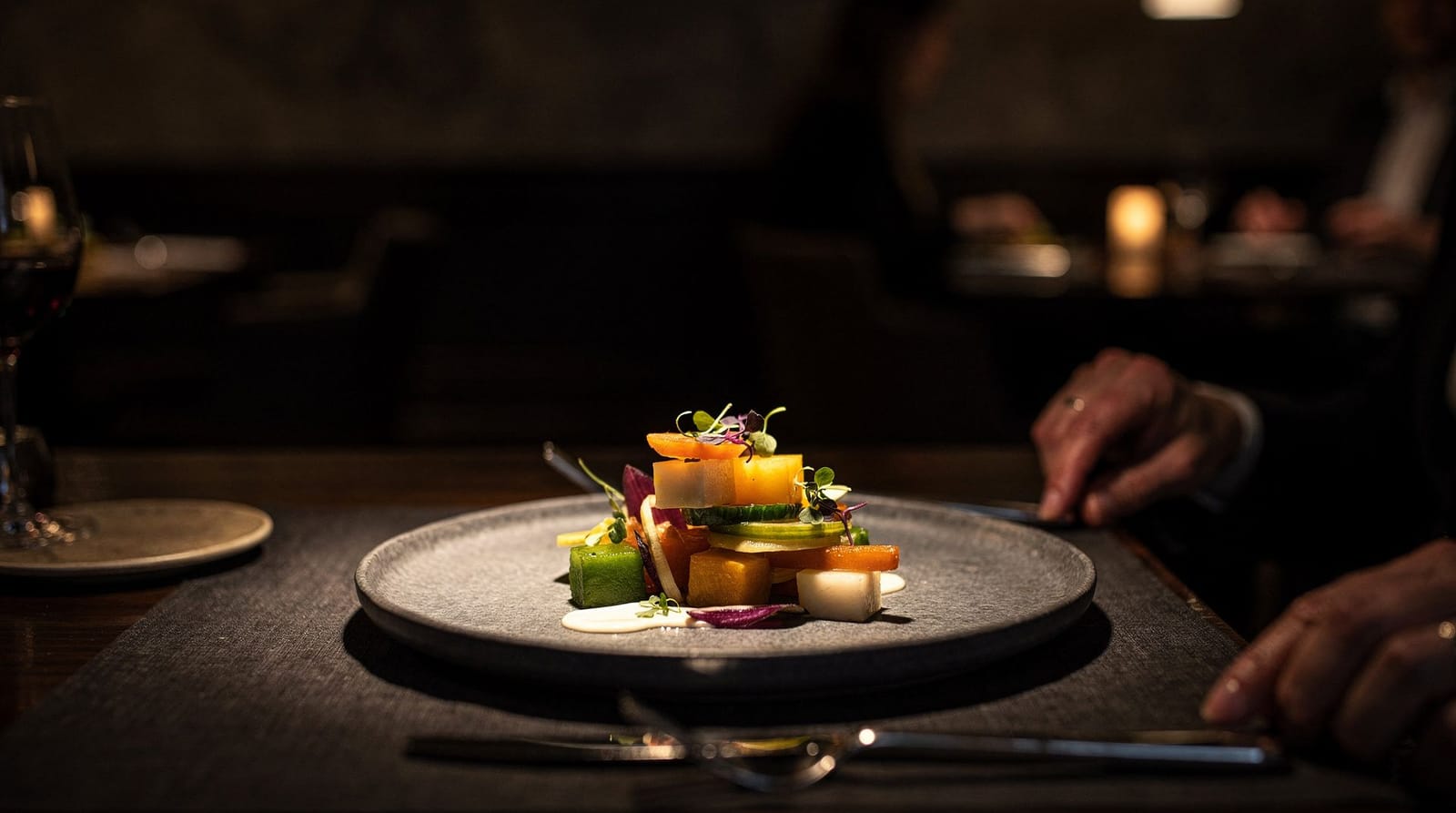
The result is a city where dinner at the top tier means encountering cooking that is recognisably Swedish and simultaneously at the frontier of contemporary technique. This is not the Stockholm that visitors expect when they think Scandinavian food = herring and meatballs. It is also, to be clear, expensive — more so than Paris for equivalent starred cooking.
| Where | Norrmalm (Frantzén, Operakällaren, Adam Albin), near Royal Djurgården (AIRA) |
| Cost | Varies by restaurant; check each restaurant’s website |
| Booking window | Set by each restaurant; the best-known fill first |
| Dress | Smart casual; smart dress at Frantzén |
| Best for | A serious tasting-menu evening, not a casual dinner |
The top tier restaurants
Frantzén — three Michelin stars
Klara Norra Kyrkogata 26, Norrmalm. Three stars since 2018.
Björn Frantzén’s restaurant is the peak of Stockholm fine dining and one of a handful of three-star restaurants in Scandinavia. The format is a counter-seated tasting menu in an intimate space, over three floors of a 19th-century townhouse. The cooking draws on Swedish seasonal ingredients — venison, Arctic char, cloudberries, sea buckthorn — executed with techniques borrowed from Japanese and French traditions alongside Swedish ones.
Frantzén is theatrical without being ostentatious. The room is beautiful, the service warm rather than formal, and the food extraordinary. It is also the most difficult reservation in Stockholm.
Booking: Frantzén manages its own bookings, so book on the restaurant’s website and check there for when tables are released.
Cost: Check the restaurant’s website for the current menu price; wine pairing adds significantly to it.
AIRA — two Michelin stars
Biskopsvägen 9, near Royal Djurgården. Two stars.
AIRA is the only two-star restaurant in Stockholm in the 2026 guide. The setting is a boathouse-inspired room with a waterside terrace, and the cooking is precise and seasonal. It is open Tuesday to Saturday, with lunch on Thursday, Friday and Saturday.
Booking: AIRA manages its own bookings, so reserve on the restaurant’s website or by phone.
Cost: Check the restaurant’s website for the current menu price.
Operakällaren — one Michelin star
Karl XII:s torg, Norrmalm (inside the Royal Opera House). One star. Operakällaren closes at the end of December 2026 for a multi-year renovation of the Opera House, so this is a last-chance entry.
The most historically significant restaurant in Stockholm — there has been a restaurant here since 1787. The current kitchen brings the historical setting together with contemporary Swedish cooking. The room is spectacular. The food is excellent without being as avant-garde as Frantzén — this is fine dining in the classical sense, with contemporary Swedish technique applied to traditional ingredients.
Worth visiting as much for the setting as the food. It serves dinner only, Wednesday to Saturday from 18:00, and has no lunch service. Check operakallaren.se for the final dates.
Sushi Sho — one Michelin star
An omakase counter at Upplandsgatan 45 with around 30 seats across three seatings, Sushi Sho is not Swedish cuisine but it represents the breadth of Stockholm’s starred scene. The Japanese technique and Swedish seafood sourcing create something genuinely distinct from either tradition alone.
Adam/Albin — one Michelin star
Regeringsgatan 2, Norrmalm, in a 19th-century building beside the opera. Chefs Adam Dahlberg and Albin Wessman cook over open flames, and the Michelin Guide named it Opening of the Year in 2026. It is open Monday to Saturday evenings. For Södermalm dining beyond the starred tier, see the Södermalm food scene.
For a full overview of every starred restaurant in the city rather than the highlights covered here, see the Michelin Stockholm overview.
Booking strategies
Use the restaurant’s own website: Michelin lists Frantzén, AIRA, Operakällaren, Adam Albin and the other starred restaurants as managing their own reservations, so book directly. Third-party aggregators may have limited allocations, but the primary release is the restaurant’s own.
Lunch service: Opening days differ widely. AIRA serves lunch on Thursday, Friday and Saturday, and Sushi Sho on Fridays and Saturdays; Operakällaren serves dinner only. Check each restaurant’s opening hours.
Off-peak timing: Late October through mid-November and January–February are typically quieter periods, so tables may be easier to find. Summer compresses availability.
Cost planning
Menu prices change often and several restaurants do not publish them on the Michelin Guide, so check each restaurant’s own website for the current menu and price before you book. Wine pairings add to the food price. In Sweden restaurant meals are charged at 12% VAT on food and 25% on alcohol, included in displayed prices.
Nordic cuisine: what to understand before going
The New Nordic movement that influenced Stockholm’s top tier has specific recurring elements:
Fermentation: Fermented dairy, fermented fish (not just surströmming), fermented vegetables appear as flavour elements throughout menus.
Foraging: Wild herbs, mushrooms, berries, and seaweed from Swedish forests and coastlines are integral to the seasonal menus. Spring brings wood sorrel and ramson; summer brings cloudberries and chanterelles; autumn brings game and root vegetables.
Curing and smoking: Traditional Swedish food preservation techniques — cold-smoking, salt-curing, air-drying — appear at fine dining level as textures and flavour intensifiers rather than as preservation necessity.
Minimal waste: High-end Stockholm restaurants tend toward whole-animal and whole-plant cooking. Parts of the ingredient that would be discarded in more classical kitchens appear as considered components.
Fine dining vs traditional Swedish food
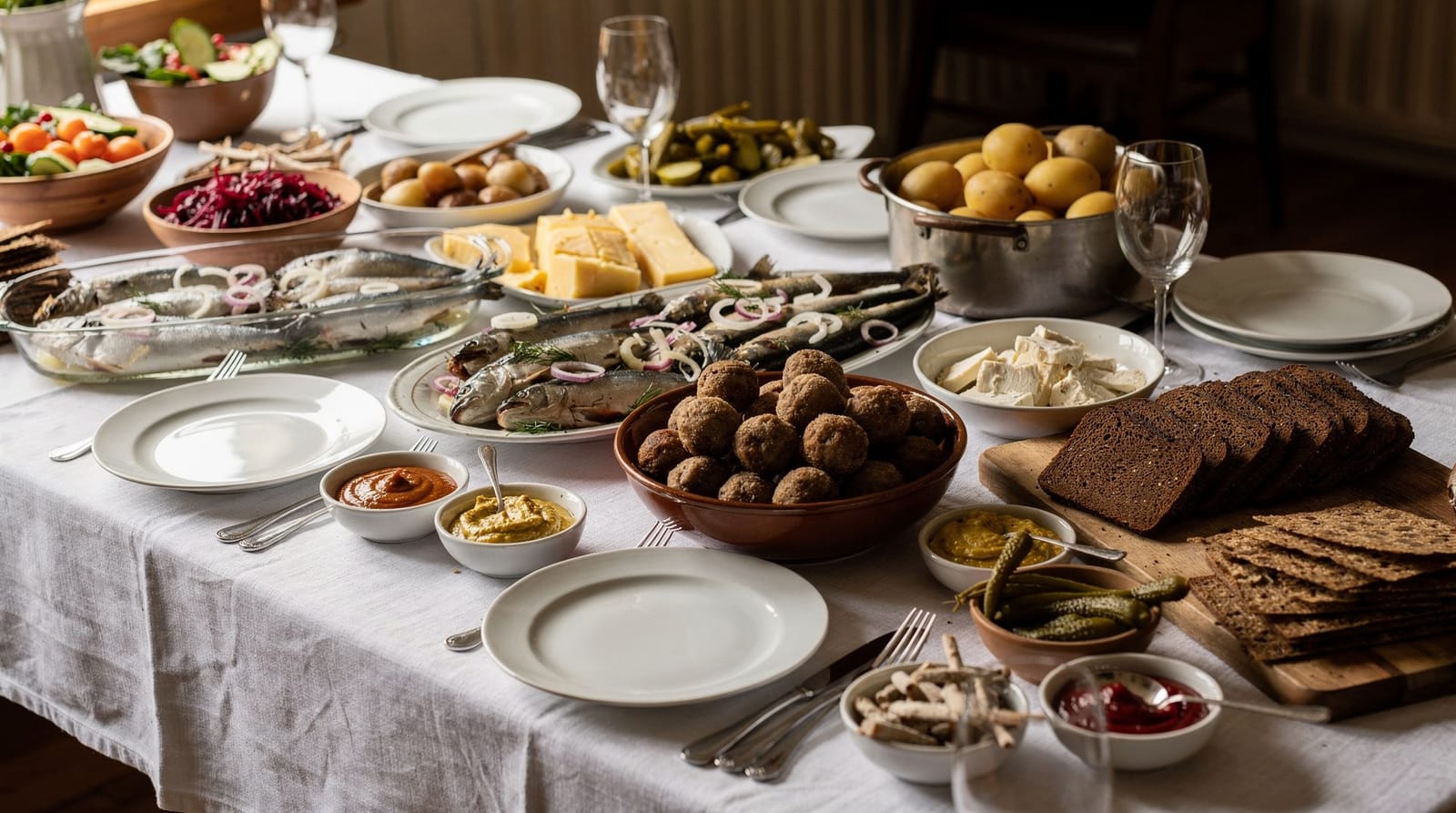
It is worth being clear about what fine dining is not: it is not where you go for a straightforward plate of köttbullar or a classic smörgåsbord spread. Those traditions are better experienced at their own dedicated venues — see the smörgåsbord guide for the full seasonal buffet tradition, or a general food tour of Stockholm for a broader, less expensive introduction to Swedish cooking across several stops in one outing. Fine dining reinterprets the same ingredients — lingonberry, cured fish, root vegetables — through a technically ambitious lens, but it is a different experience with a different price point.
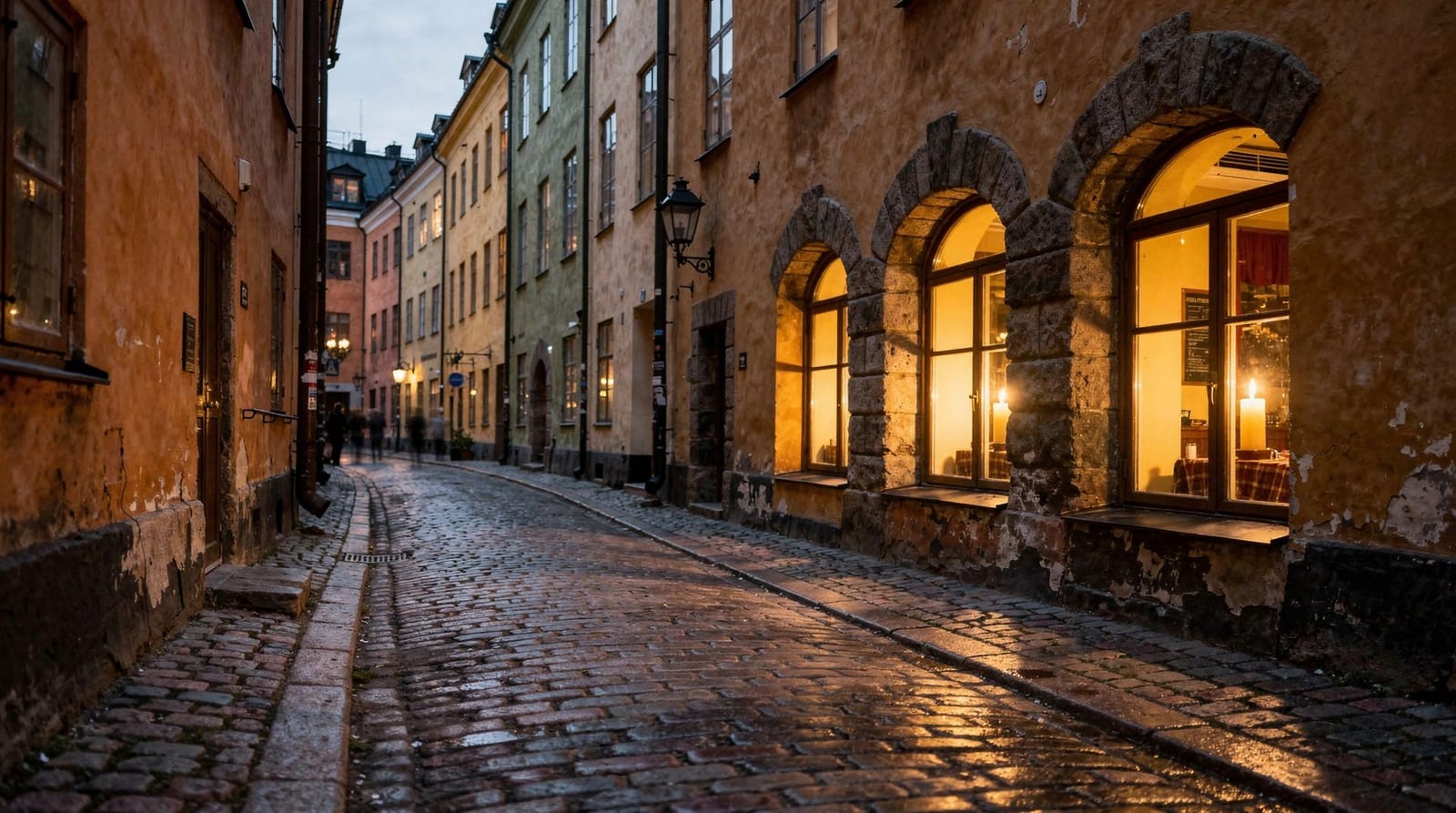
Visitors on a tight schedule sometimes try to combine a starred dinner with a full day of Gamla Stan sightseeing; be aware that the honest guide to Gamla Stan restaurants covers a different, more casual tier entirely — do not expect a Michelin-level experience from an Old Town tourist-street restaurant regardless of how it markets itself.
Shaping the rest of your day around a tasting menu
A long tasting menu is an evening in itself, and the day around it works best when it is kept light. Plan a gentle morning, a modest lunch, and nothing strenuous in the afternoon. A slow fika in the mid-afternoon is a very Swedish way to take the edge off hunger without spoiling the appetite you are saving. If you want a proper breakfast first, the Swedish breakfast guide will help you choose something that carries you through without filling you up.
Because the restaurants cluster in the centre, Norrmalm makes a natural base for the day. Walking there from your hotel or from a nearby sight means you arrive unhurried, which matters when a table is held for you after weeks of waiting. Build in a margin: arriving flustered from a late ferry or a delayed train is a poor start to a meal you may have planned for months.
Making the evening work
Arrive on time. Tasting menus are paced by the kitchen, and a late table can disrupt the whole sequence. If something goes wrong, contact the restaurant as early as possible rather than simply appearing late.
Decide on the drinks early. The choice between a full wine pairing, a shorter pairing, a non-alcoholic pairing or a single bottle is easier to settle before the evening than at the table. Most kitchens are happy to discuss the options when you confirm your booking. If you would like to learn a little about Swedish and European wine beforehand, a wine tasting in Gamla Stan can be a relaxed way to sharpen your palate, and you can book one with a guided wine tasting in the Old Town earlier in the trip.
Pay attention to the pacing. Courses arrive in small portions over several hours. Eating bread and snacks before you sit down defeats the purpose. Let the kitchen build the meal as it was designed.
Ask questions. Service at this level is generally keen to explain the provenance of an ingredient or the story behind a dish. That conversation is part of what you are paying for, and it makes the cooking easier to remember.
Settle the bill by card. Sweden is very much a card country, and the guide to payments for tourists explains what to expect, so there is no need to carry cash for the evening.
Think about the season. The menus follow the produce, so the same restaurant can feel very different in spring, high summer and late autumn. If you have a choice of dates, let the ingredients that interest you most guide the decision: foraged greens and early herbs, berries and mushrooms, or game and root vegetables. Seasonal shifts also affect how busy the city is, which is worth keeping in mind alongside the booking advice above.
Keep expectations honest. A tasting menu is not for everyone. Some courses will be small, some unfamiliar, and a few may not suit your taste. The point is the whole arc of the meal rather than any single plate, and guests who go in curious tend to enjoy it more than those expecting a conventional three-course dinner.
Fitting a splurge into a wider budget
A starred dinner can dominate the cost of a short trip. The sensible approach is to treat it as the one big spend and economise elsewhere, rather than trying to do everything at the top end. The Stockholm budget guide lays out how the other parts of a trip add up, and the tourist traps guide will keep you from wasting money on places that are poor value for what they charge. Saving on ordinary meals, for example with a casual meatball lunch, leaves more room for the evening that you actually came for.
If you are building a whole trip around a special dinner, the romantic weekend itinerary shows how one celebratory meal can sit within a couple of relaxed days, and the three-day overview helps first-time visitors see where an evening like this fits.
Good alternatives to tasting menus
If the 3-hour, 16-course commitment of a full tasting menu is not appealing:
Bakfickan (Royal Opera): Swedish classics at a U-shaped bar counter with room for 28 guests, no table reservations (Monday to Friday from 11:30, Saturday from 12:00). It sits beside the Opera House, so check operabaren.se for its status during the Opera House renovation.
Lilla Ego: Västmannagatan 69, Vasastan. Bistro atmosphere rather than a formal dining room, with an à la carte menu (dinner only, Tuesday to Saturday from 17:00). The restaurant releases bookings one month ahead and is not on the 2026 starred list.
Experience Swedish food in a curated tasting formatFrequently asked questions about Swedish fine dining in Stockholm
How far in advance should I book a Michelin-starred restaurant in Stockholm?
Each restaurant sets its own booking window and manages its own reservations, so check the restaurant’s website. The best-known names, such as Frantzén, fill first.
What does a Stockholm fine dining tasting menu cost?
Prices vary by restaurant and change often, and several restaurants do not publish them on the Michelin Guide. Check each restaurant’s own website for the current menu price.
What makes Stockholm fine dining different from Paris or Copenhagen?
Stockholm leans heavily on Swedish seasonal and foraged ingredients. Fermentation, smoking, and curing appear in elevated contexts. The style owes something to New Nordic but has developed distinctly Swedish characteristics.
Is there a dress code at Stockholm’s Michelin restaurants?
Smart casual is the norm. Frantzén expects smart dress. Trainers and shorts are generally not appropriate at any starred restaurant.
Are there good fine dining options for vegetarians in Stockholm?
Yes — most Stockholm starred restaurants can accommodate vegetarian tasting menus on request. Inform the restaurant when booking.
Top experiences
Bookable activities with verified prices and instant confirmation on GetYourGuide.