Stockholm day trips by train: all options from 38 minutes to 2 hours
Stockholm: full-day small-group Viking culture tour to Uppsala
Duration: 8–9 hours
What are the best day trips from Stockholm by train?
Uppsala (38 min, most content) is the top choice. Västerås (1 hour) has Sweden's best-preserved medieval cathedral and a Viking Age burial site with a remarkably large mound. Eskilstuna (1h10) has the Sigurdsristningen runestone, excellent Viking silver treasure exhibits, and Parken Zoo. Norrköping (1h05, SJ high-speed) has an industrial heritage quarter and major art museum. All accessible directly from Stockholm Central.
Stockholm’s train connections: better than most visitors realise
Stockholm sits at the centre of Sweden’s most developed rail network. Within 2 hours by train, you can reach four historically significant cities, two UNESCO World Heritage sites, and several towns that almost no international visitor ever gets to — leaving the well-worn Uppsala-Sigtuna-Birka circuit and finding genuinely uncommon ground.
This guide covers the full spectrum of train-accessible day trips from Stockholm, organized by journey time, with honest assessments of what each destination offers.
| Best first trip | Uppsala — 38 minutes, most content per hour spent |
| Cost range | Varies by operator, distance and booking date; check SJ or SL |
| Booking | SJ trains: book a few days ahead for lower fares; Pendeltåg: no booking needed |
| Station | All departures from Stockholm Central |
| Best time | Any season — cathedrals and museums are indoor-friendly year-round |
Under 1 hour
Uppsala — 38 minutes (SJ regional)
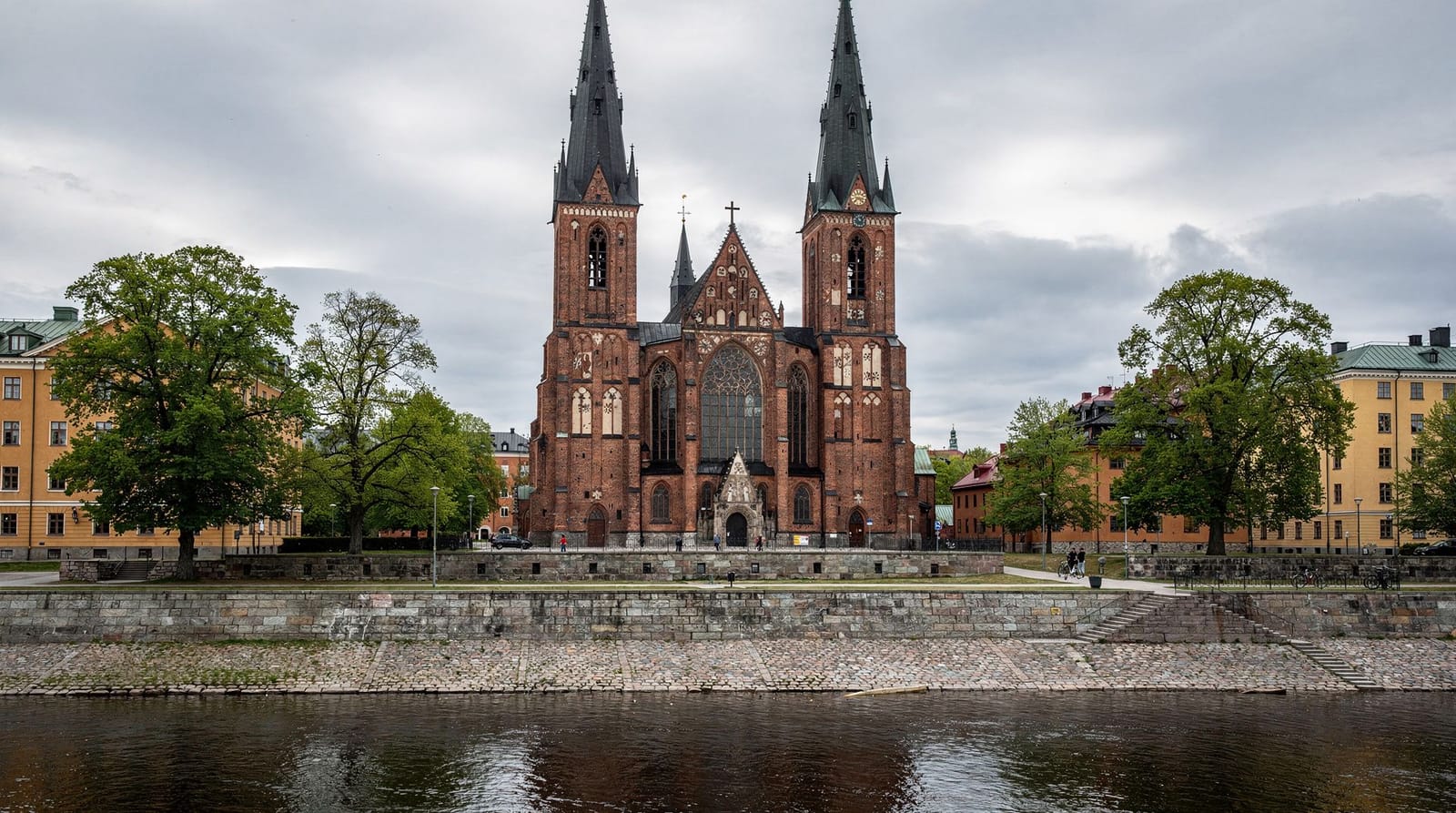
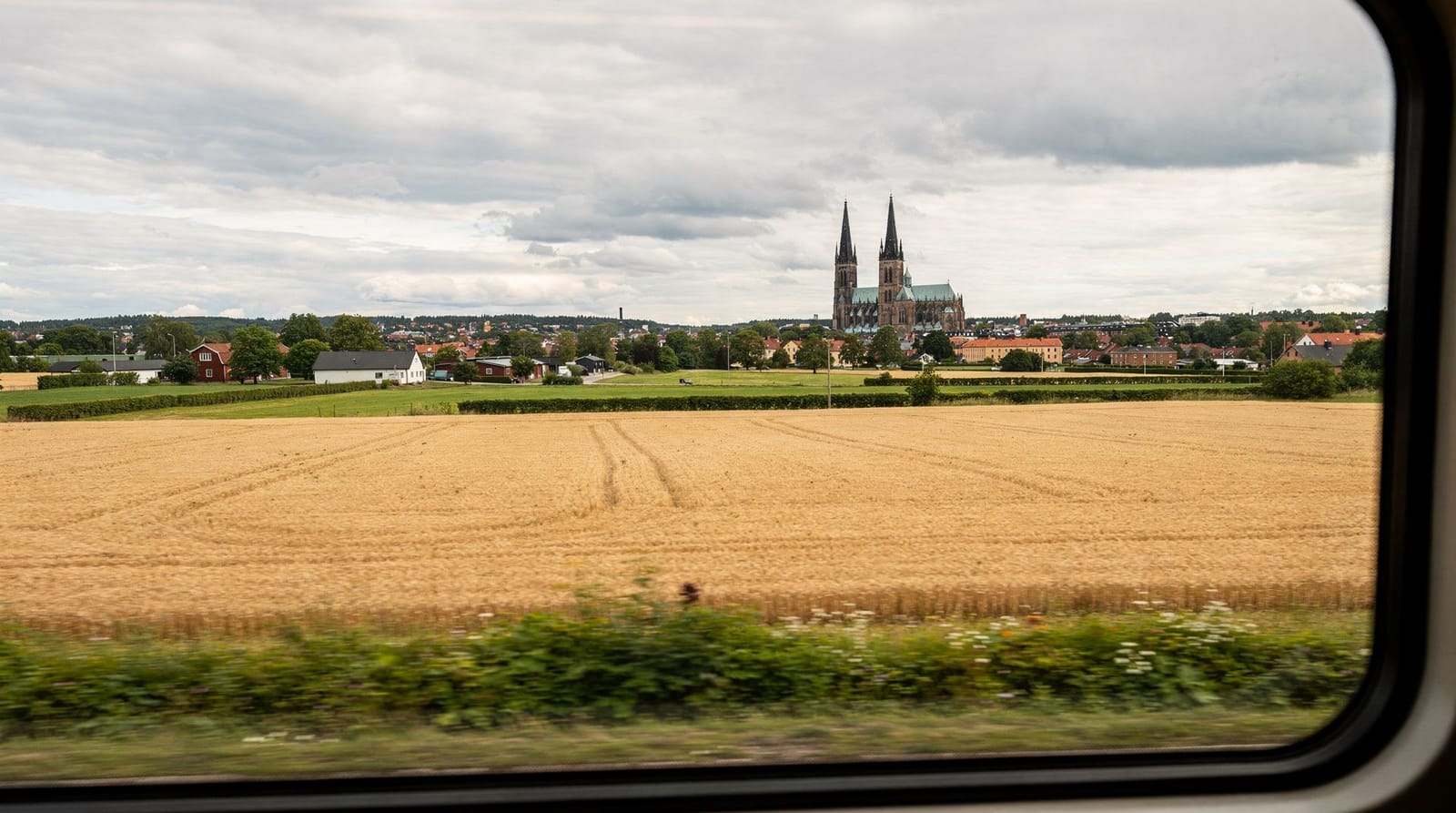
The definitive Stockholm day trip by any measure. Uppsala has more historical content per day than any other destination in the Stockholm region: Scandinavia’s tallest cathedral, Sweden’s oldest university, a castle, Carl Linnaeus’s garden, and the Gamla Uppsala burial mounds.
For the complete picture, see the Uppsala day trip guide.
Train: SJ regional trains from Stockholm Central, approximately every 30 minutes. Check SJ for the current fare.
Book the full-day Viking culture tour to UppsalaSigtuna — 40 minutes to Märsta, then 15 minutes by bus
Sweden’s oldest surviving town is technically reached by commuter train (Pendeltåg) to Märsta, then bus 575. Covered by SL pass.
For the complete picture, see the Sigtuna day trip guide.
Book a guided Sigtuna day trip from Stockholm1 hour to 1h30
Västerås — 1 hour (SJ regional)
Västerås is probably Stockholm’s most underrated train day trip. The city of 150,000 has several elements that compete with Uppsala’s content:
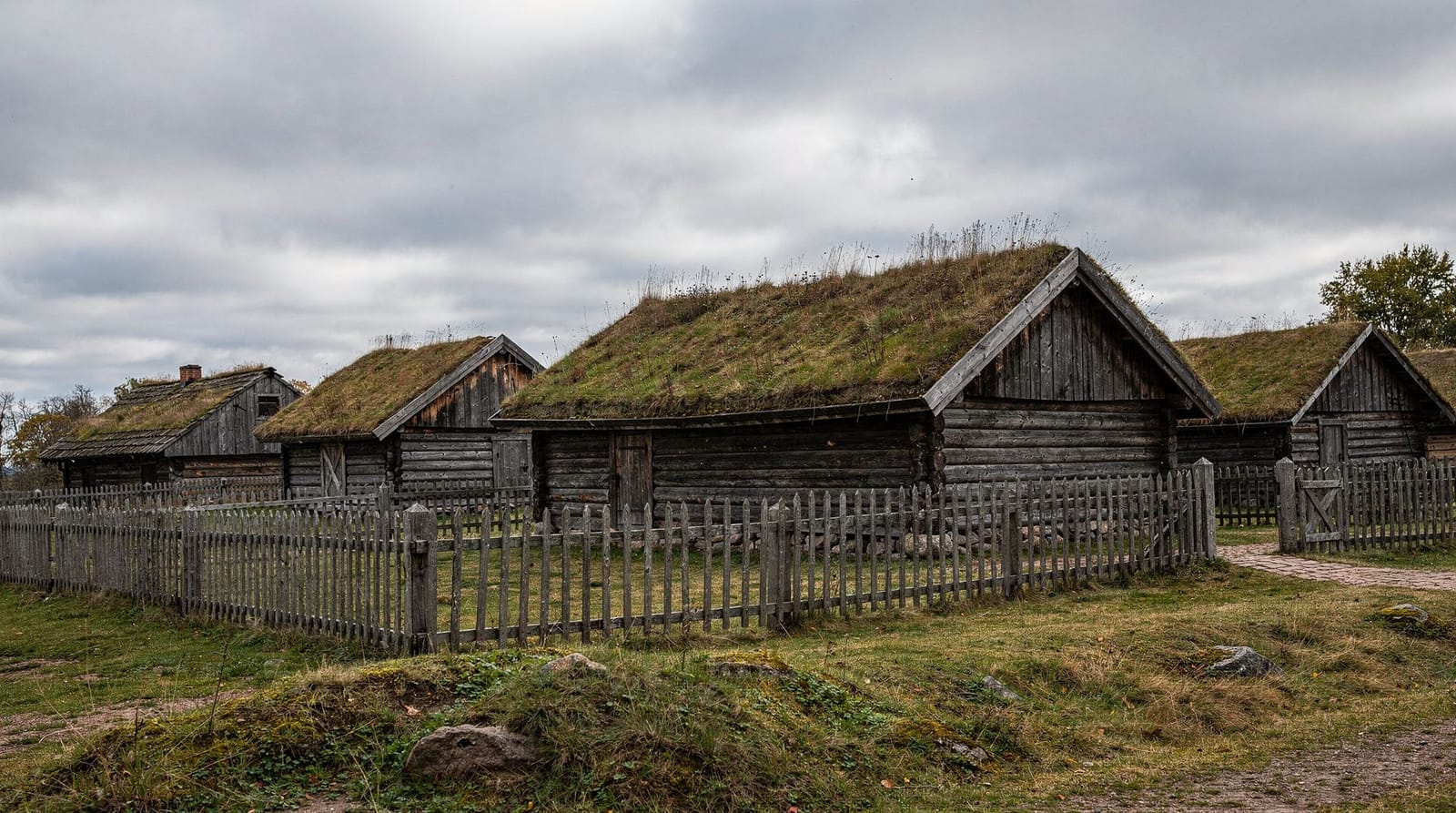
Badelunda Hill (Anundshög): The largest Viking Age burial mound in Sweden after the Gamla Uppsala three, at 14 metres high and 60 metres in diameter. The surrounding area has additional mounds, runestones, and ship settings (stone arrangements in the shape of a ship). The site is 8 km east of Västerås city centre — reachable by bicycle rental (10 km cycle path) or local bus.
Västerås Cathedral: A medieval cathedral with sections dating from the 13th century, housing the tomb of King Erik XIV (buried here in 1577). The tombs and funeral monuments are significant in Swedish royal history.
Musée Gustafsson (Regional Museum): Houses the Söderby-Karl Treasure — one of the most significant Viking Age silver treasures found in Sweden, recovered from a burial cache in the 1990s. The collection includes Arabic silver, Byzantine jewelry, and Scandinavian jewelry of extraordinary quality.
Västerås Castle: Adjacent to the cathedral, with interiors open seasonally.
Västerås is a full-day destination visited properly; a half-day focuses on the cathedral and museum, leaving Anundshög for a separate visit or a car excursion.
Train: SJ from Stockholm Central, hourly service. Check SJ for the current fare.
Mariefred — ~1 hour (train to Läggesta + local bus)
For the Gripsholm Castle approach by regular train, see the Gripsholm and Mariefred day trip guide.
Eskilstuna — 1 hour 10 minutes (SJ regional)
An industrial city that has reinvented itself in the post-manufacturing era. The draw for visitors:
Sigurdsristningen: A large, well-preserved runestone with a carved image telling the story of Sigurd the Dragonslayer (the same Norse myth that underlies the Nibelungenlied and Wagner’s Ring Cycle). Located 12 km west of Eskilstuna at Sundbyholm — accessible by local bus or bicycle.
Parken Zoo: One of Sweden’s better regional zoos with a varied collection. More appealing for families than for solo visitors.
Rademachersmedjorna: Preserved 17th-century blacksmithing workshops at the city’s industrial heritage core. The buildings are interesting from the outside even when not open for guided tours.
Eskilstuna works best as a combined day trip: morning in the city (museum, Rademacher buildings) and a taxi or bus trip to the Sigurdsristningen runestone.
Train: SJ or regional trains from Stockholm Central. Check SJ for the current fare.
1h30 to 2 hours
Norrköping — 1 hour 5 minutes (SJ high-speed)
Norrköping is the fastest train journey to the most cultural content after Uppsala. The SJ high-speed train reaches it in 65 minutes from Stockholm.
The Industrial Heritage Quarter (Industrilandskapet): Norrköping’s former textile mills and paper factories along the Motala Ström river have been converted into one of Sweden’s best examples of industrial heritage preservation. Museums, galleries, restaurants, and the city’s architectural identity are concentrated here.
Norrköping Museum of Art: A major regional collection in a converted industrial building, with strong Swedish art coverage.
Kolmården Wildlife Park: 30 km north of Norrköping, Sweden’s largest safari park and zoo. A half-day addition for families who can extend the journey.
Norrköping is unusual among Stockholm day trips in not being primarily historical — it is a well-preserved industrial city with contemporary cultural energy. Recommended for visitors who have already done Uppsala and want something different in character.
Train: SJ high-speed from Stockholm Central, approximately every 1–2 hours. Check SJ for the current fare.
Planning strategy by interest
History and archaeology: Uppsala (first choice) + Västerås for the burial mound and silver treasure (second visit or separate day).
Viking Age specifically: the Birka Viking day trip (summer only, boat, not train) + Uppsala (Gamla Uppsala mounds) + Sigtuna = three different dimensions of Viking Age Sweden, though note Birka is reached by boat rather than rail.
Industrial heritage: Norrköping’s industrial quarter offers something entirely different from the region’s usual historical sites.
Churches and royal tombs: Uppsala Cathedral + Västerås Cathedral covers both Nordic Gothic cathedrals within the Stockholm day-trip range.
Maximising content per day: Uppsala + Sigtuna combined is the most efficient use of a single full day.
For the full picture of every excursion possible from the capital, including boat-only options like Birka and the archipelago islands, see the complete day trips from Stockholm overview.
Combining train days with the rest of your trip
Train day trips work best slotted between the city’s core sights rather than at the start of a visit — spend your first day or two on Gamla Stan, Djurgården and the Vasa Museum before heading out on rail. If your itinerary also includes archipelago time, alternate a train day with a boat day rather than stacking two train trips back to back; the pace and scenery are different enough that it keeps the week varied. Travellers deciding between train excursions and the archipelago boats often find the archipelago day trip comparison useful for weighing the two against each other. If you already hold an SL pass for city transport, note that it does not cover SJ regional trains — check the SL pass guide for what it actually includes before assuming it stretches to Uppsala or Västerås.
How to shape a rail day so it actually works
The biggest difference between a good train day and a rushed one is deciding in advance what you will not see. Every destination in this guide has more to offer than a single day allows, and the travellers who enjoy themselves most are the ones who pick two or three anchors and let the rest go. At Uppsala that might be the cathedral and the burial mounds; at Västerås, the cathedral and the museum; at Norrköping, the river quarter and the art museum. Treat anything beyond that as a bonus rather than an obligation.
Start early where you can. Stockholm Central is a comfortable, well-signposted station, and an early departure gives you the quietest hours at the main sights before groups arrive. It also leaves slack for the return journey, which matters on the lines that run less often. Before you leave the platform on arrival, glance at the return timetable and note a first choice and a fallback, so a missed connection is an inconvenience rather than a problem.
Pack for a day outdoors even if your plan is mostly indoors. Several of the best sights here, from the burial mounds to the runestone and the industrial riverside, involve walking on uneven ground or waiting for a local bus, and Swedish weather can change within an afternoon. Comfortable shoes and a layer you can add or remove are worth more than any gadget. For seasonal clothing advice, the what to pack for Stockholm guide covers the essentials.
Pairing a train day with the rest of the region
Uppsala and Sigtuna sit close enough in character that they make a natural pair, and both belong to the wider story told in the Viking heritage guide for the Stockholm region. If you want a closer look at either place before committing, the destination pages for Uppsala and Sigtuna set out what each town is like on the ground. Some travellers prefer a guided option for the Viking-themed circuit, which removes the need to work out bus connections yourself, as with this combined Sigtuna and Uppsala Viking day.
If you would rather see how a train day fits into a longer stay, the Stockholm and Uppsala three-day itinerary shows one way to balance the capital with a trip out, and the three-day first-timer itinerary keeps everything within the city. Neither is the only correct approach; they simply illustrate the trade-off between depth in Stockholm and range beyond it.
Remember that rail is not the only way out of the city. Boat-based trips such as Birka, Drottningholm and the archipelago islands offer a different texture, and the public transport explainer helps you understand which tickets work on which service, so you do not pay twice for something you already hold.
Practical train information
| Destination | Travel time | Frequency | Cost (each way) | Pass covered |
|---|---|---|---|---|
| Uppsala | 38 min | Every 30 min | Varies | SJ only |
| Sigtuna (via Märsta) | 55 min | Every 15–20 min | SL pass | Yes (SL pass) |
| Västerås | 1 hour | Every 1–2 hours | Varies | SJ only |
| Eskilstuna | 1h10 | Every 1–2 hours | Varies | SJ only |
| Norrköping | 1h05 | Every 1–2 hours | Varies | SJ only (Interrail) |
| Mariefred (via Läggesta) | ~1h | Check schedule | Varies | SJ only |
Buying SJ tickets
The most reliable method: book at sj.se or the SJ app. Prices are clearly displayed for each departure; the cheapest options appear earliest in the booking window. Walk-up tickets at Stockholm Central are available but significantly more expensive on busy routes.
Choosing between destinations when time is short
If you can only spare one day, the decision usually comes down to what kind of traveller you are. Those who like dense, walkable history with plenty of places to eat and sit down will be happiest in Uppsala. Those who prefer quieter streets, fewer international visitors and the satisfaction of having found somewhere off the usual route will lean towards Västerås. Families with younger children often find that the zoo at Eskilstuna or the safari park near Norrköping gives the day a clear focus that museums alone do not.
It is also worth being honest about energy. A train day involves two journeys, a walk from the station, and a full day on your feet, and it is easy to underestimate how tiring that is after several days of sightseeing in the capital. Build in a proper lunch, a coffee break and a little time with nothing planned. Visitors who treat the day as a relaxed outing, rather than a checklist to be completed, tend to remember it far more fondly.
Finally, keep an eye on opening days at museums and cathedrals before you set off, since smaller regional sights can have shorter or more seasonal schedules than the big Stockholm attractions. A quick check the evening before costs nothing and saves a wasted journey.
Frequently asked questions about Stockholm day trips by train
Do I need to book train tickets in advance?
For SJ regional trains: advance booking gives lower prices. SL passes cover commuter trains (Pendeltåg) with no booking required.
How does SJ train pricing work?
Dynamic pricing similar to airlines — the cheapest advance fares go first and prices rise as departure approaches. Book 1–2 weeks ahead for good prices and check sj.se for the current fare.
What is the difference between SJ trains and Pendeltåg commuter trains?
SJ trains are intercity, faster, slightly more expensive. Pendeltåg are covered by SL passes, run to suburban and nearby city destinations. Uppsala can be reached by both (SJ: 38 min; Pendeltåg: ~55 min).
Is there a Stockholm day trip train pass?
Not specifically. SL pass covers commuter trains. SJ multi-journey cards for frequent use. Interrail covers SJ trains.
Which day trip by train is best for a first-time visitor?
Uppsala — the most content within the shortest travel time. Cathedral, university, anatomical theatre, Gamla Uppsala burial mounds fill a full day.
Top experiences
Bookable activities with verified prices and instant confirmation on GetYourGuide.