Free walking tours in Stockholm: what to expect and whether they're worth it
Stockholm: 2-hour free walking tour
Duration: 2 hours
Are free walking tours in Stockholm actually free?
No — they operate on a tip model. You pay nothing upfront, but a tip of 100–250 SEK per person (roughly 10–25 USD) is strongly expected and socially normal. A guide who runs a two-hour tour with 15 people needs around 150 SEK per person on average to make the model work.
The honest story about free walking tours
Stockholm’s free walking tours operate exactly like those in Amsterdam, Prague, or Barcelona: the tour is nominally free to join, but at the end the guide collects tips, and the guide’s income (and often rent, transport, and equipment) depends on what the group pays. There is nothing dishonest about the model — good guides can earn a fair wage this way, and many genuinely excellent tours operate in this format. But the social mechanics around tipping create a mild pressure that is worth understanding before you join.
This guide gives you the full picture: how the tours work, what is actually expected in terms of tipping, which operators are reliable, and when a fixed-price paid tour makes more sense.
| Real cost | Around 100–250 SEK per person (tip) |
| Time needed | 1.5–2 hours |
| Meeting point | Depends on the operator (Sergels Torg area or Gamla Stan) |
| Booking | Usually required (free), so that groups stay small |
| Best time | A morning departure for the freshest guide energy |
How free walking tours work in Stockholm
Meeting points depend on the operator. Free Tour Stockholm, for example, starts its Old Town tour at Benny Fredrikssons Torg (behind Kulturhuset, by Sergels Torg), its City tour at the top of the wide stairs on Sergels Torg and its Death in Old Town tour at Järntorget in Gamla Stan; its tours last 90–120 minutes. Start times vary by operator and season, and the booking confirmation gives the exact time and place. Group sizes range from 10 to 30 people.
The standard format is:
- Guide introduces themselves and gives a brief overview
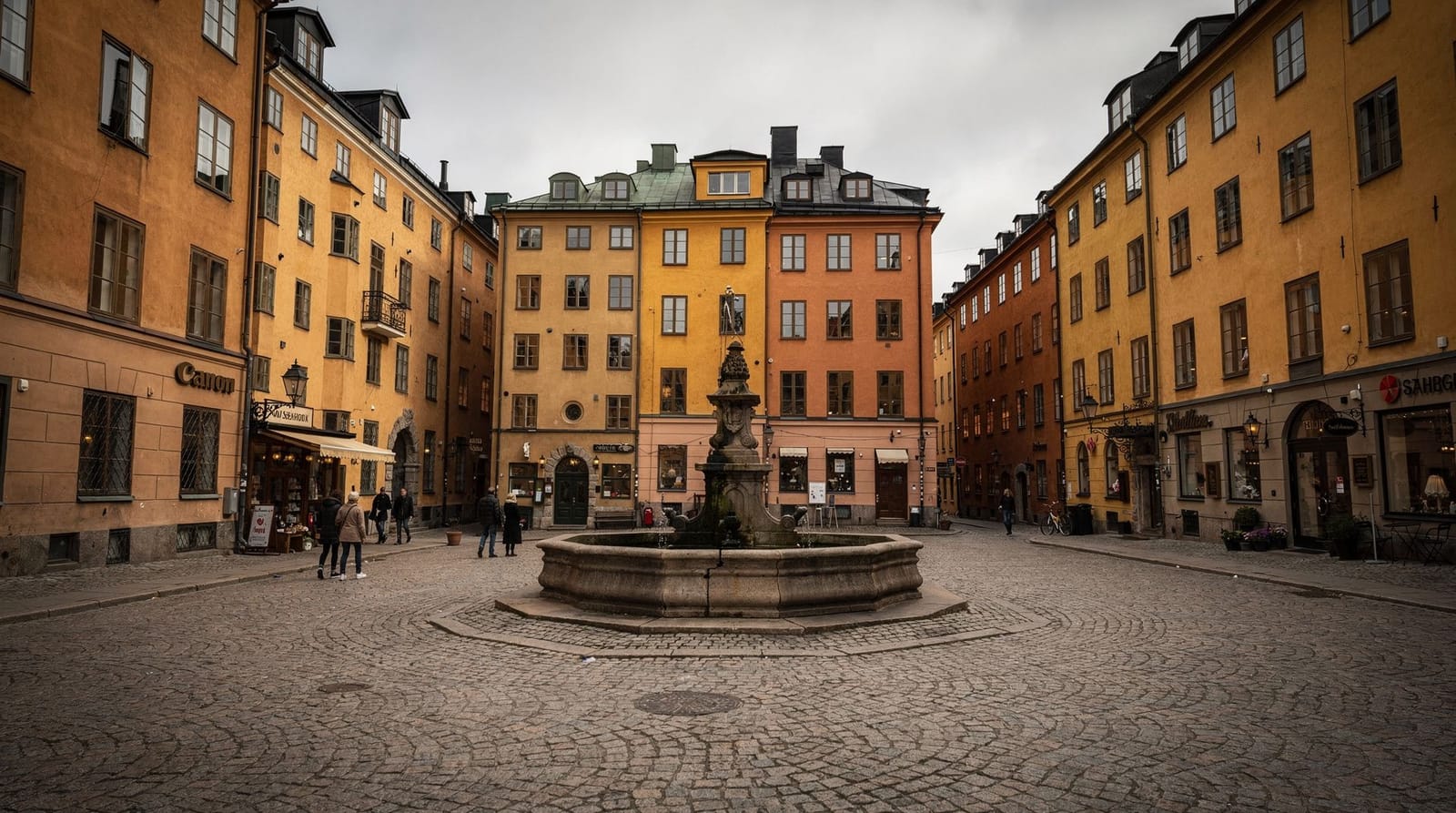
- Two-hour walk through Gamla Stan and sometimes Riddarholmen or the edges of Norrmalm
- Return to starting point
- Guide addresses the group and explains the tip model
- People give what they give (usually via cash or card, depending on operator)
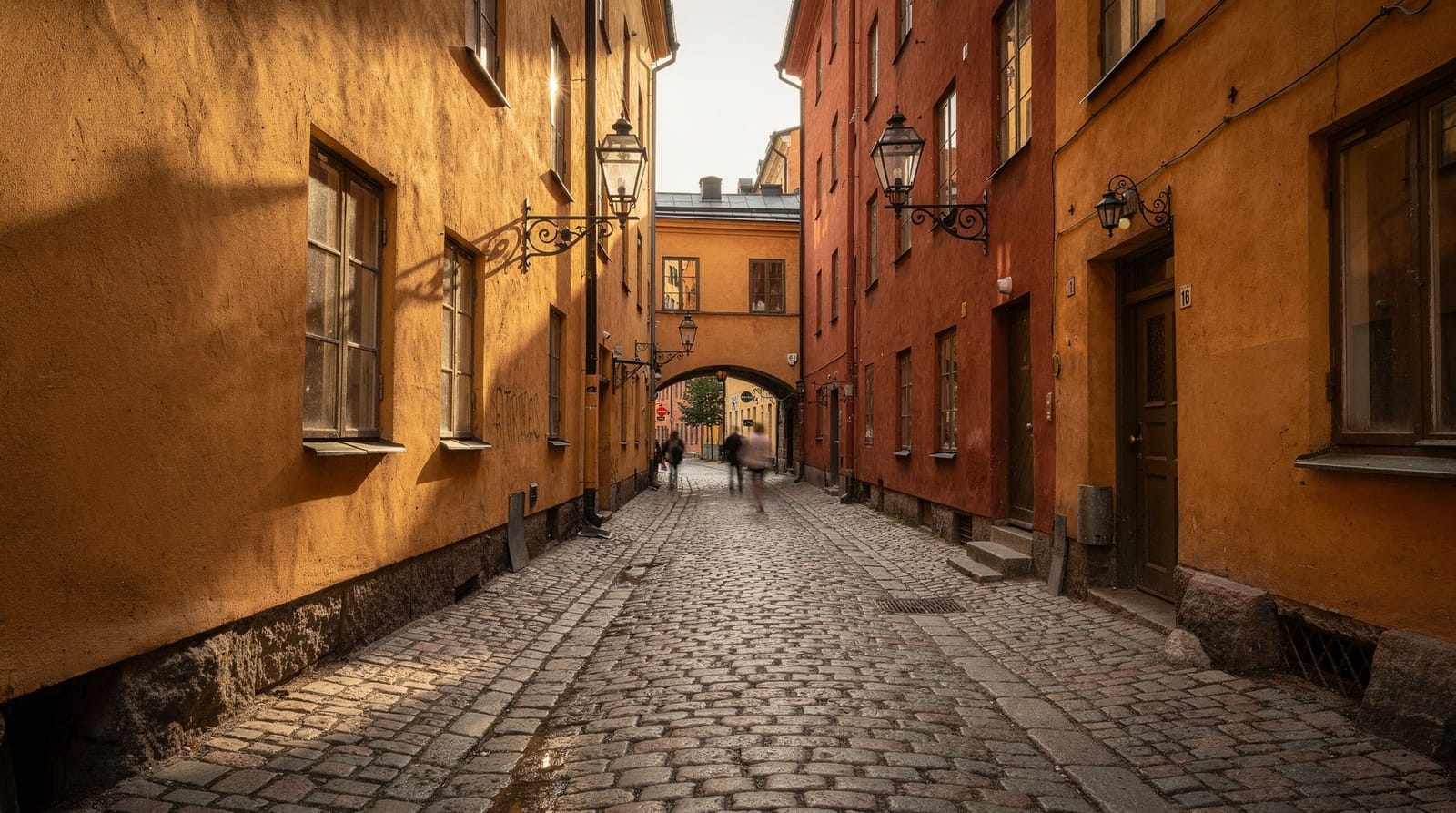
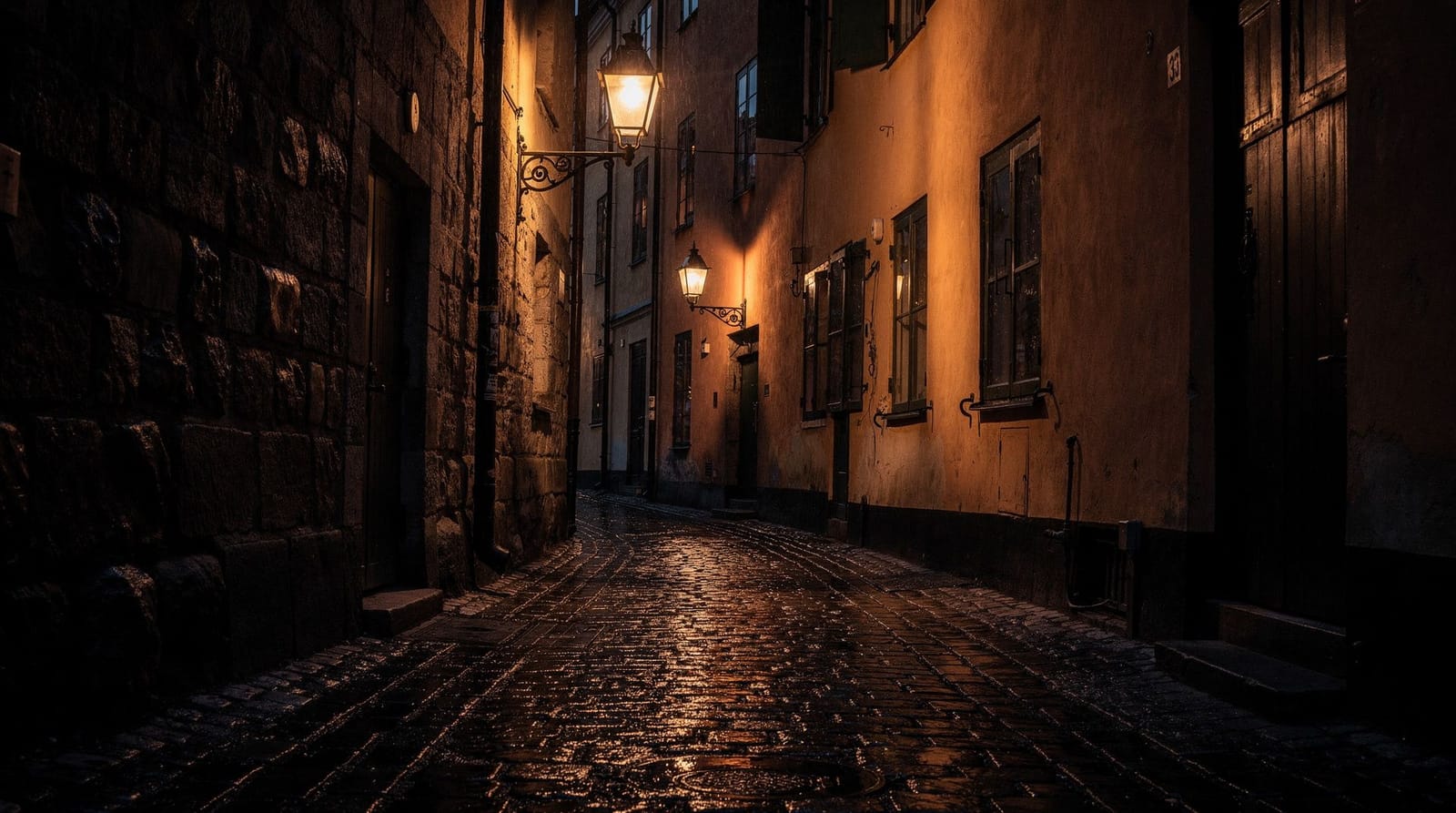
The content varies significantly by guide. A good guide will cover medieval Stockholm, the Royal Palace, Storkyrkan, the Bloodbath, the hidden alleyways, and several genuine insider stories. A mediocre guide reads from a script. There is no reliable way to know in advance which you are getting.
Book a 2-hour free walking tour of StockholmIf you’d rather guarantee a private guide and skip the group dynamic entirely, a private highlights tour covers the same Gamla Stan landmarks on your own schedule.
Book an Old Town highlights private walking tourWhat to tip
The socially expected range in Stockholm is 100–250 SEK per person (roughly 10–25 USD). For context:
- A coffee in Stockholm costs 40–60 SEK.
- Vasa Museum entry costs 240 SEK from May to September and 195 SEK from October to April.
- A paid walking tour is priced by the operator at booking.
If the guide was genuinely good — engaging, knowledgeable, funny, showed you things you would not have found yourself — 200–250 SEK is appropriate and fair. If the tour was average but functional, 100–150 SEK is reasonable. If you felt the tour was poor value even at zero, give 50–100 SEK (the guide still spent two hours, has expenses, and often paid the booking platform a cut).
Giving nothing is technically always possible but creates social discomfort in a small group setting. If you are genuinely on a tight budget, a self-guided walk using Rick Steves’ free audio tour or Voicemap app achieves similar results without the tip dynamics. See the self-guided walking guide.
The tipping pressure: an honest assessment
Stockholm guides — and free tour operators — are generally more straightforward about the tip model than those in some other cities. You are unlikely to be harangued or publicly shamed for a modest tip. But the moment at the end of the tour where the guide explains the model, with 15 people standing in a group looking at each other, has its own social gravity. People tend to cluster around the group average.
Some booking platforms display a suggested minimum tip at booking. This is cleaner and reduces the ambiguity, but means the tour isn’t truly “free.”
Best operators for free walking tours in Stockholm
Original Free Walking Tours Stockholm: The most-reviewed operator. Knowledgeable guides, good English, solid Gamla Stan circuit. Operating since before 2015. Booking via their website or GYG.
Sandeman’s Stockholm: Part of the international Sandeman’s network, consistent quality standards, good for first-time visitors. English-language tours year-round.
Stockholm Free Tour: A local operator with smaller group sizes. Less coverage than the above, but a more intimate feel.
All three can be found on GetYourGuide with verified reviews. Book a slot in advance in summer — the most popular time slots fill up.
Comparing the free tour operators
| Operator | Group size | Style | Best for |
|---|---|---|---|
| Original Free Walking Tours | Larger, 20–30 | Well-reviewed, consistent | Reliable first choice |
| Sandeman’s Stockholm | Medium, 15–25 | International network standards | Predictable format, year-round |
| Stockholm Free Tour | Smaller, 10–15 | More intimate, local | A quieter version of the same content |
None of the three differ dramatically in content — they all cover the same Gamla Stan landmarks — so group size and the specific guide assigned on the day matter more than which company you choose. Checking recent reviews for the specific time slot you’re considering is more useful than picking by operator name alone. If reviews for your preferred slot look thin or stale, switching operators for the same time window is a reasonable fallback rather than gambling on an untested guide.
When a paid tour is the better choice
Free tours are a good option for budget-conscious travellers, first-time visitors wanting an overview, or people who are uncertain whether they want a deep dive and want to try before committing. But there are several situations where a fixed-price paid tour is clearly better value:
Small groups or families: Paid private tours (priced by the operator, minimum group size often applies) allow you to set your own pace, ask specific questions, and avoid the social dynamics of a 20-person group. See the Gamla Stan walking tour guide.
Specialist interests: Ghost tours, food tours, dark history tours, and neighbourhood-specific tours (Södermalm, Östermalm) are almost always available as paid products with specialist guides. Free tours rarely have this depth.
Premium seasons: In July and August, popular free tour slots can have 30+ people, which significantly reduces the intimacy of the experience. A paid tour with a maximum of 12–15 participants is a meaningfully better product.
Beyond Gamla Stan: Free tours rarely venture far from the Old Town. For a specialist neighbourhood walk, the Södermalm walking tour guide and the Djurgården walking route are paid or self-guided options that go where free tours don’t.
A themed evening walk: The ghost walking tour of Gamla Stan covers the darker history the standard free tour skips — plague, executions, and folklore — as a specialist paid product.
Honest budget maths: A “free” tour at 150–200 SEK tip is roughly the same cost as several paid tours. If you are going to tip anyway, paying upfront for a tour you have researched and selected (rather than one you chose because it was free) often produces a better outcome.
Book a paid Gamla Stan secrets tour with fikaSelf-guided alternatives
If the tip mechanics of free tours are not for you, the genuinely free alternatives are:
Rick Steves’ free audio tour: Available as a podcast download. Covers Gamla Stan in detail. Requires headphones and a phone but no payment or social commitment. Good coverage of the main landmarks.
Voicemap app: GPS-triggered audio guides; Stockholm has several city-specific routes. Each route is priced in the app.
This website: The Gamla Stan walking tour and self-guided walking guide give you a complete DIY route with all the historical context you need.
What a good free walking tour covers
The best free tours in Stockholm’s Gamla Stan go beyond pointing at buildings. A skilled guide will cover:
The founding of Stockholm — the 1250s settlement on Stadsholmen (now Gamla Stan), the role of Birger Jarl, the strategic position controlling Lake Mälaren’s exit to the Baltic.
The medieval alleyways — names like Köpmangatan (Merchant Street) and Prästgatan (Priest Street) preserve medieval guild geography. A good guide explains what each street’s name tells you about who lived and worked there in the 14th and 15th centuries.
The Bloodbath — the 1520 executions at Stortorget deserve extended treatment. The best guides spend 10–15 minutes on this and its consequences: the rise of Gustav Vasa, the establishment of independent Sweden, the break from Denmark that shaped Scandinavia.
Royal Palace history — the medieval Tre Kronor castle that predated the current 18th-century baroque palace burned in 1697. The shift from medieval fortress to baroque palace reflects the shift from Sweden’s period as a European empire (Stormaktstiden) to a reduced but still culturally significant kingdom.
The architecture of wealth — the merchant houses on Stortorget, the guild halls, the church spires — a guide can unpack the economic and social history embedded in the buildings in ways that casual observation cannot.
The human stories — plague mortality, executions of common criminals, the daily life of craftspeople, the experience of the garrison soldiers billeted in the medieval towers. The best guides find the human scale within the historical sweep.
Evaluating a guide on the day
If you want to assess the tour quality before committing a full tip, pay attention in the first fifteen minutes:
A good guide asks the group where they are from, adjusts the framing accordingly (Dutch visitors will appreciate different things about the merchant history from Australian visitors), and has clearly thought about the sequence of the route.
A mediocre guide reads from notes, skips context, and does not respond to questions with genuine depth.
The test question: ask about the Stockholm Bloodbath and what happened immediately after. A good guide will give you Gustav Vasa, the founding of modern Sweden, the Reformation that Gustav Vasa used as cover to seize Church property, and the implications for the buildings around you. A mediocre guide will describe the executions and move on.
The free tour ecosystem in Stockholm
Stockholm’s free tour sector is healthy and competitive — there are genuinely excellent guides working in the free-tour format because the model can pay well if you consistently get good reviews and good group sizes. The best guides in Stockholm’s free tour market would easily command a premium in a fixed-price format; they work the free model because they enjoy it and because the volume keeps their storytelling sharp.
The worst guides are those doing it as a temporary job while waiting for something else — they give the standard script without conviction. The booking reviews on GYG are fairly reliable at distinguishing these categories: consistently high ratings with specific praise for historical content and engagement are a good signal.
Seasonal considerations
Free tours run year-round but peak season (June–August) is when demand and guide quality both peak. In winter (November–March), tours are less frequent, groups are smaller, and the atmosphere of walking through a medieval island in frost is genuinely beautiful. The tipping expectation is the same regardless of season.
In summer, meeting points can be busy with multiple operators running simultaneously. Identify your guide in advance and arrive 5 minutes early.
Making the most of the rest of your day
A free tour is best treated as an orientation rather than a full day. Once the group disperses in Gamla Stan, you are already standing in the right place to follow up on whatever caught your attention. If the medieval stories hooked you, the Gamla Stan medieval secrets guide and the Stockholm Bloodbath history go deeper than any two-hour group walk can. The Nobel Prize Museum guide covers the building the tour starts in front of, and the Gamla Stan neighborhood deep dive maps the island street by street.
Hungry afterwards? Be careful where you sit down. The Gamla Stan restaurants guide and the list of Stockholm tourist traps to avoid will help you skip the overpriced menus on the busiest lanes, and the fika culture guide points you towards a calmer coffee break.
If you are building a bigger plan around the tour, the Stockholm in 3 days overview and the two-day essential itinerary show where a morning on the Old Town fits best. For the tipping debate from a more personal angle, read the free walking tour tipping pressure guide and the blog rant on tipping pressure.
Free tour vs bus tour vs paid walking tour
The walking tour vs bus guide makes the broader case for walking over the hop-on hop-off format in a compact city like central Stockholm. Within the walking category specifically, the choice usually comes down to budget flexibility versus certainty: a free tour costs whatever you decide to tip, while a paid tour costs a fixed, known amount with a smaller group and a guaranteed guide standard. Neither is objectively better — a first-time visitor testing the waters does well with a free tour; someone who already knows they want a deep, unhurried dive is usually happier paying upfront.
Frequently asked questions about free walking tours in Stockholm
Do free walking tours run in winter?
Yes, though less frequently. Most operators run year-round but reduce frequency from October to March. Check booking availability for your specific dates; always book in advance in case of cancellation.
Can I join a free walking tour without booking?
Some operators accept walk-ins, but booking is strongly recommended in summer (June–August). A tour that is listed as available at short notice may cancel if minimum numbers aren’t met. Booking via GYG also provides a paper trail in case of changes.
Are free walking tours wheelchair accessible?
Gamla Stan has cobblestone streets and some stepped alleyways. Most tours stick to paved surfaces, but the route is not fully wheelchair-accessible. Contact the operator directly for accessibility specifics before booking.
What language are free walking tours in?
The vast majority of Stockholm’s free walking tours are in English. Some operators offer Spanish, German, or French tours on specific days — check the booking page for language options.
How do I find the meeting point?
It depends on the operator and the tour, and your booking confirmation gives the exact spot. Free Tour Stockholm, for example, starts its Old Town tour at Benny Fredrikssons Torg (by Sergels Torg) and its Death in Old Town tour at Järntorget in Gamla Stan.
Are tip-based tours covered by GetYourGuide’s cancellation policy?
Tours booked through GYG are covered by the standard free cancellation policy (usually up to 24 hours before). The tip is paid in person at the end of the tour; GYG does not handle it.
What should I wear?
Comfortable walking shoes — Gamla Stan’s cobblestones are uneven in places. Dress for the weather; Stockholm’s weather can change quickly. In summer, sunscreen and water are worth bringing.
Top experiences
Bookable activities with verified prices and instant confirmation on GetYourGuide.