Swedish meatballs — where locals actually eat them
The first thing to know about Swedish meatballs — köttbullar — is that the Ikea version is not them. The Ikea meatball exists in a category of its own: a globally distributed facsimile that has, through scale and repetition, become what billions of people think Swedish food tastes like. The actual thing is different: smaller, denser, more savoury, served with a gravy that isn’t the same as Ikea’s sauce, alongside lingonberry that is tart rather than sweet, and cream-braised potatoes rather than the beige mash that the cafeteria produces.
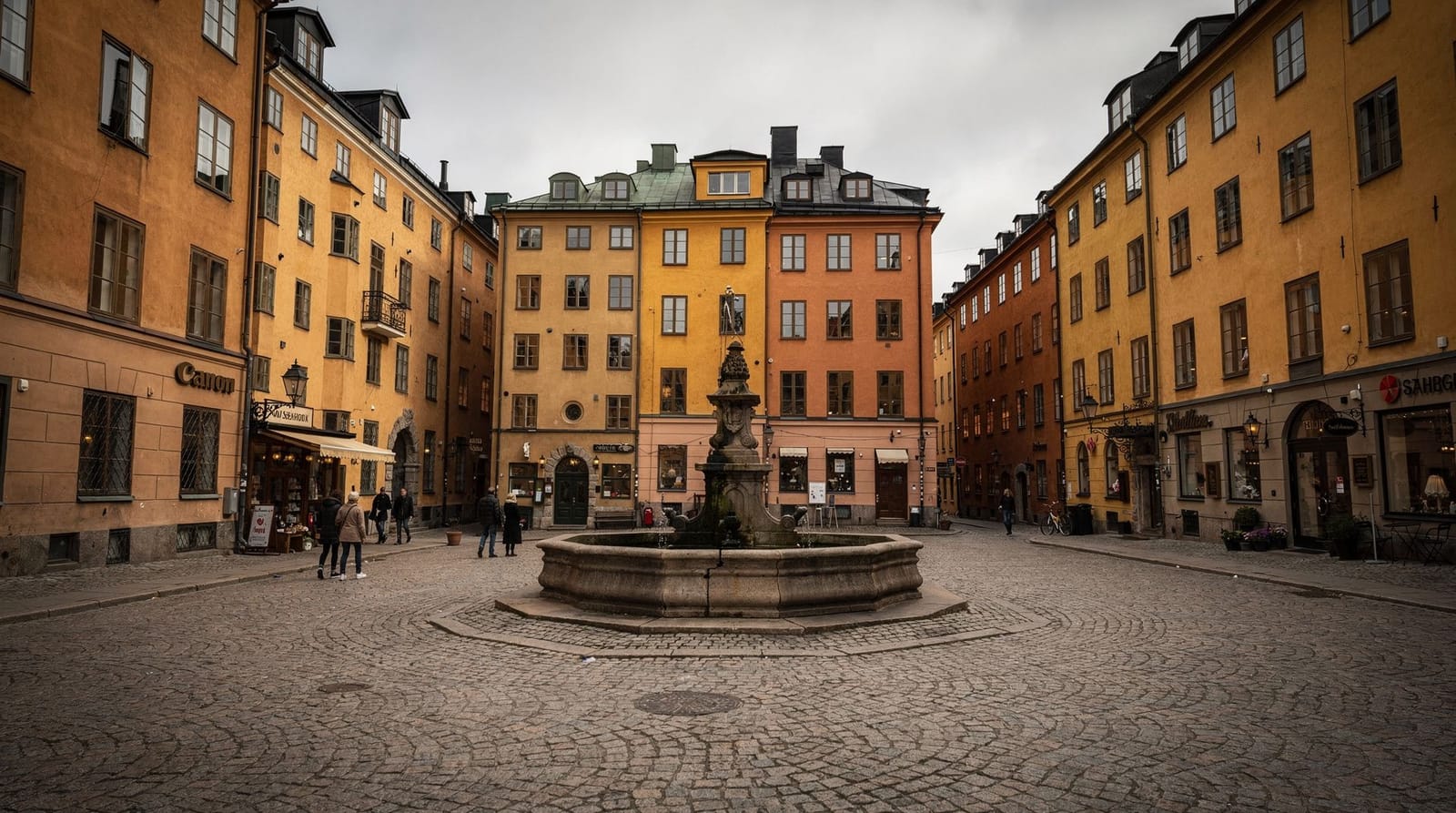
The second thing to know: Västerlånggatan in Gamla Stan is full of restaurants that will charge you 220-280 SEK for a plate of meatballs while trading on the tourist traffic. Some of them are fine. None of them are where Stockholm people eat.
Here’s where Stockholm people actually eat köttbullar.
If you want the shorter, more practical companion to this piece, our meatballs guide lays out the same ground in a more reference-style format. And if the Västerlånggatan warning is what brought you here, the honest look at Västerlånggatan restaurants and the wider tourist traps to avoid in Stockholm explain the pattern in more detail.
| Where | Pelikan (Södermalm) and neighbourhood husmanskost spots |
| Best value | Dagens lunch, around 120-160 SEK |
| Avoid | Västerlånggatan tourist menus, around 220-280 SEK |
| Reservations | Recommended for Pelikan dinner |
| Currency | SEK, cash rarely accepted — card or Swish |
The husmanskost tradition
Köttbullar aren’t fine dining. They are husmanskost — Swedish home cooking, the equivalent of a British roast dinner or a French pot-au-feu, food that was humble in origin and became culturally central through ubiquity and comfort. The right context for eating them is a husmanskost restaurant: slightly old-fashioned, affordable, the kind of place that has a lunch menu (dagens lunch) chalked on a board.
Pelikan, Södermalm
Pelikan is the place we recommend to everyone who asks, with the caveat that it is no longer a secret. A century-old beer hall and restaurant on Blekingegatan in Södermalm, Pelikan serves some of the best traditional Swedish cooking in the city. The dining room is all dark wood, vaulted ceilings and amber light. The menu is Swedish classics executed well: köttbullar, gravlax, Jansson’s temptation (a potato, cream and anchovy gratin that is better than it sounds).
The meatballs here are larger than the typical home version, very well-seasoned, and come with the lingonberry and potato combination that constitutes the correct form. Check pelikan.se for the current menu and prices.
It is popular. Reserve. Pelikan sits a short walk from the Södermalm walking tour route, so it pairs naturally with an afternoon exploring the neighbourhood.
The lunch option: dagens lunch
The most efficient way to eat well and cheaply in Stockholm is the dagens lunch (daily lunch special) system. Most Swedish restaurants — including traditional husmanskost places — serve a set lunch menu from roughly 11:30 AM to 2:30 PM. This typically includes a main course, salad bar or starter, bread, coffee, and sometimes a small dessert, for a fixed price of 120-160 SEK.
Swedish meatballs appear on lunch menus across the city, year-round. The lunch at a neighbourhood Södermalm restaurant costs less than a tourist dinner menu on Västerlånggatan by 80-120 SEK for equivalent or better food.
This is the most significant money-saving tip for eating well in Stockholm: eat your main meal at lunch, snack or eat cheaply in the evening.
How meatballs fit into a wider eating plan
Meatballs work best as one anchor meal in a day, not the whole plan. A sensible rhythm is a proper husmanskost lunch, a fika break in the afternoon (our fika culture guide explains how that works), and something light in the evening. If you are watching the budget, the Stockholm budget per day guide and our blog post on eating cheap in Stockholm show how a lunch-first approach fits into a realistic daily spend.
Payment is rarely a problem, since cards are accepted almost everywhere, but our guide to Swish and cards for tourists is worth a quick read before you sit down to your first bill.
The IKEA option, honestly
We are going to acknowledge it: the Ikea in Kungens Kurva, south of Stockholm, serves meatballs to an extremely large number of people daily, and they are not bad. They are not what we’ve described above. They are also priced far below anything else in this city, so check the Ikea restaurant’s menu for the current price.
If budget is the primary concern and you’re near Kungens Kurva for other reasons: the Ikea meatball is what it is. No shame.
What makes a good plate of köttbullar
Since we’ve now eaten more meatballs in service of this site than we strictly needed to, here is what to look for:
- Size: Small to medium. The home-style is smaller than a golf ball. Restaurant versions run slightly larger. Anything the size of a golf ball is fine; ping-pong ball size is wrong.
- Texture: Dense but not dry. There should be some give; they should not bounce.
- Gravy: Brown, savoury, the consistency of a slightly reduced stock. Not thick cream sauce.
- Lingonberry: Tart, not sweet jam. It should cut the richness of the gravy.
- Potatoes: Boiled or cream-braised (potatismos — a pure mash is also traditional).
The price you should expect to pay
At a proper husmanskost restaurant for dinner: 160-210 SEK for a main. At a lunch menu: 120-150 SEK for a full set. At a tourist restaurant in Gamla Stan: 220-280 SEK.
The food at the tourist restaurant is not twice as good.
Stockholm Swedish food and walking tourOur Stockholm food guide covers the full spectrum from fika to evening dining. For neighbourhood context on Södermalm, see the Södermalm destination page. If you’d rather sit down to köttbullar than track down a restaurant yourself, our Swedish fine dining overview also flags where husmanskost sits alongside the city’s more formal options.
Where else to look, neighbourhood by neighbourhood
Pelikan isn’t the only option, just the most reliable one we keep returning to. Vasastan and Kungsholmen both have quieter neighbourhood husmanskost restaurants with fewer tourists and shorter waits than Södermalm’s better-known spots — worth trying if Pelikan is fully booked. Norrmalm has options too, though they skew slightly more towards the office-lunch crowd on weekdays. Our Södermalm food scene guide covers the neighbourhood’s wider dining landscape beyond just meatballs, and is a good next stop if Pelikan’s evening slots are gone.
To explore those areas properly, start with the Vasastan, Kungsholmen and Norrmalm destination pages, which give a feel for each neighbourhood before you pick where to sit down. The Södermalm neighbourhood deep dive does the same for the area around Pelikan.
The lunch menu advantage, applied to meatballs
Since köttbullar are husmanskost — home cooking, lunch-culture food — the best versions appear on lunch menus rather than dinner menus. A lunch menu at a neighbourhood restaurant in Södermalm or Vasastan typically costs 120-150 SEK and includes the meatball dish with all three accompaniments, a salad, bread, and coffee. The equivalent dinner main at the same restaurant is 195-230 SEK without the extras.
This is the most efficient route to the best meatballs at the best price: arrive at 12:30 PM on a weekday, ask for the dagens lunch.
Beyond köttbullar: the full husmanskost menu
If you’ve found a good husmanskost restaurant, the meatballs are part of a broader repertoire worth exploring:
Wallenbergare: Minced veal escalopes in egg and breadcrumbs, served with cream sauce and peas. More refined than köttbullar, less well-known internationally, genuinely excellent.
Ärtsoppa: Yellow pea soup with pork, served on Thursdays by tradition (this is a real tradition, not a tourist invention — Swedish restaurants have served ärtsoppa on Thursdays since at least the 17th century). Often comes with a small pancake with jam on the side.
Pitepalt: Potato dumplings filled with salted pork, boiled, served with melted butter and lingonberry. A northern Swedish dish that appears on Stockholm menus in winter.
Jansson’s temptation (Janssons frestelse): A baked gratin of potatoes, cream, onions and Swedish anchovies (which are not the Italian kind; Swedish sprats cured in a specific way). Sounds alarming. Is very good.
Gravlax: Salmon cured in salt, sugar and dill, served with a mustard and dill sauce (hovmästarsås) on rye bread. Not a “main” but appears on many husmanskost menus as a starter or a lunch plate.
The tourist restaurant tell
A restaurant on Västerlånggatan or Stora Nygatan in Gamla Stan that has photographs of the dishes in its window, a menu in five languages laminated to a board outside, and staff actively trying to funnel passing tourists inside: this is not where local people eat meatballs.
This is not to say the food is necessarily bad. Some of these restaurants serve adequate meatballs. The point is that you’re paying a significant tourist premium (typically 50-80 SEK more per dish) for an experience calibrated to moving tourists through rather than feeding people well.
The test: if you have to stand outside and be persuaded to enter, the restaurant’s business model involves selling to people who weren’t already planning to eat there. That tells you something.
The same logic applies to Gamla Stan more broadly. The island is beautiful and worth your time, and our Gamla Stan restaurants guide separates the places worth a table from the ones that simply have the best address. Eat your meatballs elsewhere, then come back for the cobbled lanes. If you want a lot of Swedish dishes in one sitting rather than a single plate, the smörgåsbord guide points to where that tradition is done properly.
Stockholm Swedish food tasting tour in Old Town restaurantsFrequently asked questions about Swedish meatballs
Are Swedish meatballs the same as Ikea’s?
No. Ikea’s version is a mass-produced, globally distributed facsimile — larger and served with a thicker, sweeter sauce than the home-style or restaurant köttbullar you’ll find in Stockholm. The real thing is smaller, denser and paired with tart lingonberry rather than the sweeter jam Ikea serves.
Do I need to book ahead for Pelikan?
For dinner, yes — it has stopped being a secret and fills up, especially on weekends. Lunch is more forgiving; walk-ins are usually fine on weekdays before 1 PM. Reserving a table online or by phone a day or two ahead removes the risk entirely.
Can I find good meatballs outside Södermalm?
Yes. Vasastan and Kungsholmen both have solid neighbourhood husmanskost restaurants, and most areas of the city have at least one lunch spot serving the dagens lunch version. Södermalm just has the highest concentration of well-regarded options, Pelikan among them.