Stockholm in the rain — what actually works
We arrived at Arlanda on a Sunday in October to find Stockholm producing exactly the kind of weather that October in a northern city at 59° latitude is capable of producing: a low, dark sky, a persistent horizontal drizzle with occasional ambitions toward actual rain, and a wind off the Baltic that found the gap between collar and ear without fail.
The forecast said four days of this. It was accurate.
What follows is not a list of “rainy day activities” assembled from a listicle. It’s what we actually did, what worked, and what we wished we’d known about Stockholm in the rain before arriving.
| Wettest months | October, with November–December moderately wet and windy |
| Best rainy-day pick | Vasa Museum — heated, atmospheric, gets better in bad weather |
| Skip in rain | Archipelago day trips, open-top bus tours, outdoor markets |
| Free option | Riding the Tunnelbana art stations on an SL day card |
| Kit essentials | Genuinely waterproof (not resistant) outer layer, waterproof boots with grip |
What doesn’t work in rain
Some Stockholm attractions look appealing on paper in bad weather and aren’t.
The archipelago. Obviously. The ferries run in October and the islands look genuinely atmospheric in low grey light. But a day trip to Vaxholm in persistent rain, in October, with no guarantee of shelter, is a different proposition from the same trip in August. Unless you’re specifically seeking dramatic weather photography, leave the archipelago for the next visit.
Open-top bus tours. Self-explanatory, and they run reduced services in October in any case.
Walking tours. Arguably still viable, because serious walking tour guides dress for weather and keep moving, which generates warmth. But check the provider’s cancellation policy.
Outdoor markets. Hötorget has an outdoor market that operates in some rain. When it’s genuinely miserable, it reduces to a few hardy vegetable sellers under dripping awnings.
What actually works
The Vasa Museum
This is the single best rainy-day destination in Stockholm. The ship sits in a large, heated, dimly-lit museum hall that becomes more atmospheric in bad weather rather than less. Two hours inside — ship, galleries, guided tour — while it pours outside is practically ideal.
Book online. They sell timed entry slots and the museum fills up in bad weather, because everyone else has the same idea.
Fotografiska
The photography museum in Södermalm occupies a beautifully converted customs house on the waterfront. The building is warm, the exhibitions change four times yearly (check current shows before booking), and the café on the top floor has perhaps the best view in Stockholm: the waterfront and the skyline, best in low light and rain when the water goes silver-grey and the city’s lights come on at 3 PM.
Open until 11 PM most nights, which makes it a viable evening option after dinner as well.
Saluhallen food market (Östermalm)
Not a tourist attraction but one of the most genuinely beautiful indoor spaces in Stockholm. The Östermalmshallen food hall was built in 1888 and still operates as a working market: fish stalls with the morning catch still wet, cheese sellers with samples, coffee bars, open-face sandwich counters where you can eat lunch at the marble counter.
It’s free to enter, expensive to eat at if you’re watching a budget, and worth an hour regardless.
Gamla Stan, deliberately slow
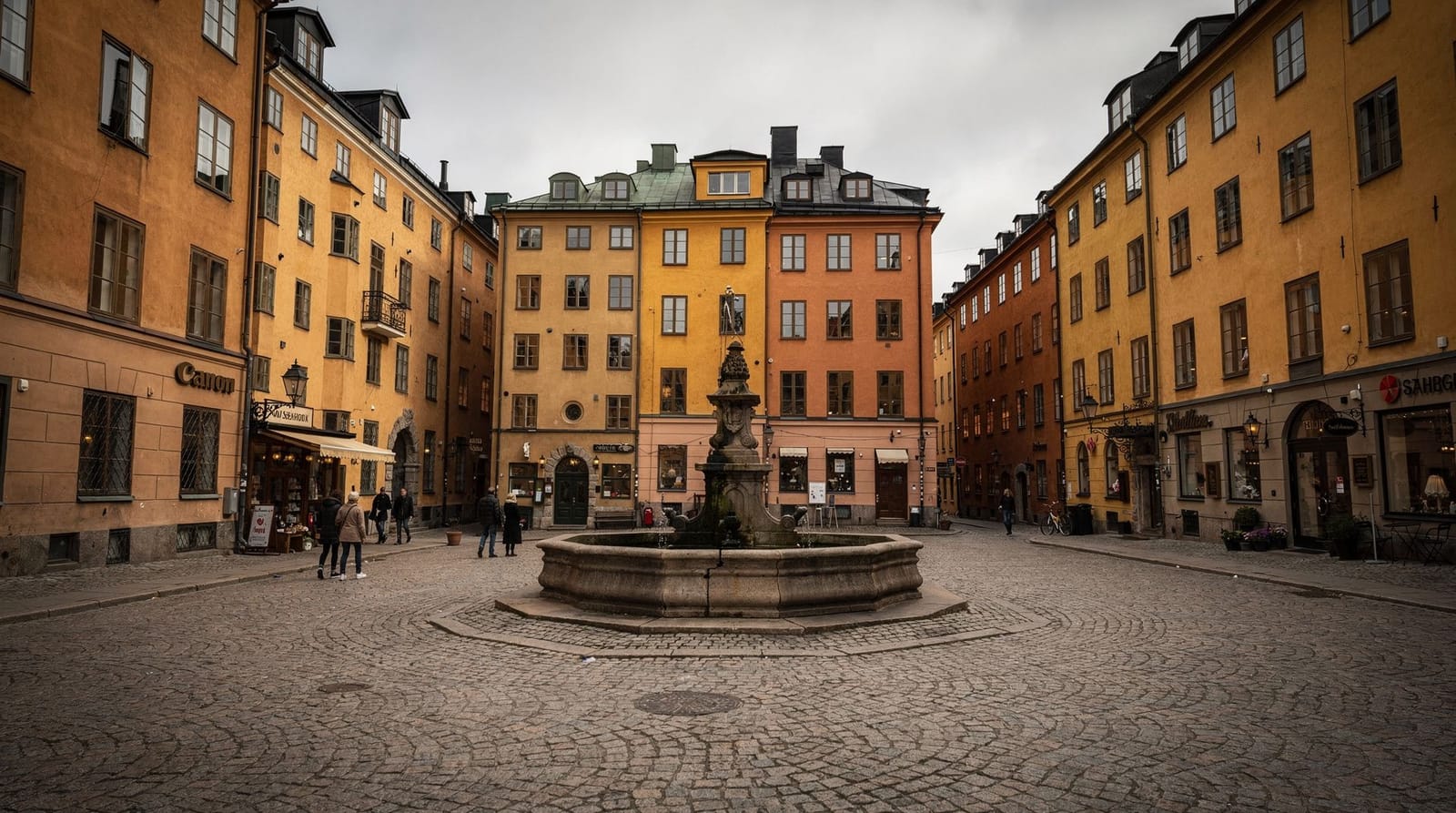
Gamla Stan is overcrowded on dry summer days. In October rain, the crowds thin dramatically. The cobblestones are slippery and dark and look exactly as medieval cobblestones should. Prästgatan and Mårten Trotzigs Gränd are nearly empty. The Nobel Museum is uncrowded.
Accept that you’ll be wet and go slowly. Find the café on Österlånggatan with the steam on its windows and the cardamom smell and stay for forty minutes. This is what Gamla Stan is actually for.
Moderna Museet
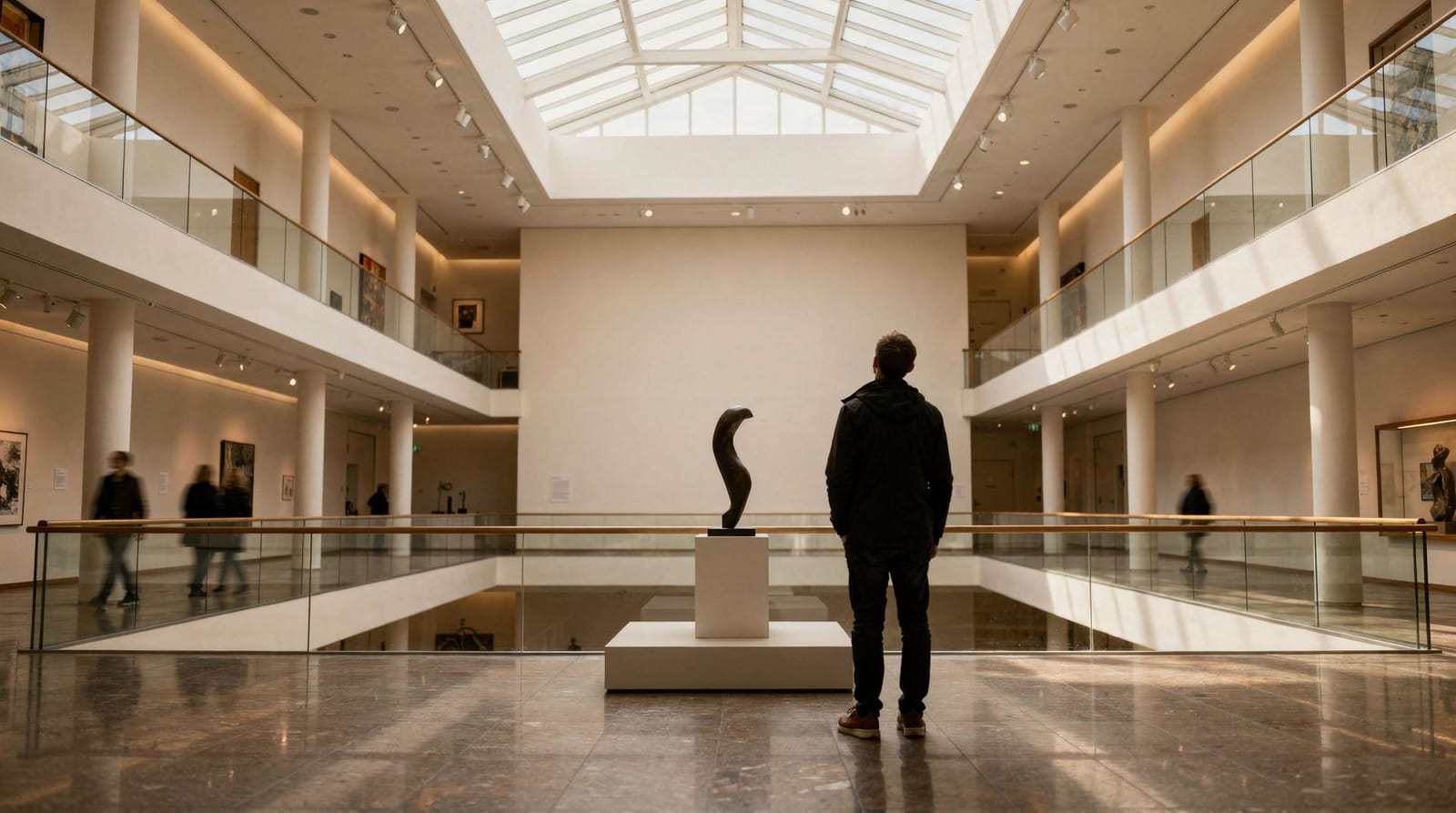
Stockholm’s museum of modern and contemporary art on Skeppsholmen island. The building is excellent (designed by Spanish architect Rafael Moneo), the permanent collection has Dalí, Picasso, Warhol, and substantial Swedish modernist work that doesn’t travel abroad often. The temporary exhibitions are reliable.
Getting there in rain means either the ferry from Strömkajen (runs in most weather) or a walk across the bridge from Blasieholmen. The bridge walk is four minutes and genuinely fine with a good umbrella.
The Tunnelbana stations
This is the Stockholm secret that everyone knows eventually: the metro (T-bana) stations in the inner city are artworks. Since the 1950s, Stockholm has treated its underground stations as public art commissions. Kungsträdgården station looks like a ruined Roman garden. Stadion station is blue arches. T-Centralen has the original 1950s blue murals. Solna Centrum has a forest ceiling that descends toward a red horizon.
On a rainy day, buy an SL day card and ride the blue line from T-Centralen to Kungsträdgården, then across to Solna Centrum. This is free as transport and extraordinary as experience.
Dressing for Stockholm rain
The error most visitors make is treating Stockholm like London — fine drizzle you walk through without real preparation. Stockholm rain in October has intent. Bring:
- A genuinely waterproof outer layer (not water-resistant — waterproof)
- Waterproof shoes or boots with grip
- A hat with a brim, or accept the neck-to-ear wind gap
- A decent umbrella, knowing that Stockholm’s wind will test it
Buying rain gear in Stockholm is possible but expensive. Bring yours.
Stockholm Moderna Museet entry ticketOur museums guide covers every major institution with opening hours and booking advice. For Gamla Stan walking in any weather, see the Gamla Stan destination page.
The psychological adjustment
The first thing to do when Stockholm rain materialises is to stop treating it as an obstacle to overcome. October rain in Stockholm is not a failure of the weather; it is the weather. Northern cities at 59° north have wet autumns. The cities that manage this well — and Stockholm is one of them — are built with covered arcades, enclosed markets, and indoor public spaces that are worth spending time in.
The Tunnelbana stations are the clearest example. These are public spaces designed to be beautiful and to make the underground feel like somewhere you’d want to be. On a wet October afternoon, finding yourself in Kungsträdgården station — with its artificial rock ceiling, its plants growing from the cave walls, the blue-lit arches that make it look like a ruined garden — is genuinely pleasant rather than merely functional.
This is a different relationship to urban space than most Anglo visitors expect. The infrastructure of indoor Stockholm is designed for extended indoor time, not merely transit between outdoor destinations.
The day-planning rewrite for rain
A conventional dry-weather Stockholm day: morning walk + outdoor market + ferry + outdoor café. This fails in sustained rain.
A rain-compatible day: museum morning (2 hours) + covered food hall lunch (Östermalm Saluhallen, 45 minutes) + Tunnelbana art tour (1 hour) + independent bookshop + evening restaurant.
The rewrite produces a day that is slower, more interior, and arguably more representative of how Stockholm actually operates in autumn. Most of the year is not August.
The October advantage
Stockholm in October has several specific advantages that good weather months don’t offer:
Museum hours: Full standard hours without the summer weekend surge. The Nordiska Museet in October has available tables in its café.
Fotografiska: The photography exhibitions change quarterly; a new show typically opens in October.
Restaurant availability: Late October bookings are less pressured than summer. Some restaurants do special autumn menus featuring the Swedish game season (älg/moose, hjort/deer, svamp/wild mushrooms).
The light when it appears: October in Stockholm has extraordinary clear-day light when the rain stops — the sky washes a specific pale blue, the remaining leaves on the lindens are yellow and burning, and the low sun angle produces shadows that summer never has.
The kit question
Stockholm October rain is not tropical rain. It doesn’t arrive as downpours; it arrives as the kind of persistent horizontal Northern European moisture that the wrong clothing lets through without difficulty. What works:
- A breathable waterproof outer layer (Gore-Tex or equivalent, not just “water-resistant”)
- Waterproof ankle boots with grip — cobblestones in Gamla Stan when wet are genuinely slippery
- A hat or hood that actually stays on in wind
- Multiple inner layers rather than one thick one, so you can adjust for heated interiors
Buying a cheap rain poncho at a Stockholm tourist shop is an option but not a solution — ponchos don’t address the wind penetration at the neck and cuffs.
More indoor options worth knowing
Beyond the five we detailed, Stockholm has enough indoor depth that a full week of rain wouldn’t exhaust it. The Nordiska Museet is a grand indoor hall in its own right, with Swedish cultural history exhibitions that easily fill two hours. Fotografiska is worth a second mention beyond what we covered above — check current exhibitions before visiting, since shows rotate quarterly. If you want a curated list beyond our own rain-tested picks, our dedicated museum rainy day guide ranks the full set by how well each handles a wet afternoon crowd.
Building a wet-weather plan around the rest of the city
Rain rarely arrives alone, so it helps to have a few more pages open before you travel. If the Vasa is your anchor for the wettest day, our Vasa Museum guide explains what to look at once you are inside, and Vasa versus Skansen is useful if you are tempted to swap an outdoor park for the dry option. Families with restless children will find a different set of ideas in our rainy day with kids guide.
For the broader picture, the best time to visit Stockholm puts October in context against the other months, and the autumn colours guide is a good companion for the days when the rain stops and the light turns. If the forecast looks bleak for your whole stay, a three-day first-timer itinerary is easy to reshuffle so that each outdoor stop is paired with an indoor fallback. And if you would rather spend an evening warm and fed than wandering, the fika culture guide is a reminder that a long coffee break is a perfectly Swedish response to bad weather.
Rainy-day ranking
| Option | Why it works | Best time |
|---|---|---|
| Vasa Museum | Heated, atmospheric, gets better in bad weather | Morning, before crowds |
| Fotografiska | Warm building, top-floor café view over rain-silvered water | Late afternoon into evening |
| Tunnelbana art stations | Free with an SL pass, genuinely striking design | Any time, quick between plans |
| Östermalmshallen food hall | Warm, atmospheric, functional lunch stop | Midday |
| Moderna Museet | Strong permanent collection, short covered walk from Blasieholmen | Afternoon |
Getting around in the rain
Rain changes how worthwhile walking is versus taking transit. Our Stockholm public transport guide covers the metro network in full, which is the fastest way to string together several of the indoor options above without getting soaked between stops. If your coat isn’t cutting it after day one, winter clothing rental isn’t just a winter-specific fix — it covers proper waterproof layers for any wet stretch of the year.
Nordiska Museet entry ticketFrequently asked questions about rain in Stockholm
What’s the wettest time to visit Stockholm?
October is the wettest month on average. July and August are relatively dry (a Stockholm summer is not typically rainy, which surprises visitors expecting perpetual Scandinavian grey). November and December are moderately wet with more wind.
Can you enjoy Stockholm in the rain?
Yes, if you plan for it. The museums, food halls, Tunnelbana art, and covered markets provide a full day’s activity. The old town in light rain is atmospheric rather than unpleasant if you’re properly dressed.
Should I avoid October in Stockholm?
No. October is a genuinely good month: lower crowds, full museum operation, autumn food specials, and very reasonable hotel prices. The rain is manageable. Bring waterproofs and adjust expectations.
What’s the single best rainy-day activity in Stockholm?
The Vasa Museum. It’s heated, atmospheric, and the ship’s presence in a dim, large hall becomes more dramatic rather than less appealing in bad weather. Book timed entry online, since it fills up faster on rainy days as everyone reaches the same conclusion.