Artipelag: contemporary art museum in the archipelago
Artipelag half-day: contemporary art museum on Värmdö, integrated into granite landscape. Acclaimed restaurant and major temporary exhibitions.
Stockholm: Gamla Stan walking tour & archipelago boat cruise
Quick facts
- Bus from Slussen
- Bus 474 or 479, ~40 min (SL pass valid)
- Summer shuttle
- Strömma boat from Strömkajen (seasonal)
- Days needed
- 0.5 day
- Best for
- Contemporary art, architecture, and archipelago landscape together
Art in the archipelago landscape
Artipelag opened in 2012 on the Värmdö peninsula, 35 kilometres east of central Stockholm, and immediately became one of Sweden’s most discussed new cultural institutions. The name combines the Swedish words for art (art) and archipelago (skärgård) — a declaration of intent that describes the building’s relationship to its setting rather than any particular curatorial approach.
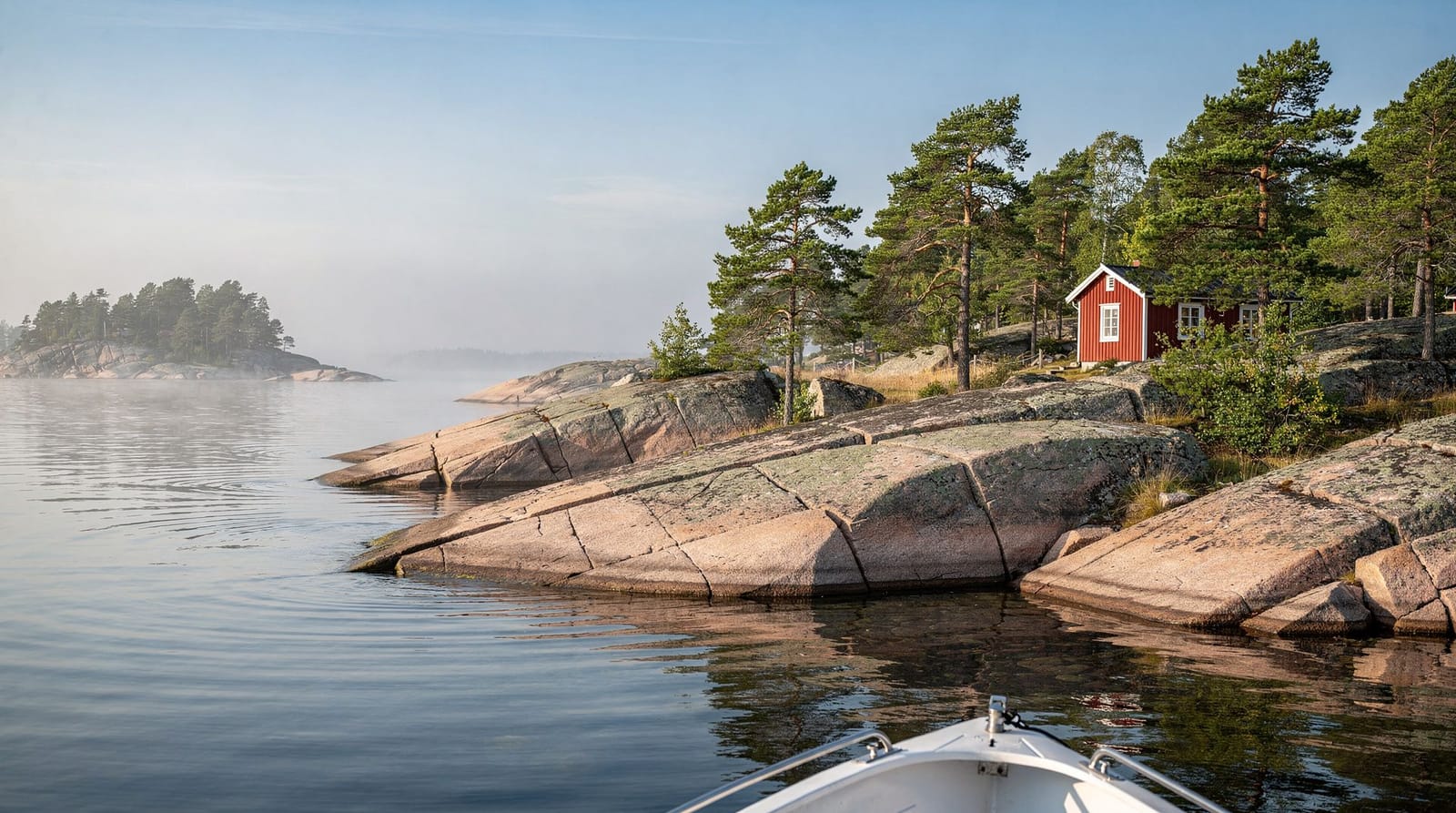
The architecture, designed by Johan Nyrén, is built into a hillside of granite and pine above the Baltic inlet of Baggensfjärden. From the approach road, the building seems low and integrated; from the water, the glazed facades and rooflines emerge from the rock like something grown rather than constructed. The relationship between the building and the landscape is not the typical art museum format of a prominent urban landmark — it is a building that makes the landscape its context rather than its backdrop.
The result is unusual: a museum where the view from the café is as significant as the art on the walls, where the walk from the car park through the granite forest is part of the experience, and where the permanent collection has been deliberately minimal so that large-scale temporary exhibitions can occupy the full institution. Artipelag has shown work from Cindy Sherman, William Kentridge, Jockum Nordström, and numerous Swedish and international contemporary artists in large-scale shows since 2012.
Getting to Artipelag from Stockholm
By bus (year-round): Bus 474 (Nacka Strand–Gustavsberg) or 479 (Stockholm–Hemmesta) from Slussen (Södermalm) serves the Artipelag stop in approximately 40 minutes. These buses are within the SL network and covered by SL transit passes. Check the current SL app for exact times — frequency varies by time of day and weekday vs weekend.
By boat (summer): In summer (approximately May–September), Strömma runs a shuttle boat service from Strömkajen (the main archipelago ferry terminal on the Stockholm waterfront) directly to Artipelag. The boat journey takes approximately 40 minutes through the inner archipelago channels and approaches the museum from the water, giving the most dramatic possible arrival perspective. The Strömma shuttle is a commercial service not covered by the SL pass. Check stromma.se for the current summer schedule and ticket prices.
The boat option is significantly more evocative if you have the time and inclination for a water approach, but the bus is reliable and efficient for year-round visits.
The building and the landscape
The approach to Artipelag from the bus stop involves a short walk through pine and granite — a deliberate design choice that creates transition between the mundane suburban bus stop and the architectural experience. Arriving by boat skips this approach and substitutes the view from the water.
The main building is entered through a low entrance that opens into a sequence of gallery spaces at different levels, all oriented to maintain sight lines to the surrounding landscape through large windows and glass walls. The building has a quality — useful but not universal in contemporary museum architecture — of appearing to have been shaped by the rock beneath it rather than imposed on it.
The outdoor terraces and walkways extend the museum into the landscape directly. In summer, the lower terrace above the water is one of the best outdoor seating areas within 40 minutes of central Stockholm. Kayaks can be rented from a small station adjacent to the museum for direct water access.
Temporary exhibitions
Artipelag’s model is built around large-scale temporary exhibitions rather than a permanent collection. This means the specific experience of any visit depends on the current show, and the museum is worth checking in advance to see what is installed. Major shows typically run for 3–6 months. Exhibition themes have ranged across photography, painting, installation, video art, and retrospectives of both Swedish and international figures.
The advantage of this model is that each visit is different and the full scale of the building’s exhibition spaces can be used for single large installations. The disadvantage, compared to a permanent-collection museum, is that there is no guaranteed anchor attraction — if the current show does not interest you, the experience is thinner.
Check artipelag.se for the current exhibition programme before planning your visit.
The restaurant
Artipelag Restaurant is consistently among the most positively reviewed restaurant experiences in the Stockholm region — not despite its suburban location but partly because of it. The kitchen focuses on Swedish seasonal cooking (fish, game, foraged ingredients, dairy from local farms) with the kind of contemporary technique applied to traditional material that has made Scandinavian cooking internationally prominent.
The dining room has floor-to-ceiling windows looking over the water, and the outdoor terrace in summer extends the experience into the landscape. The combination of genuine culinary ambition with an exceptional physical setting makes a meal at Artipelag worth planning as its own destination within the museum visit.
A more casual bistro option serves lighter lunches (soup, sandwiches, salads) at lower prices for visitors who want to eat without the full restaurant experience.
Reservations for the main restaurant are strongly recommended, particularly at weekends.
Why Artipelag has no GYG tours
Unlike every other destination in the Stockholm archipelago region, Artipelag has no GetYourGuide tours associated with it. This is a reflection of its character: it is a cultural institution, not a guided-tour destination. The visit is self-directed — you buy a museum ticket at the door, walk through the exhibitions at your own pace, eat at the restaurant, walk the outdoor paths. There is no structural reason for a guided tour.
This makes it a different kind of day trip from Birka (guided archaeology), Drottningholm (palace with guided theatrical experience), or Sigtuna (historical townscape). Artipelag is an autonomous cultural visit, more like going to a gallery in the city than a guided excursion.
The architecture in detail
The Artipelag building repays close attention beyond the first impression of granite-and-glass integration. Architect Johan Nyrén designed the building to follow the natural topography of the site — the entrance arrives at the top of the hill (minimising the building’s visual impact from the road) while the main gallery spaces descend toward the water on the eastern face, where full-height glazing brings the forest and the fjord inside.
The exhibition spaces vary considerably in scale and character: from large, column-free halls capable of taking major installations to smaller rooms with lower ceilings and more intimate qualities. This variation is useful for the temporary-exhibition model — different shows make different spatial demands, and the building can accommodate a wide range.
The outdoor paths around the building are integral to the design. Several of the paths connect the building to the granite shore directly, passing through sections of the site where the distinction between building and landscape is deliberately blurred — where a stone floor meets a rock outcrop and it is not entirely clear which is architecture and which is nature. This is the building’s most characteristic quality and the thing that photographs do not fully convey.
The architecture has received sustained critical attention since opening and is generally considered one of the more successful museum buildings in Sweden in recent decades — a meaningful claim in a country that has produced several internationally significant museum buildings (the Vasa Museum being the most prominent).
Stockholm’s contemporary art scene in context
Artipelag does not stand alone as a Stockholm contemporary art venue. The city has a lively contemporary art scene concentrated in Södermalm and the inner city, with a cluster of commercial galleries around Hornsgatan on Södermalm. The major institutions for contemporary work in the city include:
Moderna Museet (Skeppsholmen): Sweden’s national modern and contemporary art museum, with a permanent collection from 1900 to the present and major temporary exhibitions. Year-round access; admission is 170 SEK (140 SEK reduced), free up to age 18 and for everyone on Free Fridays, 18:00–20:00.
Bonniers Konsthall (Torsgatan): Mid-size commercial gallery-turned-public foundation, specialising in contemporary Nordic art with a strong exhibition programme. Free entry.
Fotografiska (Södermalm): Photography-focused museum with large-format exhibitions by international photographers. One of Stockholm’s most visited cultural institutions.
Artipelag occupies a different position from all three: it is the only venue that combines landscape, architecture, and art at this scale outside the urban core. For visitors who make a specific trip to Artipelag, comparing it mentally with an urban museum visit clarifies what makes it different.
Artipelag versus Stockholm’s other art venues: a quick comparison
| Venue | Location | Collection | Best for |
|---|---|---|---|
| Artipelag | Värmdö (40 min from Slussen) | No permanent collection, large temporary shows | Architecture, landscape, food |
| Moderna Museet | Skeppsholmen, central | Permanent 20th-century collection + temporary shows | Guaranteed content, central location |
| Fotografiska | Södermalm, central | Rotating photography exhibitions | Photography specifically |
| Bonniers Konsthall | Torsgatan, central | No permanent collection, Nordic contemporary shows | Free entry, quick city-centre visit |
Visitors with a single Stockholm art afternoon and no car are usually better served by Moderna Museet or Fotografiska, both reachable by Djurgården ferry or a short walk from Norrmalm and Södermalm. Artipelag rewards visitors who can give it a half-day on its own terms — the journey out is part of the experience, not a cost to minimise.
Practical tips for a first Artipelag visit
A few details make the difference between a smooth half-day and a frustrating one. Check the current exhibition on artipelag.se before travelling — the specific show, not just the building, determines whether the visit suits your interests. Book the restaurant ahead if you want the full sit-down meal, particularly for a Saturday or Sunday lunch; the bistro does not take reservations and works as a fallback. If travelling by bus, download the SL app in advance so you are not relying on paper timetables at the Artipelag stop, which has limited signage.
Bring cash or a card for kayak rental at the water station — this is a separate small operator, not part of the museum ticket. Visitors combining Artipelag with a wider Stockholm archipelago trip should treat it as a standalone half-day rather than trying to stack it with Vaxholm or Fjäderholmarna on the same schedule — the bus connection back to Slussen does not link efficiently onward into the archipelago network.
Combining Artipelag with the archipelago
Artipelag sits on the Värmdö peninsula, which is also the landward part of the archipelago extending east toward the Sandhamn outer zone. Visitors with a car can combine an Artipelag morning with an afternoon at one of the Värmdö beaches or harbours. Visitors arriving by Strömma boat can continue by water toward other archipelago destinations if the schedule allows.
Without a car, the combination is less straightforward — the bus from Artipelag goes back to Slussen rather than further into the archipelago. The museum works best as an independent destination, not as part of an island-hopping itinerary.
The Stockholm archipelago planning guide covers the broader network. For visitors who want art alongside their natural landscape experience, Artipelag is the dedicated answer.
Pairing the museum with time on the water
Because Artipelag itself is a self-directed visit, the practical way to round out an archipelago-themed trip is to give a different day to the water. If your schedule allows a second outing, a guided option such as a short cruise through the inner archipelago combined with an Old Town introduction gives you the channels and islands without any logistics, and it complements the museum day rather than competing with it.
Travellers who prefer more time on foot in the city before heading out to the islands can look at a walking tour of Gamla Stan paired with an archipelago boat trip. See the Gamla Stan guide for what the old town offers, and the archipelago boat tour overview for how these cruises work. Keep Artipelag for its own half-day, and let the boat day show you the islands that the museum only frames through its windows.
Frequently asked questions about Artipelag
Is Artipelag worth visiting without a specific interest in contemporary art?
Yes, for the architecture and the setting alone. The building’s relationship to the granite and pine landscape is unusual and well done; the restaurant is excellent regardless of the exhibition. Visitors who find contemporary art unrewarding but appreciate good architecture and food will still have a good half-day.
What are the opening hours at Artipelag?
Opening hours vary by season and current exhibition. Typically Tuesday–Sunday, approximately 10:00–17:00, with extended hours during major shows. Monday closure is common. Check artipelag.se before visiting.
Does the SL pass cover the Artipelag bus?
Yes — bus 474 and 479 from Slussen are within the SL network and covered by standard SL transit passes. The Strömma summer boat service is a separate commercial offering not covered by SL.
Is Artipelag good for children?
Moderately — contemporary art is not consistently engaging for young children, and the museum’s model of large temporary exhibitions can produce shows that are less accessible to younger visitors. The outdoor paths, the café, and the water views work for all ages. Families with children who have some interest in art or who simply enjoy the outdoor setting will find a half-day worthwhile; families where the children have no art interest will find Djurgården or Fjäderholmarna more satisfying.
How does Artipelag compare to Moderna Museet in Stockholm?
Moderna Museet on Skeppsholmen has a permanent collection of 20th-century art (Picasso, Dali, Matisse, Warhol, Swedish modernism) and is a national institution. Artipelag has no permanent collection but puts its entire building at the service of temporary shows, which allows a different scale of installation. Both are worth visiting on a longer Stockholm trip; Moderna Museet has more guaranteed content on any given day while Artipelag offers a more integrated landscape-and-culture experience. See the Djurgården guide for Moderna Museet context.
Is there parking at Artipelag?
Yes — there is a car park at the museum. Arriving by car reduces the bus dependency but misses the boat option. The bus is the environmentally preferred approach and perfectly practical.